ChatGPT Can Now Create Animated GIFs From a Prompt or Photo
ChatGPT can now create animated GIFs from a prompt or an uploaded photo, with speed and frame controls. Here is what Images 2.6 adds and how to try it.
 Source: The Verge — AI
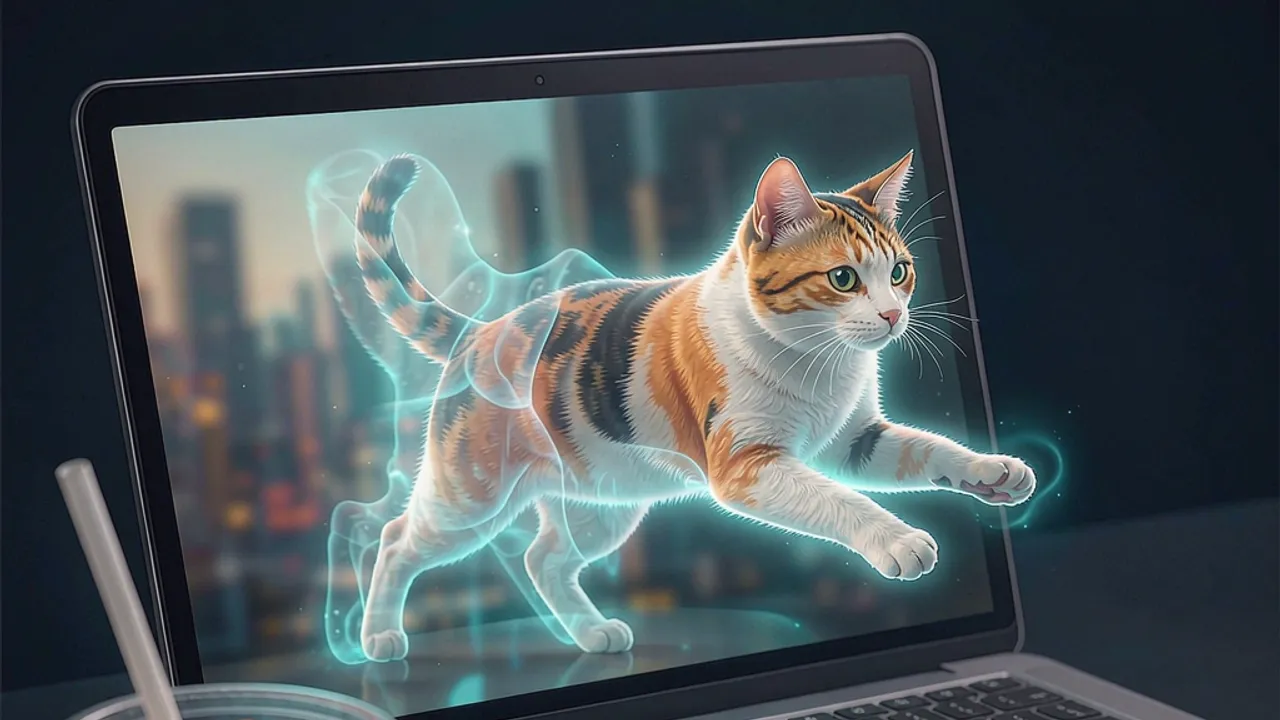
ChatGPT can now create animated GIFs from a written prompt or from a photo uploaded to the chatbot, according to The Verge. The capability matters because it removes a previously separate step for short looping animations, letting people generate, adjust and share a GIF without leaving the chat.
What can ChatGPT do now that it could not do before?
Before this update, ChatGPT could not natively produce a GIF in a single step, according to The Verge. That distinction is the core of the change. Image generation inside the chatbot was already available, but turning an idea or a still photo into a finished animated GIF required other tools or a workaround. Now the animation itself can be generated inside ChatGPT as part of the same conversation.
The feature arrives alongside OpenAI's Images 2.6 model, according to The Verge. In practical terms, that means the GIF capability is not presented as a separate product or add-on. It is part of the image update rolling out in ChatGPT, and it is tied to the same generation system that handles still images. For creators who already use ChatGPT for pictures, the workflow becomes shorter: describe the motion, or supply a starting photo, and receive an animated result that can then be refined.
How do you make and edit a GIF in ChatGPT?
According to The Verge, a user can start with either a prompt or an uploaded photo. The example shared by OpenAI and reported by The Verge involved asking for a dancing cat, which shows the text-to-animation route. The photo route is equally important for people who already have a still image and want to animate it, rather than starting from a written description alone.
Editing is built into the experience rather than left to a separate editor. The Verge reports that users can change the animation speed and edit individual frames directly in ChatGPT. They can also view the GIF frame by frame, which helps when a loop needs a small correction instead of a complete regeneration. Sharing the finished GIF with others is also supported, according to The Verge, so the output can move beyond the original chat.
For everyday use, those controls address the most common reasons a first GIF might not be quite right. Playback speed affects whether motion feels lively or rushed. Frame-by-frame viewing makes it easier to spot an awkward transition. Editing a single frame can fix a detail without discarding the whole animation. Together, they make the tool feel less like a one-shot generator and more like a small editing surface inside the conversation.
What else does Images 2.6 change?
GIF support is the headline, but Images 2.6 also changes still-image generation. According to The Verge, OpenAI says the update enables faster image generation in ChatGPT. That speed improvement applies to the broader image experience, not only to animated outputs. People who use ChatGPT mainly for pictures should therefore notice a change even if they never make a GIF.
OpenAI is also launching two API models, GPT-Image-2.6 Flare and GPT-Image-2.6 Sunburst, according to The Verge. The company describes them as offering faster and higher-quality image generation through the API. That matters for developers and products that call image models programmatically, because the API route is separate from the ChatGPT app experience. The Verge does not provide further technical detail on how Flare and Sunburst differ from each other, so the safest reading is that they are two API options aimed at speed and quality.
The combination suggests a wider update than a single GIF button. ChatGPT users get a new animated format and faster still images, while API users get new model options. The Verge presents both parts as part of the same Images 2.6 rollout, which helps explain why the GIF launch is bundled with performance and quality claims.
Where and to whom is Images 2.6 rolling out?
Images 2.6 is rolling out to all ChatGPT and Codex users, according to The Verge. That scope is broad within OpenAI's product line. It covers the main ChatGPT audience and also people using Codex, which is relevant because Codex users may be focused on software work but still have access to the image update.
Availability across apps is also wide. The Verge reports that the rollout covers web, desktop and mobile apps. A user therefore does not need to switch to a particular platform to try GIF creation. Someone starting on a phone with an uploaded photo, or on a desktop with a longer prompt, should encounter the same underlying capability, subject to the rollout reaching their account.
The Verge does not state a separate pricing change, a regional restriction or a staged timetable beyond the rollout description. Readers should not assume details that are not in the report. What is clear from the source is the intended reach: all ChatGPT and Codex users, across the three main app surfaces.
How much image generation is ChatGPT handling now?
The scale figures help explain why speed is a central part of the update. According to The Verge, OpenAI says users now generate more than 4 billion images per week across ChatGPT and its API. That is a rise from the 3 billion per week the company reported in September, according to The Verge.
Those numbers are large enough that even a modest improvement in generation speed could matter at scale. Faster image generation reduces waiting time for individual users, but it also affects system capacity when billions of images are produced each week. Adding GIF generation on top of still images adds another kind of output to that volume, although The Verge does not break out how many of the images are GIFs.
For readers, the figures should be treated as company-reported usage, not as an independent measurement. The Verge attributes the 4 billion weekly figure to OpenAI and compares it with the earlier 3 billion figure OpenAI reported in September. The direction is clear: usage has grown, and the Images 2.6 update is arriving in that context of higher demand.
How can you try a similar workflow in Grafy?
A genuine Grafy connection is through Creator, which generates images and video from a prompt or a photo. That makes it a natural place to explore the same starting point as the ChatGPT update: begin with words or a still image and create visual output. Creator is not being presented here as a GIF tool, and no GIF-specific feature should be assumed. The value is in the shared workflow of prompt-led or photo-led visual generation, which readers can test with their own ideas.
For people who want to keep alternatives side by side, Graph offers a branching graph of prompts, outputs and edits. That structure fits the editing part of the story, because it lets a reader compare versions instead of overwriting a single result. Social Studio can then help turn a finished visual into social posts, which is a practical next step for a GIF intended for sharing. Together, these apps let readers experiment with generation, iteration and publication without claiming Grafy has the exact ChatGPT GIF controls.
Frequently asked questions
Can ChatGPT create a GIF from an uploaded photo?
Yes. According to The Verge, ChatGPT can now create GIFs using a prompt or a photo uploaded to the chatbot. That means a user does not need to start from a written description alone. A still photo can serve as the starting point for an animated GIF, and the result can then be adjusted inside ChatGPT.
Does Images 2.6 also make still image generation faster in ChatGPT?
Yes. According to The Verge, OpenAI says the Images 2.6 update enables faster image generation in ChatGPT. The speed improvement is part of the same update that adds GIF support. It applies to still images as well as the new animated format, so regular image users should benefit even if they do not try GIF creation.
Is Images 2.6 available to Codex users as well as ChatGPT users?
Yes. According to The Verge, Images 2.6 is rolling out to all ChatGPT and Codex users across web, desktop and mobile apps. The rollout therefore covers both audiences. Codex users are included alongside ChatGPT users, rather than the update being limited to the main chatbot app alone.
Source: The Verge — AI
Source: The Verge — AI — ChatGPT will now make you animated GIFs
More news
OpenAI pipeline finds 948 Linux kernel privilege flaws
OpenAI says an autonomous pipeline found, validated and patched 948 Linux kernel privilege-escalation flaws. What it means for kernel security work.

OpenAI appears to re-enable training on Codex chats, users report
Hacker News users say a Codex data-sharing setting was switched back on without their knowledge, prompting questions about prompt privacy and consent.
Anthropic, OpenAI, Google, Cloudflare debut AI agents for code security
Anthropic, OpenAI, Google and Cloudflare each released an AI agent that finds, disproves and patches security bugs in source code.