Epic Games mandates 'AI-first' development for delayed Disney shooter
Epic Games has directed developers to use AI tools like Claude for all code and art in an upcoming Marvel and Star Wars shooter, delaying its release as part of a major '…
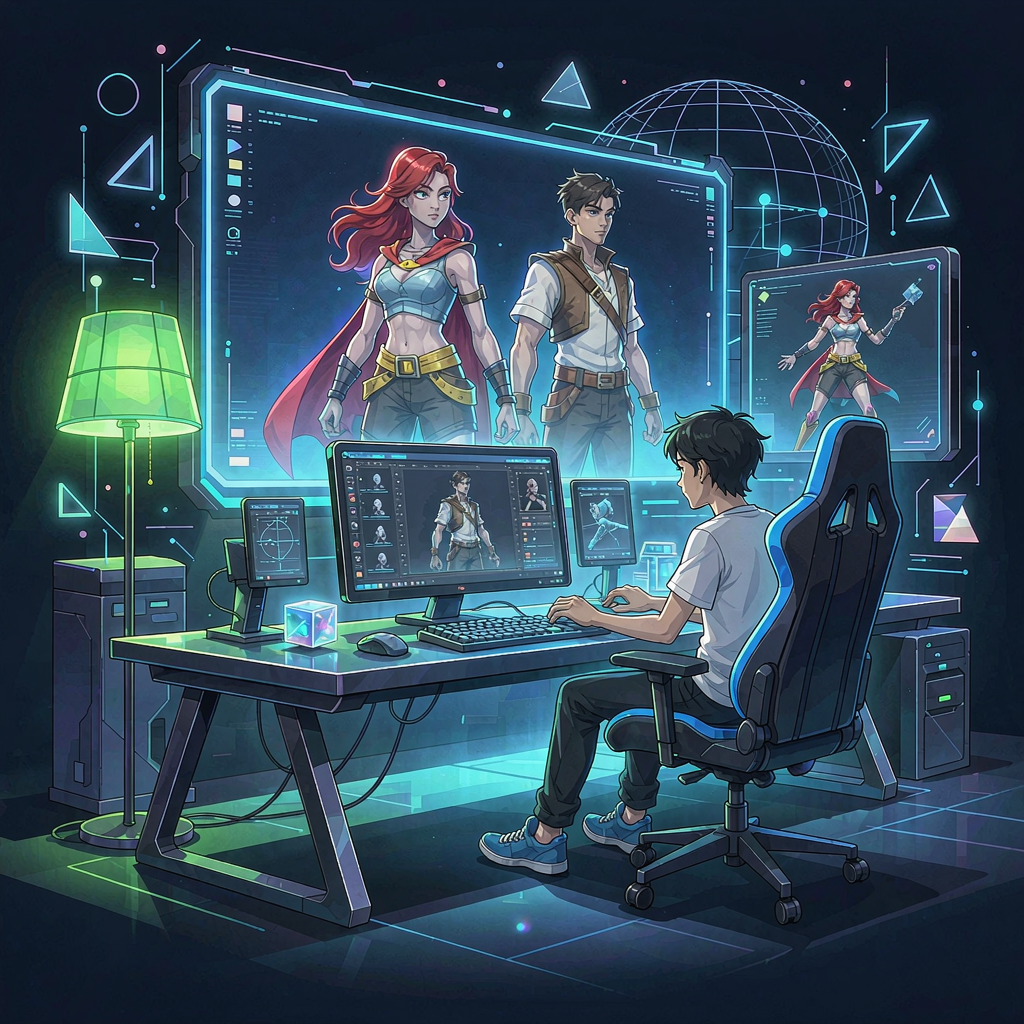
Epic Games has issued an "AI-first" mandate to developers working on an unannounced Disney game, directing them to use generative AI tools for all code and art. This significant strategic shift, which has contributed to a delay of the project from its original March release window, signals a new phase of industrial-scale AI adoption in major game production.
According to a report from Bloomberg, cited by The Verge, the directive was communicated to staff working on the game, which is reportedly a shooter featuring characters from Marvel and Star Wars. One of the game's directors stated in a message that there would be "No more hand-written code," and that all of the game's art would be "generated with full AI workflows." Epic Games spokesperson Jake Jones confirmed the company is "embracing AI-accelerated development."
What is Epic Games planning with AI?
Epic Games intends to use AI to generate the foundational code and artistic assets for its upcoming Disney title. According to the report, the mandate extends to using tools like Anthropic's Claude for coding tasks. In a statement to Bloomberg, the company framed this as an acceleration initiative rather than a pure efficiency play. Epic CEO Tim Sweeney elaborated on this point in a tweet, stating the aim is "to enable everyone here to build MORE and BETTER stuff, and to bring the benefits to all teams using Unreal." The move is part of a broader multiyear collaboration with Disney, which invested $1.5 billion in Epic in 2024. ## Why has the game been delayed? The shift to an AI-centric workflow is a primary factor in the game's delay from its original March release window. Retooling a development pipeline to rely on generative AI for core production elements like code and art represents a substantial technical and operational overhaul. This kind of pivot requires retraining staff, establishing new quality assurance processes for AI output, and integrating these tools into the existing Unreal Engine workflow. The delay suggests Epic is prioritizing the successful implementation of this new methodology over hitting the initial launch date. ## How does this fit into broader industry trends? Epic is not alone in exploring AI for game development; other large tech companies like Meta and Google have also released AI tools aimed at creators. However, Epic's mandate is notable for its scope and top-down enforcement within a high-profile, big-budget project. Sweeney has been a vocal proponent of normalizing AI in production, previously arguing that Steam should drop its "made with AI" tag because "AI will be involved in nearly all future production." This shift occurs against a backdrop of challenges for Epic, which laid off over 1,000 employees earlier this year following a reported downturn in engagement for *Fortnite*. ## What does 'AI-accelerated development' mean in practice? In practice, "AI-accelerated development" at Epic means developers are being directed to use AI as the primary tool for creating code and art, moving away from traditional manual creation. This could involve using large language models to write boilerplate code, generate shaders, or script game logic. For art, it implies using image and potentially 3D model generators to create concept art, textures, and environmental assets that are then integrated and polished. The goal, as stated by leadership, is to amplify human creativity and output, not merely to reduce headcount, though the long-term impact on team structures remains to be seen. ## How can creators explore similar AI workflows in Grafy? For creators, developers, and researchers interested in the practicalities of AI-assisted creation, Grafy provides a multimodal workspace to experiment with similar concepts. The most direct application for exploring game creation with AI is in **Grafy's Game Studio** (/game), which turns a text brief into a playable 2D or 3D game. This allows for rapid prototyping of game ideas using generative AI, similar in spirit to the acceleration Epic is pursuing. Furthermore, the individual components of game development can be explored across Grafy's apps. **Grafy Code** (/code) serves as an AI coding studio where developers can generate, edit, and run code with AI assistance. For asset creation, **Creator** (/creator) generates images and video from prompts, while **3D Studio** (/studio) is designed for generating and editing 3D models. To research the implications of this trend, one could use **Reader** (/reader) to analyze papers and reports on AI in software development, or discuss the technical and ethical dimensions with multiple models in **Chat** (/chat). ## What are the potential implications for game development? The implications are twofold: workflow and output. If successful, AI-accelerated development could significantly speed up prototyping and content creation, allowing smaller teams to produce more visually complex and feature-rich games. It could lower barriers to entry for certain types of development. However, it also raises questions about the future of certain technical and artistic roles, the need for new skills in prompt engineering and AI output curation, and the legal and stylistic consistency of AI-generated assets within a major IP. Epic's experiment will be a closely watched case study for the entire industry. ## Frequently asked questions ### What game is Epic making with Disney? According to the Bloomberg report, Epic is developing an unannounced shooter game featuring characters from Disney-owned franchises Marvel and Star Wars. It is part of a multiyear partnership, and Disney invested $1.5 billion in Epic in 2024. Specific title and gameplay details have not been officially released.
What does "no more hand-written code" mean?
This directive, reported by Bloomberg, suggests developers are to use AI tools like Claude to generate code, rather than writing all lines manually. It likely focuses on boilerplate, systemic, or initial prototype code, which human developers would then review, modify, and integrate. It does not necessarily mean all logic is AI-generated without human oversight.
Is Epic replacing developers with AI?
Epic's leadership states the goal is augmentation, not replacement. CEO Tim Sweeney tweeted the aim is to enable developers to "build MORE and BETTER stuff." However, the company did conduct major layoffs in 2024, and the long-term effect of AI acceleration on team size and composition in the industry remains an open question.
Source: The Verge — AI — Epic shifts to ‘AI-accelerated development’ for upcoming Disney game
More news

Meta releases Muse Spark Open, an 816B-parameter open-weight AI for code and media
Meta has released Muse Spark Open, an open-weight 816-billion-parameter multimodal model optimized for long-context coding and agentic tasks, handling text, images, audio…
Meta Launches Muse Spark Open, a Powerful AI Model for Apple Macs
Meta's Muse Spark Open, an 816B-parameter open-weight model optimized for Apple silicon, enables complex coding and video editing tasks to run locally on high-end Macs.

Meta and Apple collaborate on Muse AI models for Apple Silicon Macs
Meta announces Muse Spark Open, a multimodal AI model it calls the most capable US open-weight model to date, with Apple supporting its deployment on Mac Studio via the M…