Grafy Research Tests Budgeted AI Predictions
Grafy Research released a framework for foundation-model predictions under average query cost budgets, using training data and Q-learning. Here's why
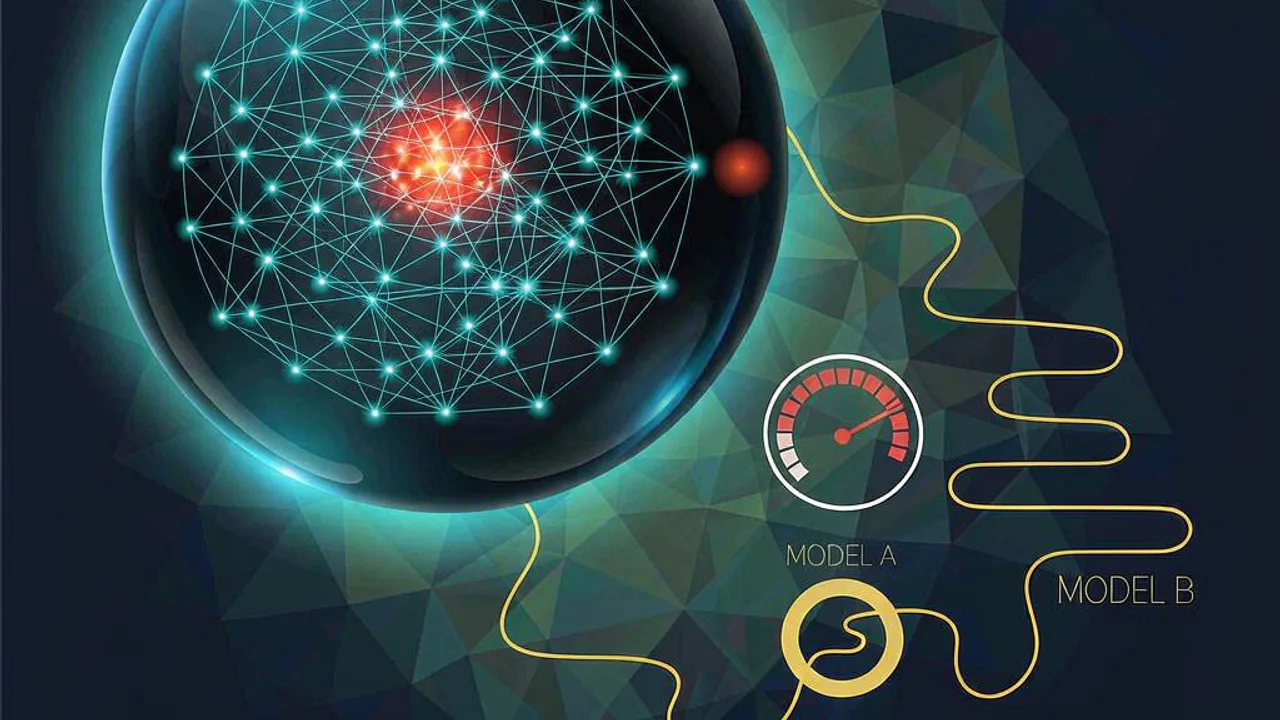 Source: Grafy Research Lab
What happened and why it matters
Grafy Research Lab has published a research paper, according to the source page, titled Prediction with Foundation Models under Deployment Budgets. The work centers on how foundation models can make predictions for a downstream task by drawing on knowledge from extensive pretraining, according to the source. The researchers describe a framework that aims to improve prediction for the task under a budget on average query cost per input.
The source says foundation models differ in task-specific accuracy and query cost. That difference is the starting point for the paper's concern. In practice, a team may have access to several capable models and a limited budget for how much can be queried. The framework is therefore not only about model performance; it is about how performance and spending fit together.
Why it matters: it offers a research-oriented response to a common deployment problem in AI: not all queries are equally useful or affordable. The source frames the problem in terms of budgets, and the proposed methods attempt to make better use of available models. For creators, developers and researchers, the story matters because it touches on how AI tools decide which model to use when accuracy, latency and cost must be balanced.
What the source said about foundation models and budgets
According to the source, foundation models can supply predictions for a downstream task that draw on knowledge from extensive pretraining. The source also notes that these models differ in task-specific accuracy and query cost. The paper's framework is described as a way to improve prediction under a budget on average query cost per input.
The source does not present a single universal model. It points to variation across models, and to the need to manage that variation. The budget appears to be measured per input, with the average query cost as the constraint. The source's feed summary says the framework uses training data to learn which models to query and how to combine outputs with features available without querying.
The source material leaves room for practical questions. How should a team choose models? How should outputs be combined? What counts as a feature available without querying? The framework is presented as a starting point, and the source does not resolve all those questions in the feed summary.
How the framework proposed to improve predictions
The source describes two methods. The first method queries the same models for every input. The second method lets the models vary across inputs and uses Q-learning to decide which model to query next and when to stop.
According to the source, the second method is tied to a reinforcement-learning approach. The framework's training uses data to learn model choices and combinations. The source presents the first method as a simpler baseline in which the same models are used each time. The second method is positioned as allowing variation, with Q-learning informing the next query and the stopping decision.
The source describes the second method as using Q-learning to decide which model to query next and when to stop. That is a specific design choice within the second method. The first method does not appear to use that same decision process. The source frames both methods as ways to support prediction under the deployment budget.
What the source reported and what remains unclear
The source lists the work as being by Zhaohui Xu, Xiaofei Xu and Doudou Zhou, according to the source information. The source's subjects are listed as Machine Learning and a related applied category. The feed summary does not include benchmark results or accuracy numbers. It describes the framework, the budget, and the two methods.
For readers, the source material suggests a research project about efficient prediction with foundation models. It does not say how much accuracy gains were achieved, how the approach compares with other systems, or how the average query cost budget was set. Those limits matter when the story is turned into engineering guidance.
How Grafy readers might relate
The story's theme of choosing models under cost or budget can connect to Grafy's multi-model setup. Grafy Chat allows users to work with many AI models side by side, which can be useful for comparing answers or routing tasks. Grafy also has a lowest-cost mode described in a Grafy blog post about spending the cheapest model that can answer. For a developer or researcher, the practical next step may be to use a multi-model workspace to examine how different foundation models handle a task.
If the budget question interests you, Grafy Chat lets you work with several models in one place, and the lowest-cost mode post explains how to route toward cheaper answers. The connection is genuine, though Grafy is describing its own product approach rather than the research paper's framework.
Frequently asked questions
Does the framework use Q-learning to decide which model to query?
According to the source, the second method lets the models vary across inputs and uses Q-learning to decide which model to query next and when to stop. The framework also uses training data to learn which models to query and how to combine outputs. The source presents this as part of a deployment-budget approach, not as a claim that Q-learning replaces all other methods.
Does the framework require every input to use the same model?
According to the source, the first method queries the same models for every input, while the second lets them vary across inputs. The Q-learning approach is described in the second method. The source does not say the framework always uses varying models.
What does the source say about prediction under deployment budgets?
The source says foundation models can supply predictions for a downstream task using broad pretraining knowledge, but they differ in task-specific accuracy and query cost. The framework aims to improve prediction under a budget on average query cost per input. It describes two methods for selecting or combining model queries.
Source: Grafy Research Lab — Prediction with Foundation Models under Deployment Budgets
More news

Efficient Activation Checkpointing Cuts Memory for LLM Training
A new paper proposes a faster, lower‑error activation checkpointing technique that trims GPU memory use while keeping training speed.

New GAP architecture merges attention and MLP into one block
A researcher has introduced Gated Attention Projection (GAP), a Transformer alternative that reduces parameter counts by nearly 20% through architectural.

Microsoft Research's AI Frontiers group disbanded following reorg
The AI Frontiers research group at Microsoft Research has closed down. Learn why leadership cited a shift toward scaling over fundamental research.