New 0rwx framework proposes Unix-inspired AI usage levels
A new labeling system called 0rwx uses Unix permission concepts to categorize how much control and scrutiny humans maintain over AI-generated work.
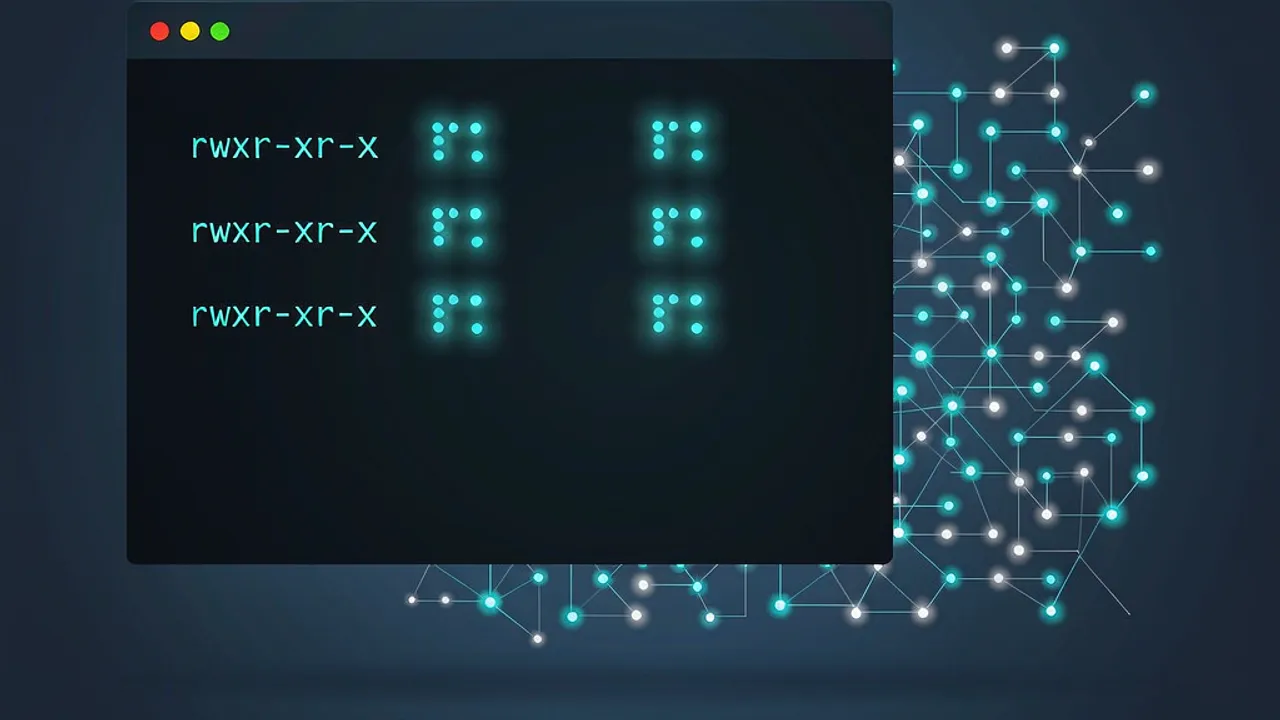 Source: Hacker News — front page
A new conceptual framework called 0rwx has been introduced to provide a standardized language for describing the relationship between human creators and large language models. Inspired by the permission systems found in Unix operating systems, the model seeks to categorize AI involvement based on the level of human scrutiny and control applied to the output.
What is the 0rwx framework?
According to the creator at Namtao Productions, the 0rwx framework is a labeling system designed to help domain experts discuss AI usage with greater clarity and less confusion. Rather than focusing on which specific tool is being utilized, the framework defines four distinct levels of interaction based on the user's ability to critically evaluate and manage the generated content.
The name is a direct nod to the standard Unix permission notation for Read (r), Write (w), and Execute (x). By applying these concepts to generative AI, the framework attempts to move the conversation away from subjective judgments and toward a technical description of the human-AI workflow.
How are the four levels of AI usage defined?
In the 0rwx model, the levels of interaction are broken down into four specific categories, each representing a different degree of autonomy granted to the machine:
-
ZER 0 (No permissions): At this level, the AI has no ability to read or write to the user's work. This is characterized as "Hand Made," where the human is the sole creator, such as when a person is painting or composing music manually. The human is the primary thinker.
-
R EAD (Read-only permissions): In this stage, the AI is described as "AI Inspired." The machine has read-only access, meaning it can provide reference images, chord inspirations, or code snippets that the human then implements. The user's role is to "make" using the AI as a source of information.
-
W RITE (Read-write permissions): This level is termed "AI Collaboration." Here, the AI has read-write permissions, allowing for a more integrated workflow. Examples include reading code to assist in writing it, generating collages, or creating loops. In this mode, the human's role shifts to "fixing" or refining what the AI produces.
-
E X ECUTE (No human readability): The final level, "AI Made," suggests a state where the user can no longer fully parse or reconstruct the underlying work. This is described as "vibe coding," image generation, or song generation, where the human's primary role is to "curate" the final output rather than direct the granular process.
Why does a new AI labeling system matter?
As generative models become more deeply integrated into professional workflows, the distinction between human-led and machine-led creation often becomes blurred. The 0rwx framework attempts to address this by providing a vocabulary that distinguishes between using AI as a reference (Read) versus using it as a primary engine of production (Execute).
By categorizing work through the lens of permission and scrutiny, creators can more accurately communicate the provenance of their work. This is particularly relevant for researchers and developers who need to document the extent to which automated systems influenced a specific result, whether it be a piece of software, a scientific paper, or a musical composition.
How does this apply to modern creative workflows?
The framework highlights a spectrum of agency. In professional environments, the goal is often to move between these levels depending on the task. A developer might use the "Read" level to understand a new library, move to the "Write" level to collaborate on a complex function, and perhaps use the "Execute" level to generate boilerplate code.
Understanding these levels helps creators set expectations regarding quality and accountability. For instance, work at the "Execute" level requires a different type of validation—curation—compared to work at the "Write" level, which requires technical scrutiny and debugging.
How can you apply these concepts in Grafy?
While 0rwx is a conceptual framework, the workflows it describes are central to how multimodal tools are used in practice. For creators moving through these levels of autonomy, maintaining a clear history of decisions is vital.
In Grafy, the Graph app serves as a functional implementation of the scrutiny required in the "Write" and "Read" stages. By providing a branching graph of prompts, outputs, and model history, it allows users to move away from the "black box" nature of the "Execute" level and back toward a more collaborative "Write" or "Read" workflow, where every iteration and model choice is visible and reversible.
Frequently asked questions
What does the 0rwx framework stand for?
The 0rwx framework is a labeling system for AI usage inspired by Unix file permissions. It categorizes the relationship between a human and an AI into four levels: Zer 0, Read, Write, and Execute, based on how much the AI can interact with the work and how much the human can scrutinize the output.
How does the framework distinguish between AI collaboration and AI generation?
The framework distinguishes these by the level of permission and control. AI collaboration falls under the Write level, where the AI has read-write permissions and the human actively fixes or refines the output. AI generation falls under the Execute level, where the AI makes the content and the human primarily curates the result.
Is the 0rwx framework a technical specification?
No, the 0rwx framework is a conceptual model intended to provide a common language for experts. It is not a software protocol, but rather a way to describe the degree of human agency and scrutiny present in a creative or technical workflow involving large language models.
Source: Hacker News — front page — 0rwx – A simple model of AI usage, inspired by Unix permissions
More news

New research proposes runtime governance for tool-using AI agents
Researchers propose the Open Process Control Plane to manage AI agent actions. Learn how this separates agent proposals from business authority.

Correct Decisions Can Trigger Policy Violations in AI Agents
Researchers have identified a new failure mode where an AI agent's own correct decisions lead it to violate safety policies later in a session.

New LRSA method accelerates long-context AI inference
Researchers propose LongCat Recall Sparse Attention (LRSA) to solve retrieval bottlenecks in long-sequence models, significantly speeding up inference.