AgentOrch Benchmark Shows Global Orchestration Closing Gap to Step‑by‑Step AI Agents
The new AgentOrch benchmark compares global orchestration with step‑by‑step LLM agents.
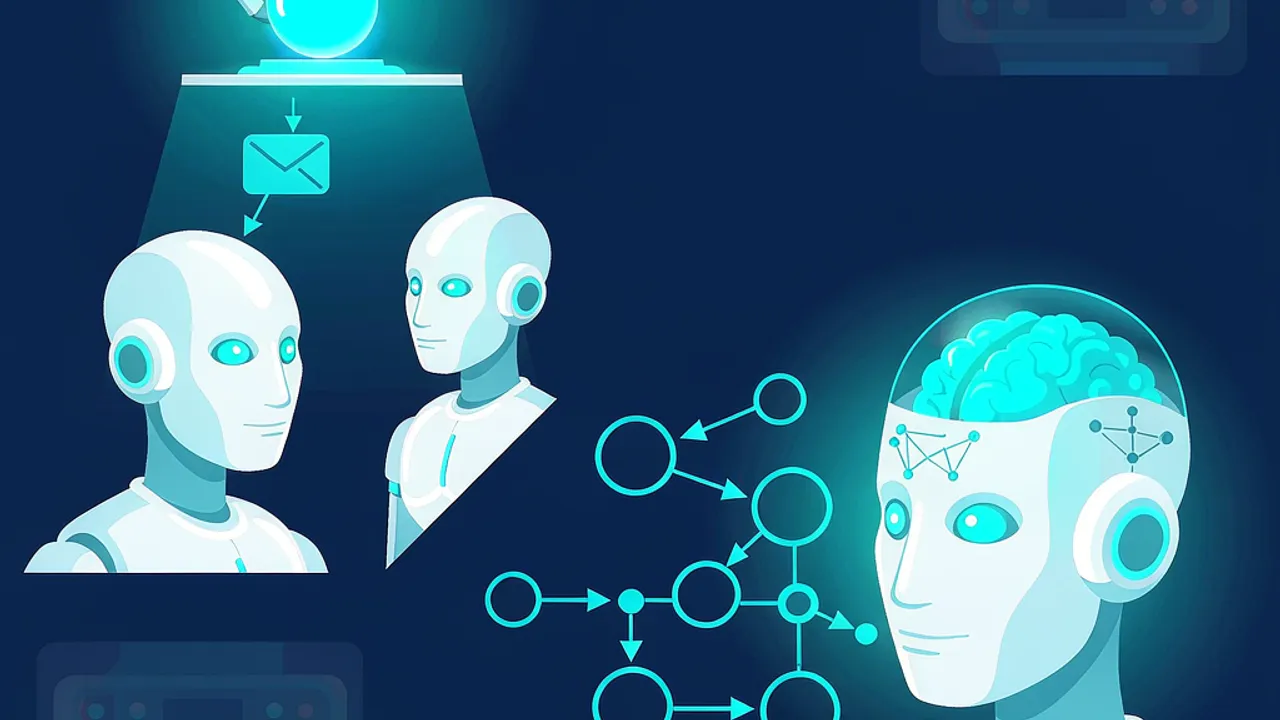
What is step‑by‑step interaction and global orchestration?
Enterprise AI agents traditionally follow a step‑by‑step pattern: the system performs an action, observes the outcome, then calls a large language model (LLM) to decide the next move. This tight feedback loop yields high accuracy but incurs a new LLM inference for every step, increasing latency and cost.
Global orchestration takes a different approach. The agent asks the LLM once, receives a fully‑specified executable workflow, and then runs the entire sequence without additional model calls. The upside is a drastic reduction in inference overhead; the downside, historically, has been lower correctness compared with the iterative method.
How does the AgentOrch benchmark compare the two approaches?
The authors of the paper AgentOrch: How Close Can Global Orchestration Come to Step‑by‑Step Interaction? introduced a dedicated benchmark that evaluates both paradigms under identical conditions. The benchmark consists of 650 enterprise standard operating procedures (SOPs) and 3,220 runtime variants, covering a wide range of tasks and environment configurations. Each SOP is executed twice – once with a step‑by‑step agent and once with a globally‑orchestrated agent – using the same toolchains, execution environments, and evaluation metrics. The full dataset and evaluation scripts are released alongside the paper, enabling reproducibility.
Read the paper on arXiv for the complete methodology.
What did the study find about accuracy and efficiency?
Across all five LLM families tested, the step‑by‑step method remained more accurate for every SOP and variant. However, the accuracy gap shrank dramatically as model capabilities improved: the difference between the two approaches was reduced by roughly 79 % when comparing early‑generation models to the strongest recent model in the study.
The authors also measured inference cost. Global orchestration required a single LLM call per workflow, cutting the number of calls – and thus the associated compute expense – by an order of magnitude compared with the step‑by‑step baseline.
Which techniques help global orchestration catch up?
The benchmark identified three concrete routes that consistently narrowed the performance gap:
- Incremental workflow construction – building the global plan piece‑by‑piece before execution, without using runtime feedback. This strategy added an average 9.98 percentage‑point (pp) boost to global accuracy.
- Execution‑feedback revision – after an initial run, the system revises the complete workflow using the observed outcomes. Even on held‑out runtime variants, this method yielded a 6.13 pp improvement.
- Targeted training on complete workflows – fine‑tuning models specifically on end‑to‑end workflow examples lifted accuracy by an average 12.18 pp across all five trained models.
These findings suggest that the gap is not a hard limit of the global paradigm; rather, it can be narrowed by smarter planning, limited feedback loops, and specialized model training.
Why does this matter for enterprise AI agents?
Enterprises often deploy AI agents to automate repetitive, rule‑based processes such as ticket triage, data entry, or compliance checks. The cost of invoking an LLM for each micro‑step can quickly become prohibitive at scale. A globally‑orchestrated agent that delivers comparable accuracy while making a single LLM call per task could lower operational expenses, reduce latency, and simplify monitoring.
At the same time, the benchmark reminds practitioners that accuracy is still paramount for mission‑critical workflows. The three gap‑closing techniques provide a practical roadmap: start with incremental planning, add a lightweight post‑run revision step, and consider fine‑tuning models on full‑workflow data.
How can Grafy users explore or apply these insights?
Grafy does not yet offer a built‑in global orchestration engine, but creators, developers, and researchers can experiment with the concepts using existing tools:
- Graf Reader – Upload the AgentOrch PDF and use the AI‑powered chat to ask detailed questions about the benchmark, extract dataset samples, or summarize the three improvement techniques.
- Graf Graph – Visualize a SOP as a branching graph of actions. You can model both a step‑by‑step flow (each node triggers an LLM call) and a global flow (a single node representing the whole plan) to compare their structures.
- Graf Chat – Experiment with different LLMs side‑by‑side. Prompt the models to generate a complete workflow for a simple SOP, then run a simulated execution loop that feeds back results, mimicking the incremental and revision strategies described in the paper.
By combining these apps, you can prototype a prototype of global orchestration, test the impact of incremental planning, and even fine‑tune a model on the workflow texts if you have the necessary compute resources. The Grafy ecosystem’s multi‑model support makes it easy to compare how a cheaper model behaves versus a larger, more capable one, echoing the benchmark’s cross‑model analysis.
Frequently asked questions
How much faster is a globally‑orchestrated agent compared to step‑by‑step?
Global orchestration eliminates the need for an LLM call after every action, typically reducing the number of calls by an order of magnitude. In practice, this translates to lower latency per workflow and a significant reduction in compute cost, especially for long SOPs.
Can I use the AgentOrch dataset for my own research?
Yes. The authors released the full set of 650 SOPs and 3,220 runtime variants alongside the benchmark code. You can download it from the arXiv supplemental material and import the files into Grafy Reader for analysis.
Does Grafy currently support training LLMs on workflow data?
Grafy offers model routing and fine‑tuning through its cloud integrations (OpenRouter, Vertex AI, Replicate, etc.). While the platform does not host training infrastructure directly, you can connect to a supported provider, upload the workflow corpus, and fine‑tune a model following the “targeted training on complete workflows” approach described in the paper.
Source: arXiv AI — AgentOrch: How Close Can Global Orchestration Come to Step-by-Step Interaction?
More news
AOS-Bench Tests Whether AI Agents Can Handle Streams of Work
A new arXiv benchmark called AOS-Bench tests whether coding agents manage task streams under shared compute limits. It matters for persistent agents.

Nvidia Launches Open Nemotron 3.5 Models for Enterprise Agents and Local PCs
Nvidia released new open-weight AI models designed for always-on agents, targeting enterprise data centers and local AI PCs.

DeepMind unveils Genie 4, a real‑time multimodal world simulation model
DeepMind announced Genie 4, a multimodal model that generates photorealistic visuals.