AI Labs Are Buying Work Emails and Files to Train Models
Data brokers are buying corporate emails, files and messages to train AI models, raising privacy and consent concerns for workers in a crowded new market.
 Source: WIRED — AI
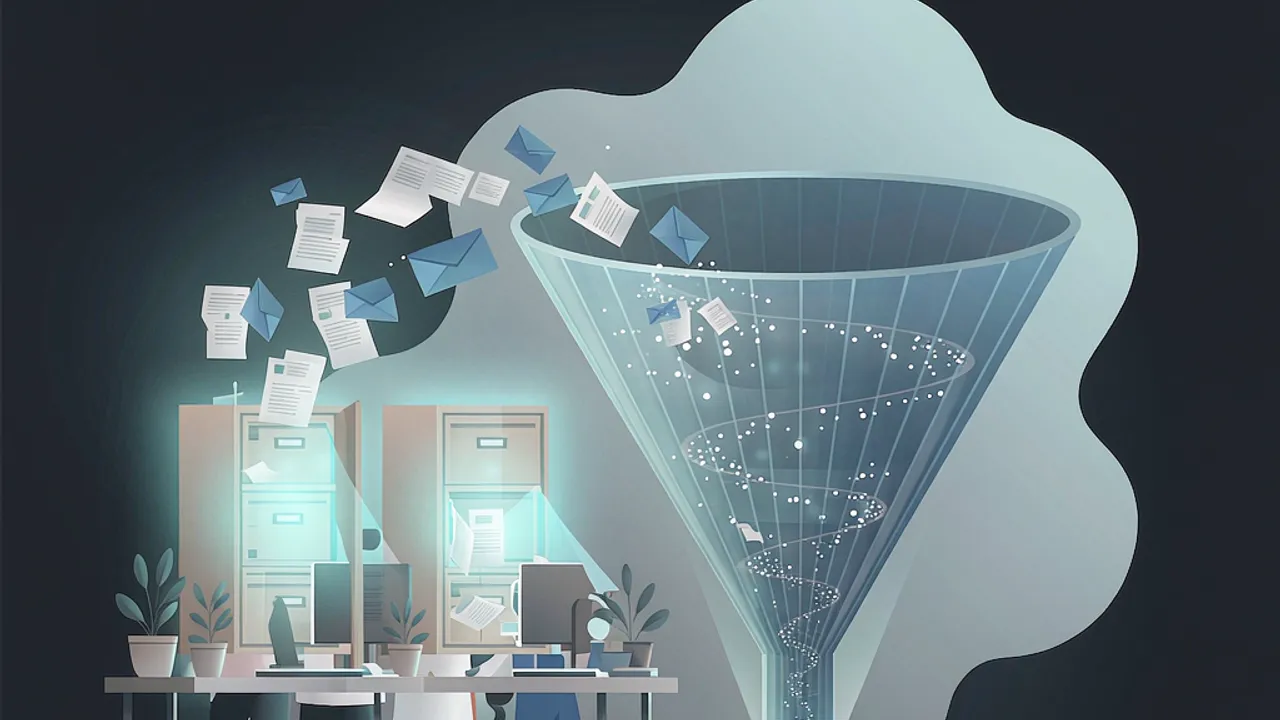
AI companies are paying data brokers for copies of internal corporate records — including documents, emails, Slack messages, tickets and call transcripts — to train their models, according to WIRED. The deals matter because they show how scarce public data is pushing labs toward private workplace data, and they raise questions about privacy, consent and whether workers are contributing to systems that could automate their own jobs.
What exactly is being bought?
According to WIRED, the author Steven Levy received pitches offering media companies such as WIRED between $350,000 and $1.8 million as a one-time fee for old work records. Another pitch, which also included call transcripts, raised the possible value to $2 million. A separate pitch claimed that public data is exhausted and that labs are spending more than $45 billion on private data to build better models.
The material sought is not limited to published articles. The pitches described documents, emails, messages and tickets produced inside organisations during everyday operations. Levy writes that he was already aware that AI companies buy expert data from various sources, but that the scale of this particular business was larger than he had expected.
Individual workers are also being approached. WIRED cites a freelance writer who said a company called Handshake offered her $1,000 for her work on a single story, which she declined. A Handshake representative confirmed the offer to WIRED and said the company licenses professional documents across many fields so labs can test and train how models handle real knowledge work, with journalism among those fields. The representative also said a large part of Handshake's business is buying graduate students' papers and coursework.
Other sellers specialise in companies that are winding down. Levy cites an entrepreneur friend who received mail from companies describing their business as helping startups wind down, including one named Sunset. According to that description, the process involves scrubbing and anonymising the data, stripping out company people and identifying details, and then brokering a deal with AI labs.
Who are the main players in this market?
WIRED identifies Handshake, Micro1 and Mercor as industry leaders snapping up databases. Mercor, founded in 2023, is presented as the apparent leader. Levy reports that its three cofounders became billionaires at 22 last year, and that the company claims partnerships with just about all major AI labs. The labs themselves were more circumspect when asked: Anthropic acknowledged a large market for data but told WIRED it does not buy workflow from live companies like WIRED, while OpenAI did not respond before publication.
Micro1 was founded in 2022. Its chief executive, Ali Ansari, told WIRED that Micro1 uses much of the information it buys to improve AI models it builds itself, while also selling to large AI firms. He said labs, enterprises and robotics companies currently pay about $40 billion to $50 billion a year to obtain data, a figure Levy notes he was unable to verify. Ansari predicted the market could exceed $1 trillion a year within two to four years.
Mercor chief executive Brendan Foody told WIRED that the company originally started as an AI recruiting business before learning that large labs were frustrated with the quality of available data. In his account, the industry had been hiring experts to simulate actual workflow, but that approach did not capture the messiness of a real operating business. He argued that large AI companies have two bottomless needs: compute and data.
Newer entrants are also competing for supply. Levy followed up one cold pitch from a company called Tenkara, founded about two years earlier, whose head of commercialisation, Jonah Stillman, confirmed that a large part of his job is making calls like that one to acquire data. Tenkara's aim, as described to WIRED, is to improve an AI model for running office operations for manufacturing companies.
Why do AI labs want real workplace records?
The core argument from buyers is that public text alone is no longer enough. Simulated expert work can demonstrate a task in a clean form, but real offices produce messy sequences: drafts, revisions, approvals, misunderstandings, tickets, timestamps and handoffs between people. Training on that kind of material could teach models how knowledge work actually unfolds, rather than how it is described in public sources.
That logic also explains the interest in archives and internal systems. A newsroom's old files, a startup's Slack history or an airline's internal messages contain examples of decisions, coordination and problem-solving that are rarely published. For labs seeking to move from general chat to agents that can perform office tasks, such records are potentially valuable training signals.
Ansari's prediction that selling workflow data could become more common than advertising as a revenue line for companies underlines how central he expects this market to become. He also said that, in his view, pretty much everybody is trying to enter the data space because demand is so high. Levy checked one related claim about Y Combinator startups and found that in the most recent batch, 40 of 65 launched companies were classified as data startups.
What are the privacy and consent concerns?
Buyers say they remove personal identifying information before data reaches labs. Foody told WIRED that when a business streams data to Mercor, the company strips out personal identifying information, which he said can be verified. Levy reports that everyone in data acquisition he spoke to felt technology had solved the privacy issues involved in buying such information.
Critics are not convinced. Mayu Tobin-Miyaji, general counsel of the Electronic Privacy Information Center, told WIRED that it is not clear anonymising can fully remove privacy issues. She said emails and Teams messages contain unstructured data that is harder to clean, and that employees may discuss doctor's appointments or family issues in messages that were never meant to leave the workplace. The Electronic Privacy Information Center has filed an amicus brief on behalf of flight attendants in a dispute described below.
Venture capitalist Gordon Ritter, who has campaigned on the issue, told WIRED that norms and standards for data acquisition have not been set and are not being handled appropriately. He argued that the AI industry is moving faster than the ability to set standards, and that this is partly intentional.
A further concern is consent. Levy writes that the movement effectively enlists workers, not always with explicit consent, to contribute to an effort whose ultimate goal may be to replace or automate the human work behind those documents and messages. The president of the flight attendants' union, quoted by WIRED, described the data as valuable only in the age of AI, to train models to replace jobs and commodify working in a work environment.
Ansari acknowledged that people might not be happy with everything they do at work being funnelled into a large AI model. He said he considered that a fair point, but argued objections would be manageable because workers would understand that better models could make their lives easier. Levy notes that promised future abundance is often used to justify compromises.
What happened in the Spirit Airlines case?
The Spirit Airlines bankruptcy sale gave the market unusual public exposure, according to WIRED. The digital assets offered for sale included 80,000 email accounts, 500 million internal messages, 20.6 million Microsoft SharePoint files and one million time-card records.
Google appeared to win with a $10 million bid, but Micro1 then topped that bid by $2.5 million, prompting an argument over who the winner was. The sale is currently on hold. The reason, WIRED reports, is that the flight attendants' union has charged that the sale involved private information belonging to its members.
The case matters beyond its size. It shows that even when a company is bankrupt and its assets are being sold, the records inside those assets belong to a human workflow involving identifiable workers. If anonymisation is incomplete, or if consent was never obtained, a training-data deal can become a labour and privacy dispute.
How can readers explore this topic in Grafy?
There is no Grafy app that buys or sells workplace data, and readers should not assume their files are used for training by default. What Grafy can do is help you analyse the documents and policies that sit at the centre of this debate. With Grafy Reader, you can read, search and question PDFs and papers with AI, which is useful for comparing privacy policies, data-sale notices or research on anonymisation. Grafy Chat lets you test the same question across many AI models side by side, which can surface different assumptions about consent and de-identification. Grafy Files provides PDF, image and audio tools and conversions if you need to prepare or inspect documents before deciding what to keep private.
For newsrooms, startups and universities, the practical lesson from WIRED is to treat internal records as assets with legal and ethical weight. Before any sale, organisations should verify what identifiers remain after scrubbing, whether employees consented, and whether contracts allow the data to be used for model training. Readers following the story can also use Grafy Watch to monitor pages for changes, though the core work remains reading the primary sources carefully.
Frequently asked questions
What did WIRED report about pitches to buy WIRED's work records?
WIRED reported pitches offering $350,000 to $1.8 million for old work records such as documents, emails, Slack messages and tickets. Another pitch including call transcripts raised the possible value to $2 million. Levy said he was not authorised to sell WIRED's editorial documentation and did not offer it.
Does Anthropic buy workflow data from live companies like WIRED?
No, according to WIRED. Anthropic acknowledged a large market for data but told WIRED it does not buy workflow from live companies like WIRED. OpenAI did not respond before publication. Other data companies, including Mercor, claim partnerships with major labs.
Why did the Spirit Airlines data sale pause?
The sale paused after the flight attendants' union charged that it involved members' private information. The assets included 80,000 email accounts, 500 million internal messages, 20.6 million SharePoint files and one million time-card records. Google bid $10 million before Micro1 topped it by $2.5 million.
Source: WIRED — AI
Source: WIRED — AI — AI Companies Really, Really Want to Buy Your Work Files and Emails
More news

Anthropic IPO Valuation Talks Drop to $1.3 Trillion
Anthropic's IPO valuation talks fell to $1.2–$1.3 trillion after investors rejected $1.5 trillion, amid a Nasdaq rout and questions over its S-1 filing.

Google's DiffusionGemma Generates Text in Parallel Blocks
Google DeepMind's DiffusionGemma generates and refines whole 256-token blocks in parallel instead of one token at a time, and can revise its own output.
Palo Alto Networks in Talks to Buy Clutch for $500M
Palo Alto Networks is in talks to acquire AI agent security startup Clutch for $500 million, according to TechCrunch. What it would mean in practice.