Google launches TorchTPU to lure PyTorch apps away from Nvidia
Google has released TorchTPU, an open-source version of PyTorch that makes it easy to move AI apps to its Tensor Processing Units.
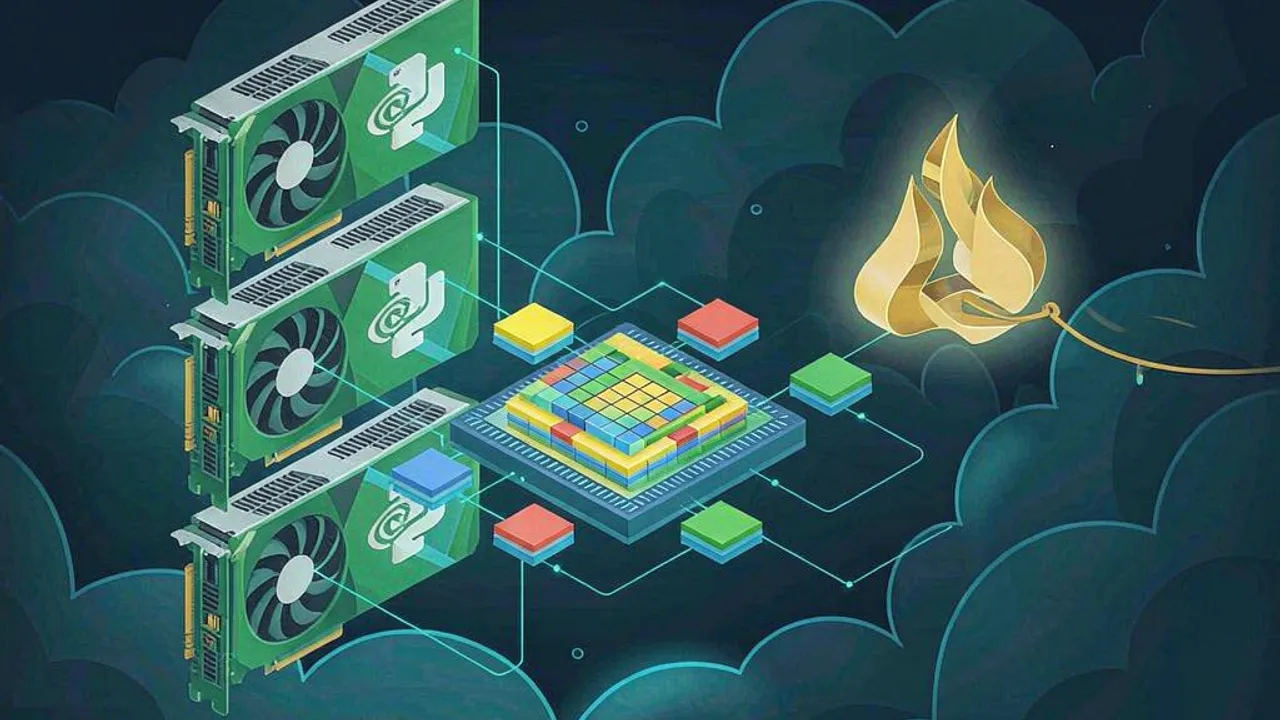
Google has launched an open-source tool designed to pull AI developers away from Nvidia's dominant hardware ecosystem. The move, coming just a day after a similar announcement from Amazon, signals a new, aggressive phase in the battle for control over the infrastructure underpinning modern AI applications, according to a report by TechCrunch.
What did Google and Amazon announce?
On Tuesday, October 20, 2026, Google announced the release of TorchTPU, an open-source version of the popular PyTorch AI development framework. According to the report, TorchTPU allows developers to run their PyTorch-built applications on Google's custom Tensor Processing Units (TPUs) and Google Cloud with only a simple configuration change, eliminating the need to rewrite code. This follows Amazon's announcement on Monday of its own tool, TorchNeuron, which performs a similar function for its Trainium chips and AWS cloud. Both tools aim to reduce the friction of moving AI workloads off Nvidia's GPUs, which have been the default hardware for PyTorch since its inception.
Why is Nvidia's position in AI so strong?
Nvidia's dominance stems from a historical alignment between its hardware and the software tools AI developers use. PyTorch, originally developed by Meta in 2016 and now managed by the Linux Foundation, was built when Nvidia GPUs were already the standard for AI research. Consequently, many of its features became tightly coupled with Nvidia's technology. TechCrunch notes that PyTorch is used by an estimated 85% of AI applications, creating a powerful lock-in effect where apps are written by default for Nvidia's platform. This has given Nvidia a significant strategic and economic advantage in the AI boom.
How are Google and Amazon trying to break this lock-in?
The cloud giants are employing a multi-pronged strategy. Their primary tactic is providing drop-in compatibility: both TorchTPU and TorchNeuron promise to port existing PyTorch apps to their respective chips without code rewrites. Amazon is taking an additional step by submitting code to the main PyTorch project itself to decouple core features from Nvidia hardware, aiming to make the framework more hardware-agnostic by default. Google claims to have one-upped Amazon by working directly with key industry players like Meta, Hugging Face, and the makers of vLLM and SGLang to ensure TorchTPU integrates seamlessly with popular development tools. Google also launched a dedicated "TPU agent suite" to help developers migrate and debug their applications.
What does this mean for AI developers and startups?
For developers, this competition translates directly into more choice and potential cost leverage. The ability to easily run PyTorch workloads on Google TPUs or Amazon Trainium chips creates viable alternatives to Nvidia, which could lead to more competitive pricing and specialized hardware options for different tasks (like training versus inference). Startups building AI applications now have a clearer path to architect their systems for multi-cloud or vendor-agnostic deployments from the start, reducing long-term infrastructure dependency. However, as TechCrunch cautions, this does not guarantee a mass exodus from Nvidia, whose GPUs still offer unparalleled performance and a mature software ecosystem that alternatives must match.
How can you explore hardware choices for AI projects in Grafy?
For creators and developers architecting AI systems, understanding the trade-offs between different hardware backends is a critical research task. While Grafy does not directly manage GPU or TPU provisioning, its Grafy Code app (/code) provides an ideal environment for prototyping and testing the code that would run on these platforms. You can use it to write and run Python scripts that utilize PyTorch, simulating different deployment scenarios. Furthermore, you can use Grafy Chat (/chat) to query multiple AI models side-by-side for the latest benchmarks, cost analyses, and migration guides for TorchTPU or TorchNeuron. For deeper research, Grafy Reader (/reader) allows you to upload technical papers, cloud provider documentation, and performance reports to build a comprehensive knowledge base for your infrastructure decisions.
Frequently asked questions
What is PyTorch and why is it important?
PyTorch is an open-source machine learning framework used to build, train, and run AI models. It is reportedly used by 85% of AI applications, making it the industry's standard toolkit. Its deep integration with Nvidia hardware has been a cornerstone of Nvidia's market strength.
Will this immediately end Nvidia's dominance in AI hardware?
No. According to the TechCrunch report, these moves by Google and Amazon are significant steps to challenge Nvidia, but they do not guarantee developers will abandon its platform en masse. Nvidia's GPUs have a proven performance record and extensive software support that alternatives must rival.
Can I try TorchTPU or TorchNeuron in Grafy?
Grafy itself is a front-end workspace that connects to various cloud AI models via APIs. You cannot provision physical TPUs or Trainium chips through Grafy. However, you can use Grafy's apps like Grafy Code to develop and test PyTorch code, and Grafy Chat to research the migration process and economic implications for your projects.
Original source: Google has joined Amazon in attacking Nvidia’s stronghold with AI app developers
Source: TechCrunch — AI — Google has joined Amazon in attacking Nvidia’s stronghold with AI app developers
More news
Google releases Gemini 4 Argon, challenges AI frontier
Google has launched its long-awaited Gemini 4 Argon model, claiming it competes with the industry's best in reasoning and complex workflows.

Nvidia Launches Open Nemotron 3.5 Models for Enterprise Agents and Local PCs
Nvidia released new open-weight AI models designed for always-on agents, targeting enterprise data centers and local AI PCs.
Rust Framework Achieves Bit-for-Bit Match with PyTorch
A student's Rust deep learning framework replicates PyTorch's exact numerical output, bit-for-bit, when training nanoGPT.