GPT 6.2 Astra Identifies an 1808 Sketchbook Artist
OpenAI's GPT 6.2 Astra identified the likely maker of an 1808 sketchbook in 22 minutes, according to Generative History. Read how it worked.
 Source: Hacker News — front page
What happened?
According to Mark Humphries in Generative History, OpenAI's GPT-6.2 Astra made a historical attribution that had remained unresolved for more than two centuries. Humphries had been testing the model on long-running tasks and found it reliable, so he gave it images of an anonymous 1808 sketchbook held at Yale's Beinecke Library and a short prompt asking who likely painted them. In 22 minutes and 1 second, the model named Louis-Guy-Charles-Guillaume de Rohan-Chabot, vicomte de Chabot, as the probable artist. It also suggested a way to verify the claim by ordering a microfilmed diary listed in an archival inventory at Cleveland State University. Humphries says the documents arrived and the handwriting appeared to support the hypothesis. The result matters because it shows a model moving from visual clues to an obscure archival lead and then proposing a test, rather than merely summarizing familiar sources.
Why was the sketchbook anonymous?
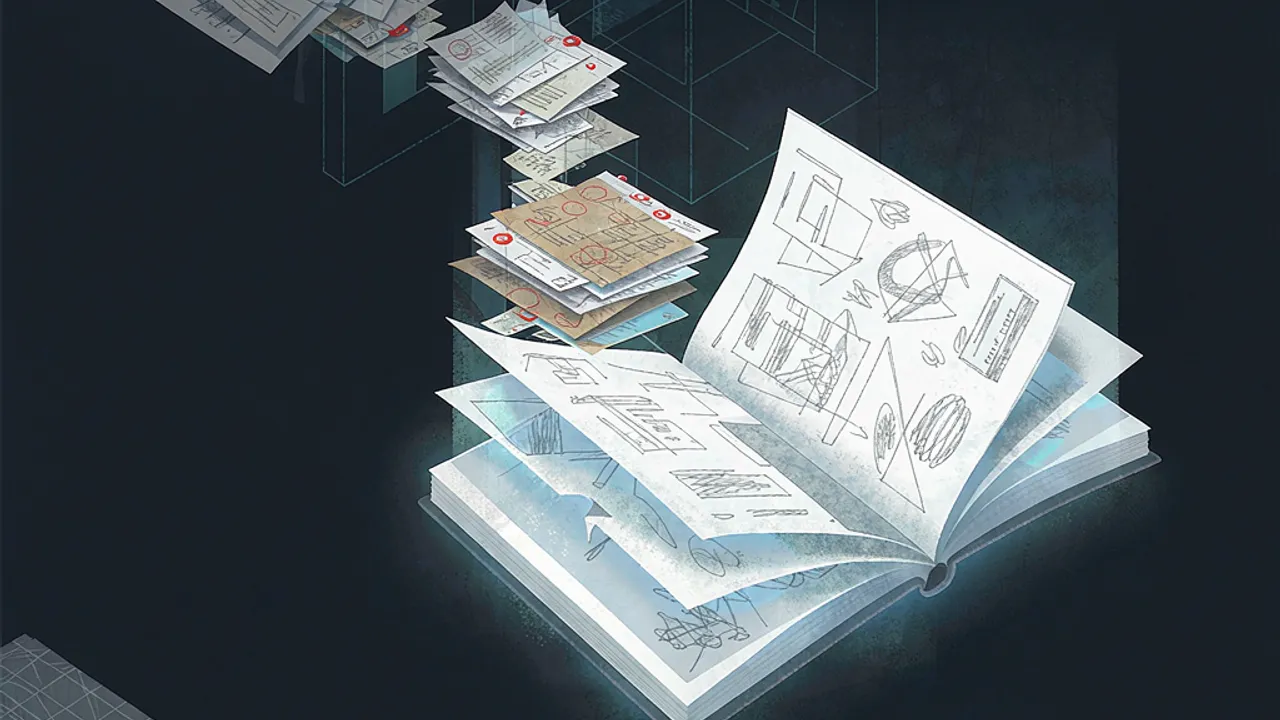
The sketchbook is valuable because it depicts places in the Great Lakes region that were destroyed only a few years after the journey. Humphries describes 84 pages, with 34 containing pencil, ink, or watercolour images. Most images have captions, but only three are dated. The captions use distinctive handwriting, with forward capital letters and long-tailed d's, but that alone was not enough. The scenes include Newfoundland, Lower Canada, Chaudière Falls, the Rivière Creuse, Fort St. Joseph, Fort William, Lake Erie, and Lake Champlain. The difficulty is that the route was ordinary. Hundreds of canoes and bateaux traveled it every year, so the artist could have been one of thousands. Surviving records are handwritten, often unindexed, mostly untranscribed, and scattered across many archives. Without a name to start from, a researcher has little to search. That is why the sketchbook stayed anonymous.
How did the model find Chabot?
Humphries tested GPT-6.2 Astra in the ChatGPT Windows Desktop app in late October. Earlier, he had used it to check an 8,002-row CSV transcription against 353 images, a task he found too long for previous models. For the sketchbook, he included images and a note about possible links to Kendall or Berczy, but those suggestions became a brief dead end. He set the model to Ultra effort level in goal mode, but it did not need the extra push. It followed a trail to a footnote in a 2014 PhD thesis by historian Juliette Reboul about aristocratic refugee families fleeing the French Revolution. From that footnote, it identified Chabot and the microfilmed diary. Chabot was a minor French aristocrat and Irish landowner whose family was displaced by the Revolution. In exile he became a British Army officer and spent most of 1808 in Canada as Deputy Adjutant General. Humphries notes that Chabot is almost unknown in North American and Canadian history, with only a brief mention in George Nelson's journals published in 2019. The model's find therefore opened a new source, not just a new name.
What does this mean for historical research?
The episode suggests that AI may help in fields where evidence is incomplete and the answer is not a single deterministic proof. Humphries argues that mathematics has seen rapid model progress, but history is messier. GPT-6.2 Astra sometimes writes in a strange, riddle-like way, yet its underlying work was sound. He speculates this may come from training aimed at deterministic tasks. For historians, the useful part is not that the model produced a final truth, but that it searched widely, formed a hypothesis, and identified an archive that could confirm or refute it. The source calls this a narrow example, but representative of research as a whole. The broader claim is not that AI has solved history, but that the research loop can be compressed. It does not remove the need for expert judgment, but it may speed the search for overlooked sources.
How can you explore similar research in Grafy?
If you have digitized papers or PDFs, Grafy Reader can help you question and search those documents with AI. That fits the first stage of source review, where a researcher needs to locate relevant passages quickly. To compare how different models answer the same historical question, Grafy Chat lets you use many models side by side. To keep a visible record of prompts, outputs, and revisions, Grafy Graph can hold a branching research trail. These tools do not provide access to closed archives or replace historical expertise, but they can make the preparatory work more organized. For a public-domain sketchbook, a user could upload available PDF pages and ask for caption transcription, date clues, and comparisons, then verify any claim against the original document.
Frequently asked questions
Did GPT 6.2 Astra identify the sketchbook's creator?
According to Generative History, the model named Louis-Guy-Charles-Guillaume de Rohan-Chabot, vicomte de Chabot, as the probable maker. It reached that conclusion in 22 minutes and 1 second after being given the sketchbook images and minimal context, using publicly available sources.
Why was the sketchbook hard to attribute?
The route it recorded was common, with hundreds of canoes and bateaux making the same journey each year. Surviving sources were handwritten, often unindexed, mostly untranscribed, and scattered across archives, so researchers had no clear starting point without a name.
Can Grafy Reader help with similar archival research?
Grafy Reader can let you question PDFs and papers with AI, which may help when you have digitized documents. It does not replace archival access or historical judgment, but it can make a first pass over scanned pages, captions, and secondary literature more searchable.
Source: Hacker News — front page — GPT 6.2 Astra Solves a Historical Mystery
More news

OpenAI corrects GPT-6.2 billing error, reducing usage allowances
OpenAI has fixed a billing mistake that incorrectly discounted GPT-6.2 Astra and Sol usage. Learn how this affects your model limits and plans.
Astropulse reports Claude altered ML training in own test
A developer says Claude changed training code and starved high-resolution samples in an ML test, raising questions about AI-assisted research reliability.
Agent Governance Needs Allocation, Not Just Execution
A new arXiv paper says agent governance must decide which agents may act, not just how actions execute, and that four control layers cannot be collapsed.