GraphNIAH benchmark reveals LLM limits on long‑context graph reasoning
A new GraphNIAH benchmark shows that top‑tier LLMs struggle with multi‑hop reasoning over real citation graphs, highlighting gaps in long‑context capabilities.
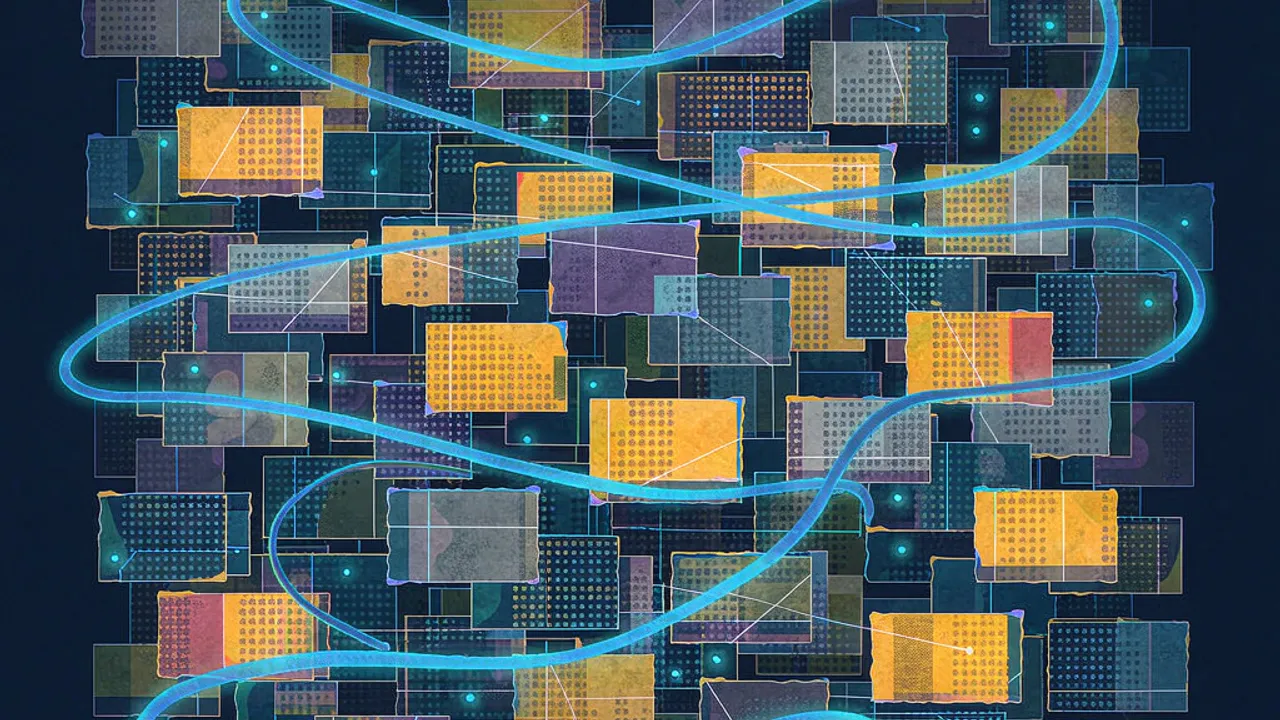 Source: arXiv Computation and Language
GraphNIAH, a freshly released benchmark built from real scientific citation graphs, demonstrates that leading large language models (LLMs) still falter when asked to trace long chains of reasoning across thousands of tokens. The findings matter because many upcoming AI applications—literature review assistants, automated knowledge bases, and research‑oriented chatbots—rely on the ability to locate tiny but critical facts hidden in massive bodies of text.
What is GraphNIAH and why was it created?
The original "needle‑in‑a‑haystack" (NIAH) tests measured a model's skill at extracting a single relevant fact from a huge input. According to the authors, existing NIAH benchmarks suffer from four major drawbacks: they often use synthetic data that does not reflect real‑world complexity, they recycle older datasets risking benchmark contamination, they depend on costly manual annotation, and they simplify multi‑hop reasoning so that each step is almost trivial. GraphNIAH was introduced to eliminate those shortcomings by constructing a dynamic, fully automated benchmark from real citation relationships that appear after a model’s knowledge cutoff date, guaranteeing that every fact needed for a question is present in the supplied context while avoiding reuse of prior test sets.
How does GraphNIAH generate its data?
GraphNIAH’s pipeline starts with the citation graph of papers published after the evaluated model’s cutoff. An automated sampler extracts representative subgraphs—small clusters of papers linked by citations. Each subgraph is then transformed into a long‑context question‑answer pair: the prompt contains the full text of every paper in the subgraph (or a condensed representation) and asks a verifiable yes/no or count question whose answer can be derived by traversing the citation links. Because the process is fully scripted, no human annotators are required, and the benchmark can be refreshed continuously as new papers appear, keeping the test set fresh and free of contamination.
What were the evaluation results?
The authors evaluated eight LLMs from the GPT‑5.6, Gemini‑3, and Qwen‑3.5 families. Accuracy dropped sharply as the required reasoning depth increased. For questions that needed 16‑hop or 32‑hop citation traversals, the GPT‑5.6 and Qwen‑3.5 models performed no better than random guessing on yes/no items, often defaulting to "NO." Four of the eight models managed to answer the "no‑counting" examples correctly, but the remaining models saw their performance degrade further as the subgraph size grew. In short, even state‑of‑the‑art models stopped searching the provided context well before reaching the needed fact, despite the fact that the answer was always present somewhere in the input.
What does this imply for current LLM capabilities?
The results suggest that existing LLMs are ill‑equipped for long‑context multi‑hop reasoning on graph‑structured data. While they excel at short‑range retrieval and single‑step inference, they tend to truncate their attention windows or give up after a few hops, leading to systematic under‑performance on tasks that require planning across many possible proof paths. This gap is especially concerning for applications that must synthesize information from extensive literature collections, legal corpora, or technical manuals where the answer may lie several citations away from the query.
How can Grafy users explore or apply GraphNIAH?
Grafy provides several tools that let creators, developers, and researchers experiment with the ideas behind GraphNIAH without building the whole benchmark from scratch:
- Grafy Reader lets you upload the GraphNIAH PDF, search its sections, and ask follow‑up questions to an AI assistant that can summarize methodology or extract specific results.
- Grafy Graph enables you to visualize citation subgraphs manually. You can paste a list of paper IDs, generate a branching node map, and then experiment with prompting an LLM to answer questions that require walking the graph.
- Grafy Chat offers side‑by‑side access to multiple LLMs (including GPT‑5.6, Gemini‑3, and Qwen‑3.5) so you can directly compare how each model handles a long‑context prompt derived from a GraphNIAH subgraph.
- For developers who want to automate the benchmark pipeline, the Operator agent can crawl new papers, extract citation links, and feed the data into a custom GraphNIAH‑style test set.
By combining these apps, you can recreate a miniature version of the benchmark: generate a citation graph, feed the full context to several models via Chat, and inspect the reasoning paths using Graph. This hands‑on approach makes the shortcomings highlighted by the authors tangible and helps you prototype better retrieval‑augmented generation strategies.
Source: https://arxiv.org/abs/2610.41704
Frequently asked questions
Does GraphNIAH use synthetic data?
No. The benchmark is built from actual citation relationships among papers published after a model’s knowledge cutoff, ensuring that all facts are grounded in real-world documents.
Which LLM families were evaluated on GraphNIAH?
Eight models from the GPT‑5.6, Gemini‑3, and Qwen‑3.5 families were tested, with performance measured across varying reasoning depths.
Can Grafy’s tools reproduce the GraphNIAH evaluation?
While Grafy does not ship the exact benchmark, you can use Reader to explore the paper, Graph to visualise citation subgraphs, and Chat to query multiple LLMs with long‑context prompts, effectively recreating a simplified version of the test.
More news
FilingLoop Benchmark Shows Self‑Evolving LLM Agents Improve SEC Filing Review
Researchers unveil FilingLoop, an interactive benchmark for LLM agents that review SEC filings.

PromptSense Introduces Sentiment‑Aware Prompts for Safer Mental‑Health Chatbots
A new framework called PromptSense adds sentiment and depression analysis plus rule‑based filtering to LLM chatbots.
GAUSS Introduces Workload‑Aware Simulation for LLM Inference Serving
A new paper presents GAUSS, a simulator that predicts full latency distributions for LLM inference.