LoopCache speeds up long‑context decoding in Looped Transformers
Researchers introduce LoopCache, a technique that removes stale speculation in looped transformers and cuts compute for long‑context generation.
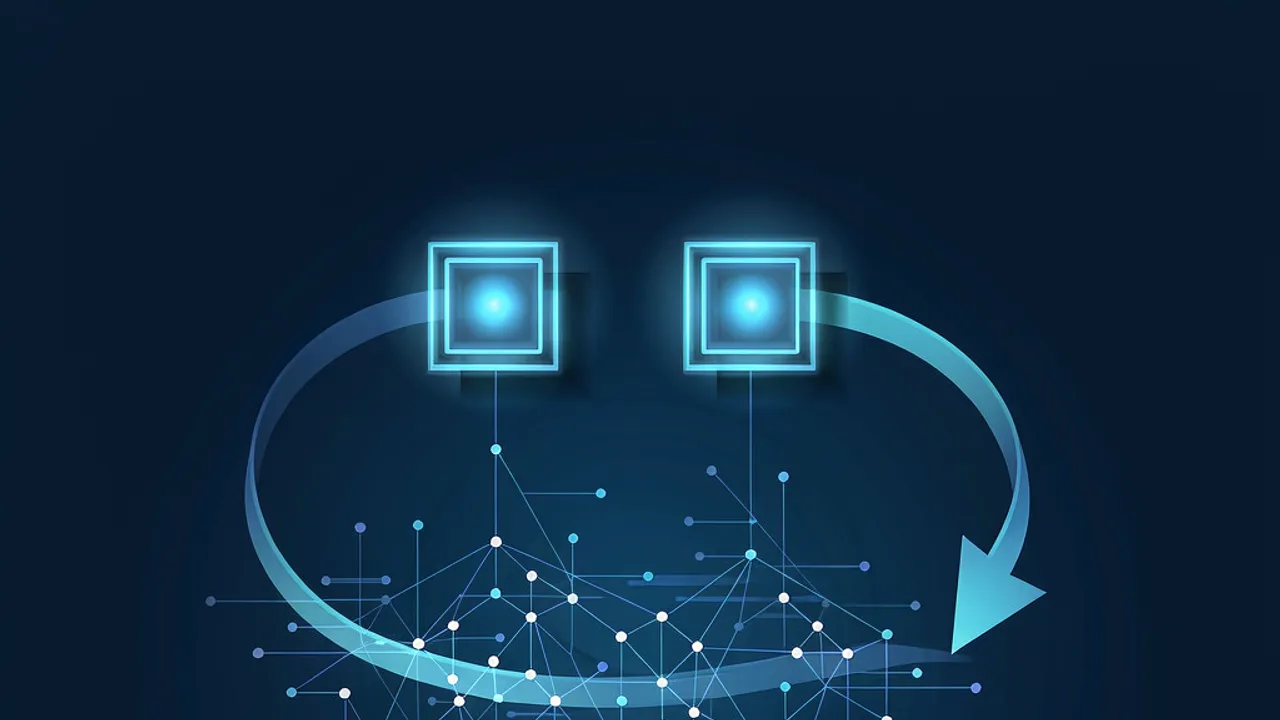 Source: Grafy Research Lab
LoopCache, a new method for accelerating self‑speculative decoding in looped transformers, was presented by Zizhuo Fu, Haochen Huang, Shengxuan Qiu, Linye Wei, Ziyu Tang, Runsheng Wang and Meng Li on arXiv (2026‑11‑19). The technique tackles two inefficiencies in existing wave‑style decoding pipelines, promising faster generation for models that reuse a single block many times.
What are Looped Transformers and why are they useful?
Looped Transformers achieve a large effective depth while keeping the model size modest. Instead of stacking many distinct layers, they repeat a weight‑shared block times, treating each repetition as a separate "loop". Each loop keeps its own key‑value (KV) cache, allowing the model to retain context across the recurrent steps. This design lets developers deploy compact models that can still handle very long sequences, which is attractive for on‑device inference and for scaling up context windows without exploding memory.
How do current self‑speculative decoding methods work and where do they fall short?
Wave‑style self‑speculative approaches such as WaveFront Decoding (WFD) and LoopSpec aim to reduce latency by drafting multiple tokens ahead of the final model pass. They pipeline draft and target tokens across several loops in a single step, effectively overlapping computation. However, according to the authors, these methods have two critical drawbacks. First, they only draft at fixed loop boundaries, ignoring the fact that predictions can shift between loops. Second, they do not adjust drafts when intermediate token probabilities change, leading to wasted compute on trajectories that become stale.
What is LoopCache and how does it improve decoding efficiency?
LoopCache introduces a dynamic caching mechanism that updates the KV cache for each loop as speculative tokens are generated. Instead of committing drafts only at preset loops, LoopCache monitors prediction changes and refreshes drafts when necessary. This adaptive behavior prevents the model from pursuing outdated token sequences, reducing the number of redundant forward passes. In practice, the authors report that LoopCache eliminates the stale‑trajectory waste present in WFD and LoopSpec, delivering faster decoding especially for very long contexts where many loops are involved.
What are the practical implications for developers and researchers?
For creators building applications that require long‑form generation—such as story writing assistants, code completion tools, or scientific summarizers—LoopCache offers a concrete way to cut inference time without sacrificing output quality. Researchers studying efficient transformer architectures can now experiment with a more realistic speculative decoding baseline that accounts for intermediate changes. The method also aligns well with hardware that supports fast KV cache reads and writes, meaning existing inference pipelines may adopt LoopCache with minimal engineering effort.
How can you explore LoopCache with Grafy?
Grafy’s Reader app lets you load the arXiv PDF, ask natural‑language questions about the methodology, and retrieve exact passages without leaving the workspace. You can also use Code to prototype a small looped‑transformer implementation and plug in the LoopCache logic described in the paper, testing it on custom prompts. For visualizing how drafts evolve across loops, the Graph tool can map the speculative token flow, letting you see where stale trajectories would have been pruned. These apps provide a low‑friction path to experiment with the ideas before integrating them into production models.
Source: https://arxiv.org/abs/2611.24301
Frequently asked questions
Does LoopCache completely replace WaveFront Decoding?
LoopCache addresses specific inefficiencies in WaveFront Decoding but does not discard the entire WFD framework. It can be layered on top of WFD to make the speculative drafts more responsive to intermediate prediction changes.
Can I use LoopCache with any transformer model?
The technique is designed for looped transformers that maintain per‑loop KV caches. While it could be adapted to other architectures with similar caching mechanisms, its biggest gains appear when the model repeatedly applies the same block across many steps.
How much speedup does LoopCache deliver?
The paper reports that LoopCache removes the compute wasted on stale speculative paths, leading to noticeable latency reductions for long‑context generation. Exact speedup numbers depend on the model size, number of loops , and hardware configuration.
More news

Movie2Game-Bench Introduces a Holistic Metric for Turning Films into Playable Games
A new benchmark, Movie2Game-Bench, evaluates film‑to‑game adaptations beyond basic playability.

RSI‑Prime Dataset Enables LLMs to Train Other Models
A new arXiv dataset, RSI‑Prime, provides 350 full training trajectories to teach large language models how to conduct model‑training.
Resolution as Attention proposed to boost agent memory efficiency
Researchers introduce Resolution as Attention (RAA), a method that allocates perceptual detail to past interactions.