New Diffusion Method Improves Graph Signal Generation
Researchers have introduced Graph-Aware Diffusion (GAD) to better model data on networks. Learn how this improves forecasting and recommendations.
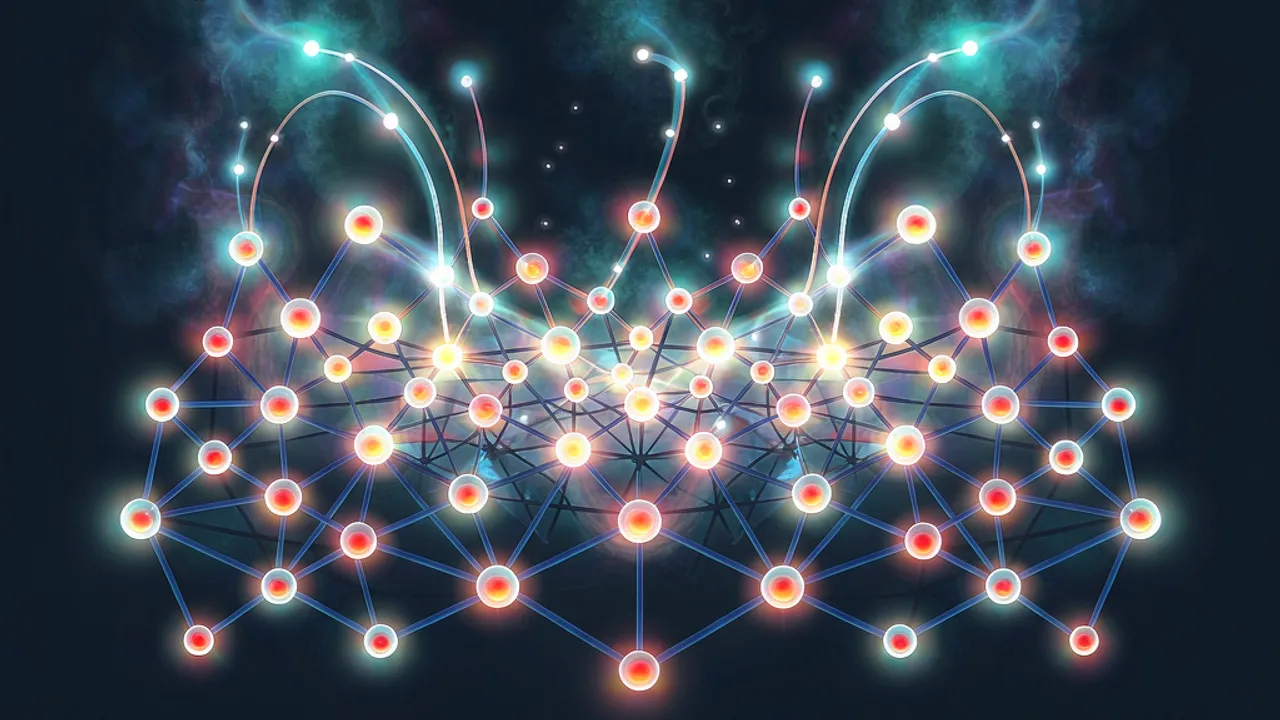 Source: Grafy Research Lab
Researchers have developed a new approach to generative modeling that accounts for the underlying structure of networked data. By integrating graph topology directly into the diffusion process, the new method aims to solve common inaccuracies in how AI models handle signals like traffic flow or consumer behavior.
What is Graph-Aware Diffusion (GAD)?
Standard diffusion models typically treat data points as independent entities. When these models are applied to graphs—networks where data exists on nodes connected by edges—the forward process of adding noise usually happens to each node in isolation. According to the paper by Vimal K B et al., this approach forces the neural network to do the heavy lifting of learning the relationships between connected nodes from scratch, which is computationally expensive and difficult when data is sparse.
Graph-Aware Diffusion (GAD) changes this by using a heat diffusion process driven by Gaussian noise. Instead of adding noise independently to every node, GAD allows the noise to propagate across the graph. This process effectively smooths the signal, attenuating high-frequency components faster than low-frequency ones. Because the forward process is inherently tied to the graph's structure, the model's prior already contains information about node dependencies, allowing the denoiser to focus on how the data deviates from the expected graph patterns.
How does MASS optimize the noise schedule?
In diffusion models, the noise schedule determines the signal-to-noise ratio (SNR) at different stages of the process. In traditional graph-based diffusion with a shared rate, the SNR for different graph frequencies can diverge exponentially. This means high-frequency information might be lost too quickly or low-frequency information might remain too noisy, making it hard for the model to learn effectively.
To address this, the authors propose Mode-Adaptive SNR Scheduling (MASS). Rather than applying a single diffusion rate to the entire graph, MASS assigns a specific diffusion rate to each graph frequency. The goal is to ensure that all frequencies share the same SNR at every point in time. For signals that are stationary across the graph, this approach equalizes the normalized error of the optimal linear denoiser across all frequencies, providing a more balanced learning signal.
What are the performance benefits of this approach?
Testing the GAD and MASS framework against standard methods yielded significant improvements across several practical domains. According to the research, the model showed the following results:
- Recommendation Systems: Accuracy in recommendation tasks improved by 5% to 19%.
- Traffic Imputation: The Root Mean Square Error (RMSE) for imputing missing traffic sensor data was reduced by up to 7.8%, even while using half the number of reverse steps.
- Forecasting: The model achieved lower Mean Absolute Error (MAE) and RMSE in forecasting tasks using only 3 reverse steps.
Additionally, the researchers found that MASS significantly reduces the "stiffness" of the reverse stochastic differential equation (SDE). In mathematical terms, the stiffness of the reverse SDE for MASS has a logarithmic upper bound relative to the condition number of the shifted Laplacian, whereas shared-rate methods have a linear lower bound. This reduction in stiffness suggests that the model is more stable and efficient during the sampling process.
Why does graph topology matter for AI?
Many real-world datasets are not simple grids or sequences; they are complex networks. For example, a sensor network for monitoring city traffic or a social network representing user interactions are defined by their connections. If an AI model ignores these connections during the initial noise-addition phase, it misses a vital source of information.
By using the eigenvectors of the graph Laplacian to act as Fourier modes, GAD treats the graph's structure as a fundamental part of the signal's geometry. This allows the model to treat the graph not just as a container for data, but as a mathematical framework that guides how information is generated and recovered.
How can researchers explore these concepts?
For those interested in the mathematical foundations of graph signals, spectral analysis, or the nuances of diffusion-based generative modeling, these topics can be explored through deep technical reading. You can use Reader to upload and query academic papers on graph neural networks or diffusion theory to extract specific mathematical proofs and experimental results.
Frequently asked questions
What is the main difference between GAD and standard diffusion models?
Standard diffusion models add noise to data points independently, ignoring any underlying connections between them. In contrast, Graph-Aware Diffusion (GAD) uses a heat diffusion process that allows noise to propagate across the edges of a graph, ensuring the model respects the network's topology during the generation process.
How does MASS improve the training process?
Mode-Adaptive SNR Scheduling (MASS) assigns unique diffusion rates to different graph frequencies so that they all maintain the same signal-to-noise ratio. This prevents high-frequency data from being lost too quickly and ensures the denoiser receives a consistent level of information across all components of the signal.
In what real-world tasks can this technology be applied?
This technology is particularly useful for tasks involving networked data, such as predicting traffic flow from road sensors, forecasting future values in time-series graphs, and improving the accuracy of product recommendation engines by better understanding the relationships between different users and items.
Source: Vimal K B, Sergio Rozada, Antonio G. Marques, Elvin Isufi, and Hadi J. Rad, "Graph Signal Generation via Graph-Aware Diffusion Models"
Source: Grafy Research Lab — Graph Signal Generation via Graph-Aware Diffusion Models
More news
AI Memorization Moves from Semantic Gist to Verbatim Recall
Researchers have identified a distinct abstraction phase in diffusion models where they learn semantic concepts before achieving exact image reproduction.
New Theory Links Fractional Diffusion to Brownian Twins
Researchers have discovered that fractional diffusion models can be reduced to classical Brownian models, simplifying how we understand noise memory.
New interpretable embeddings use decision columns for search
Researchers propose using decision columns as embeddings to create auditable, interpretable search and entity matching systems for business data.