Only four Uber rides were booked by AI agents in busiest week
Uber said only four rides were booked by AI agents in its busiest week, versus 320 million trips and orders. Here's what it signals for agents.
 Source: TechCrunch — AI
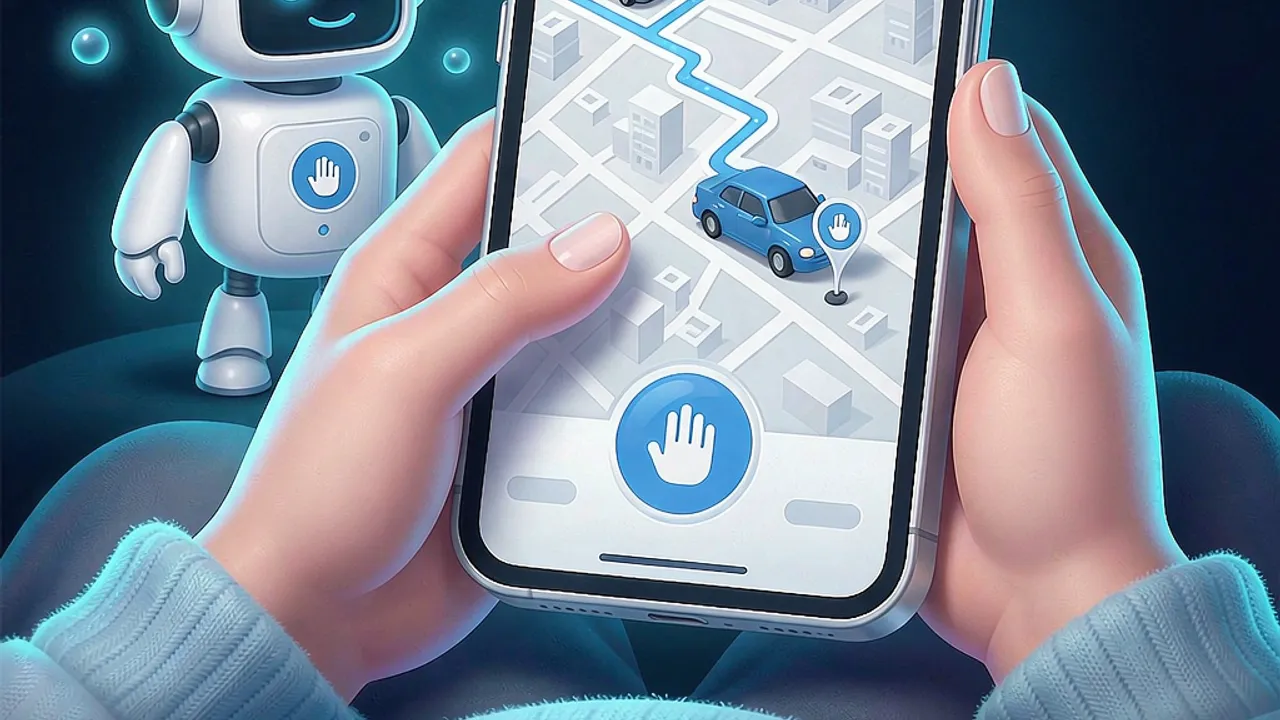
Uber said only four rides were booked through an AI agent during its busiest week in October, the week of Halloween. The figure, reported by TechCrunch from Uber's third-quarter earnings call, shows how far personal agents remain from handling everyday transactions at scale despite rising hype around them.
For creators, developers and researchers building or testing agentic systems, the contrast matters more than the headline number alone. Uber reported hundreds of millions of trips and orders in the same period, yet agent-initiated transactions were a rounding error. That gap raises practical questions about where agents create real value, how quickly users will delegate purchases, and whether speed and habit in existing apps leave much room for an intermediary to improve the experience.
How many rides did AI agents book for Uber?
According to TechCrunch, Uber disclosed the figure on its third-quarter earnings call on Wednesday. During the week of Halloween, described by the company as its busiest week in October, only four rides were ordered through an AI agent.
Uber chief financial officer Balaji Krishnamurthy gave analysts the wider context for that week. The company handled around 320 million trips and orders across Uber and Uber Eats combined. Set against that total, four agent-booked rides represent an extremely small share, and they were disclosed specifically to show the current scale of agent use rather than to suggest rapid adoption.
The disclosure is notable because it comes from a large, consumer-facing platform that already has the underlying transaction infrastructure agents would need. Uber does not have to persuade users to try ride-hailing or food delivery in general. The question being tested is narrower: whether people will let a personal AI agent carry out those familiar tasks on their behalf, and whether the company can observe that behaviour in its own systems.
How did Uber Eats compare in the same week?
Food delivery showed somewhat higher agent activity than ride-hailing, but the volume remained small relative to overall demand. According to TechCrunch, Krishnamurthy said around 500 Uber Eats orders were placed by an AI agent during the week of Halloween.
That is more than a hundred times the number of agent-booked rides, yet still tiny compared with the roughly 320 million trips and orders handled across both businesses. The difference between the two services may invite speculation, but the source does not explain why food orders were more common through agents than rides. It would be unsafe to infer a reason from the numbers alone.
What the comparison does establish is that agent use was not zero across Uber's platform. People were already using some form of AI agent to transact, at least in limited numbers. At the same time, the scale was so small that neither service showed a material shift in how customers chose to order.
CEO Dara Khosrowshahi characterised the overall picture as very early, with limited traction so far, while also saying the company hoped traction would increase. That framing matters for readers assessing the market. The numbers describe a starting point, not a settled pattern, and Uber's own leadership presented them as an early signal rather than a verdict on agents.
Why is agent use so low when the apps are already fast?
One explanation offered on the call, according to TechCrunch, is that the existing apps already complete the relevant tasks quickly. Khosrowshahi pointed to an average booking time of about 50 seconds for a ride in the Uber app. Reordering a favourite food item through Uber Eats took about 90 seconds on average.
If a user can book directly in under a minute, an agent has less obvious time to save. It may still offer other benefits, such as coordinating across services or handling a task while the user is doing something else, but the source does not provide evidence that users are seeking those benefits for rides or food orders at scale. The reported timings help explain why delegation may not feel necessary for these particular transactions.
Habit may also play a role, although the source does not quantify it. TechCrunch reported a similar pattern at DoorDash, which said on its earnings call the previous week that it had received only a few hundred orders from AI agents so far, with most customers still ordering through the DoorDash app. The parallel suggests the Uber figures are not an isolated case.
For builders, the lesson is that technical access to a transaction is not the same as a compelling reason to delegate it. An agent that adds steps, uncertainty or delay to a task that already takes less than a minute faces a high bar, especially when the user trusts the native app and its payment, location and history features.
What did Uber say about AI agents more broadly?
Despite the low transaction numbers, Khosrowshahi was described by TechCrunch as bullish about agents in general. He said Uber viewed agents as another opportunity to reach its platform and expected them to be a net positive for demand across its ecosystem.
He also noted that there are currently around eight major AI assistants on the market, and said he expected that number to grow to more than 10 over time. In addition, he said every AI system company was talking to Uber. Those comments indicate that Uber is engaging with the companies building assistants, even though agent-driven orders remain rare.
The wider context in the TechCrunch report helps explain why Uber is paying attention. Personal AI agents that can act on a user's behalf, rather than only answer questions, have attracted significant hype and investment. TechCrunch cited Instinct, founded last year and most recently funded at a $10 billion valuation, and Meta's Muse, which the company said became the No. 1 app in Apple's U.S. App Store last month and topped 10 million users, with many people using it to shop and transact with businesses.
Large technology companies are also offering agents. According to TechCrunch, OpenAI, Anthropic, Google and SpaceXAI, associated with Grok, now offer their own AI agents, alongside numerous smaller startups. That competitive landscape makes it more likely that agents will be distributed through major assistants, but the Uber and DoorDash figures show that distribution alone has not yet translated into large numbers of completed transactions.
What does this mean for other platforms and agent startups?
For other platforms, the figures provide a useful reality check. A startup or established service may be technically reachable by an agent, yet still see only a small number of agent-initiated orders if users prefer the native app. DoorDash's disclosure of a few hundred agent orders, reported by TechCrunch, points in the same direction as Uber's four rides and 500 food orders.
For agent startups, the challenge is to identify tasks where delegation offers a clear advantage over opening an app. The source does not identify such a task for ride-hailing or food delivery, and the reported 50-second and 90-second averages show why those use cases are difficult. Tasks that are longer, more repetitive, more complex or spread across multiple services may present a different proposition, but readers should not assume that success in one category will automatically transfer to another.
There is also a measurement lesson. Public companies are beginning to report agent transaction volumes in concrete terms, which makes it possible to compare claims about agentic commerce with observed behaviour. Uber's disclosure is valuable not because four rides prove agents will fail, but because it provides a dated, company-reported baseline against which future growth can be judged.
Khosrowshahi's expectation of more than 10 major AI assistants suggests he believes the agent layer will expand, even if current transaction volumes are low. Whether that expansion leads to meaningful demand for platforms such as Uber will depend on adoption, user trust and whether agents can complete tasks more effectively than existing interfaces. The earnings-call comments, as reported by TechCrunch, support continued experimentation rather than a conclusion that the market has already been decided.
How can readers explore agentic tasks in Grafy?
Readers who want to understand what an agent can and cannot do in practice can test the concept in a controlled way with Grafy Operator, a browsing agent that carries out web tasks. That makes it a relevant place to explore the difference between an assistant that answers a question and one that attempts to complete a multi-step task on a website.
For broader comparison, Grafy Chat lets readers put questions to many AI models side by side, which can help when assessing how different assistants approach the same request. Readers who want to examine the underlying reporting more closely can also use Reader to search and question PDFs and papers with AI, for example when reviewing earnings material or research related to agent adoption.
Those tools do not replicate Uber's internal transaction data, and they should not be treated as evidence of how many people use agents to book rides. Their value is practical: they let readers experiment with agent behaviour, compare model responses and study source documents while the market evidence remains limited.
Frequently asked questions
How many Uber rides were booked by an AI agent during Uber's busiest week in October?
According to TechCrunch, Uber said only four rides were booked through an AI agent during its busiest week in October, the week of Halloween. The company reported the figure on its third-quarter earnings call, alongside around 320 million trips and orders across Uber and Uber Eats that week.
How many Uber Eats orders were placed by an AI agent during the week of Halloween?
According to TechCrunch, Uber chief financial officer Balaji Krishnamurthy said around 500 Uber Eats orders were placed by an AI agent during the week of Halloween. That was higher than the four agent-booked rides, but still small compared with the combined total of trips and orders.
Did Uber say AI agents will not matter for demand on its platform?
No. According to TechCrunch, CEO Dara Khosrowshahi said Uber viewed agents as another opportunity to reach its platform and expected them to be a net positive for demand. He described current agent traction as very early and limited, while expressing hope that it would grow.
Source: TechCrunch — AI
Source: TechCrunch — AI — Almost no one uses AI agents to book their Uber, company says
More news

NVIDIA Releases Auto Ontology to Ground AI Agent SQL Queries
NVIDIA has launched Auto Ontology, an open-source library that creates a semantic layer for enterprise data. Learn how it improves AI agent accuracy.

Architectural patterns for the enterprise AI context layer
New architectural insights suggest moving beyond simple RAG to build precise enterprise context layers. Learn how to optimize AI agent performance.

DeepSeek Open-Sources dsh-superagent Coding Agent
DeepSeek has released dsh-superagent, an open-source router-worker agent designed to accelerate coding tasks through parallelized worker sessions.