PANO Introduces Parallel Latent Aggregation for Neural PDE Solvers
Researchers unveil PANO, a Transformer‑based neural operator that uses multiple latent aggregation patterns to retain more physical information when solving.
 Source: Grafy Research Lab
What is PANO and why it matters
The paper PArallel Latent Space Neural Operator (PANO) was released on arXiv on 18 November 2026. According to the authors, Zijiang Yang, Xiaomeng Wu, Chen Kuang and Dongmei Fu, the method tackles a persistent bottleneck in Transformer‑based neural operators for partial differential equations (PDEs): the loss of physical information when observations are compressed into a single set of latent tokens. By keeping more of the original physics visible to the model, PANO promises higher fidelity and scalability for simulations that rely on PDE solvers, such as fluid dynamics, climate modeling, and structural analysis.
How does PANO differ from prior neural‑operator approaches?
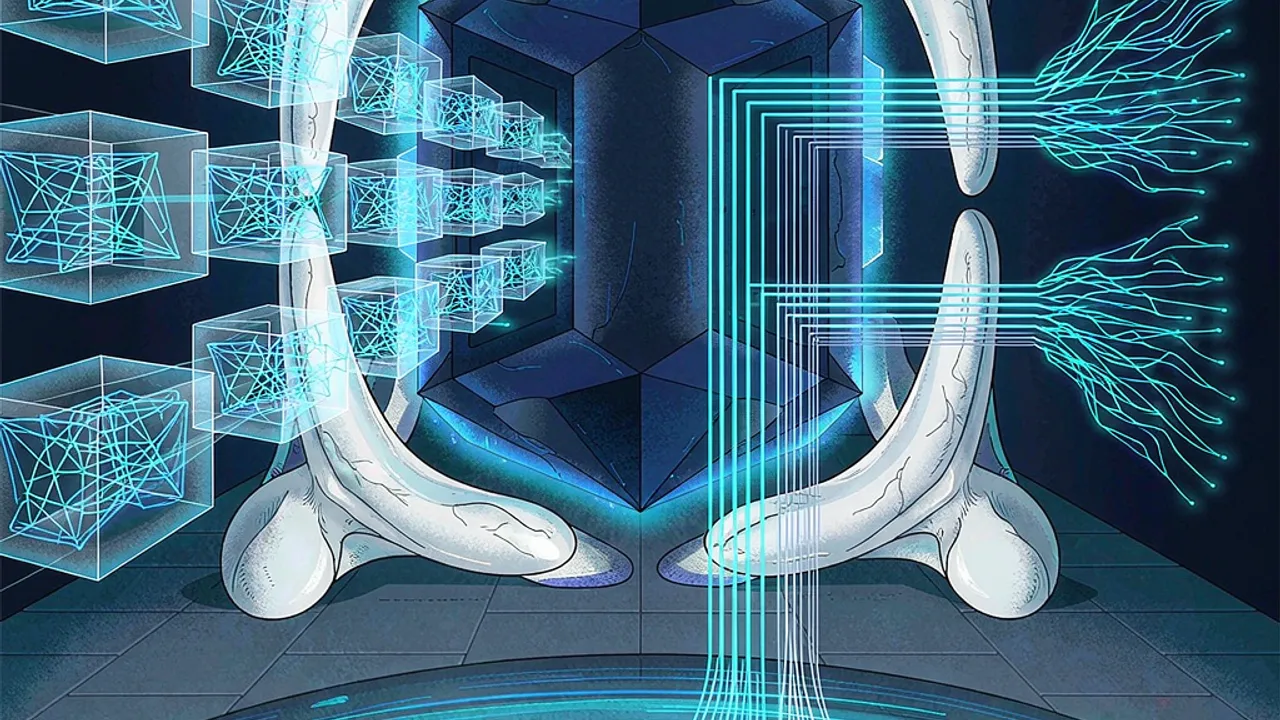
Existing neural operators typically aggregate all observations with one pattern—often a simple averaging or pooling step—before feeding them to a Transformer. The authors note that this single‑pattern compression makes any physical signal that does not align with the chosen pattern invisible in the latent space, limiting the operator’s ability to learn complex interactions. PANO introduces parallel aggregation: multiple, distinct token‑generation pathways run side‑by‑side, each preserving a different facet of the observed data (e.g., local gradients, global averages, directional flows). These parallel latent tokens are then jointly processed by the Transformer, allowing the model to reason over a richer set of physical cues.
Reported benefits and potential applications
While the full benchmark suite is detailed in the 39‑page paper, the authors highlight three key advantages:
- Improved accuracy on benchmark PDE problems, especially those with heterogeneous spatial features.
- Reduced sensitivity to the choice of aggregation pattern, making the model more robust across varied datasets.
- Scalable memory usage, because the parallel tokens are still limited in number, avoiding the explosion of memory that would come from naïvely increasing token counts. If these claims hold in practice, PANO could become a go‑to component for engineers building surrogate models of expensive simulations, researchers exploring high‑resolution climate forecasts, and developers integrating physics‑aware AI into real‑time control systems.
How developers can experiment with PANO using Grafy
Grafy offers several tools that line up naturally with the workflow described in the paper:
- Reader – Load the arXiv PDF directly into /reader to ask the AI questions about specific sections, extract equations, or generate a concise summary for quick reference.
- Code – Use the AI‑assisted coding studio at /code to clone the authors’ repository, adapt the parallel aggregation modules, and run the provided training scripts on Grafy’s cloud compute.
- Graph – Track each experiment’s hyper‑parameters, dataset versions, and resulting metrics in a branching graph at /graph. This visual history makes it easy to compare single‑pattern baselines against the new parallel setup.
- Chat – When you hit a roadblock, the multi‑model chat at /chat can suggest debugging tips, point to relevant literature, or even generate boilerplate PyTorch code for the parallel tokenizers. By chaining these apps, a researcher can go from reading the paper to a reproducible training run without leaving the Grafy workspace.
When should you consider adopting PANO?
PANO is most advantageous when your PDE data exhibits multiple scales or directional biases that a single aggregation step cannot capture. Examples include:
- Turbulent flow fields where local vortices coexist with large‑scale circulation.
- Geophysical simulations with sharp material interfaces (e.g., land‑sea boundaries).
- Electromagnetic problems where both field magnitude and curl are critical. If your current neural operator struggles with such heterogeneity, swapping in the parallel latent encoder described in PANO may yield noticeable gains with only modest additional compute.
Limitations and open questions
The authors acknowledge that the parallel aggregation introduces extra architectural complexity, which can increase training time modestly. Moreover, the method has been evaluated primarily on synthetic benchmark suites; real‑world deployment in industrial CFD or weather models remains to be demonstrated. Future work could explore adaptive selection of aggregation patterns based on data characteristics, or combine PANO with mesh‑free discretizations for even greater flexibility.
Source: https://arxiv.org/abs/2611.22782
Source: Grafy Research Lab — PANO: Parallel Latent Space Neural Operator for Solving PDEs
More news

KV‑LTM Introduces Persistent Per‑Session KV Caches for Personal Assistant Memory
Researchers propose KV‑LTM, a tier that stores raw session text and its KV cache to cut repeat pre‑fill work in AI assistants.
Anthropic prices IPO at $83 a share, valuing the AI firm at $1.5 trillion
Anthropic filed its S‑1 on Nov 18, setting the IPO price at $83 per share and a $1.5 trillion valuation.
Learned Multigranular Memory Retrieval Boosts Small LLM QA Performance
A new paper introduces LMMR, a learned multigranular memory retrieval method that trims input to under 400 tokens while raising F1 scores on HotpotQA and other.