Perplexity Computer adds Multiagent, 16 AI agents cross‑checking work
Perplexity’s Computer platform now offers a Multiagent tier that runs a lead AI orchestrator alongside up to 16 Claude.
 Source: MarkTechPost
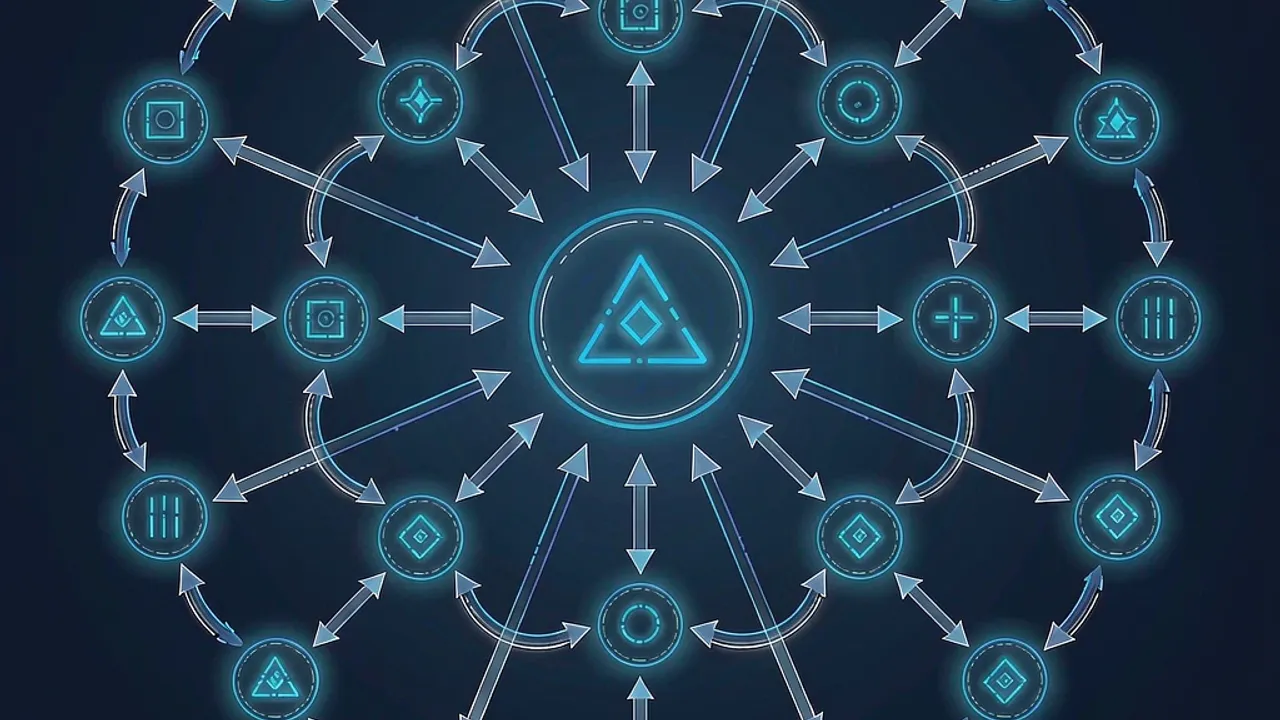
Perplexity announced a new tier for its Computer platform called Multiagent, which lets a lead AI orchestrator run up to sixteen subsidiary agents drawn from Claude, GPT and Gemini families. The agents exchange their intermediate results and cross‑check each other's conclusions, a design aimed at reducing hallucinations and improving answer fidelity for demanding queries.
What is the Multiagent feature and why does it matter?
According to MarkTechPost, Multiagent sits one level above the existing Ultra effort tier. While Ultra already allocates more compute to a single model, Multiagent adds a coordination layer that can invoke many models in parallel. The lead agent acts as a supervisor, delegating subtasks, aggregating responses, and prompting the sub‑agents to critique one another. This architecture is intended to catch errors early, especially when answering multi‑step questions or when the answer depends on disparate sources of knowledge.
How does the lead agent manage up to 16 agents?
The lead agent receives the user’s prompt and first decides how to break the problem into smaller pieces. It then spins up a set of worker agents—each instantiated on a different underlying LLM (Claude, GPT, Gemini). Workers process their assigned piece, return a draft, and the lead agent requests peer reviews. If a worker’s output conflicts with another’s, the lead agent can ask for clarification, request revisions, or run a consensus algorithm before producing the final answer. This loop repeats until the lead agent deems the answer self‑consistent.
Which models are involved and what does “cross‑checking” entail?
Per the source, the Multiagent tier mixes models from three major providers:
- Claude (Anthropic) – known for nuanced instruction‑following.
- GPT (OpenAI) – the most widely used conversational model.
- Gemini (Google) – strong at reasoning and factual retrieval.
Cross‑checking means that after a worker finishes its task, the lead agent asks other workers to evaluate the result. For example, if a Claude instance produces a numeric answer, a Gemini worker might verify the calculation, while a GPT worker checks the logical flow. Discrepancies trigger a refinement request, and the lead agent records which model’s answer was ultimately chosen, providing a traceable audit trail.
What practical benefits does this bring for users?
The primary promise is higher reliability. By forcing multiple models to review each other, the system reduces the chance that a single model’s hallucination propagates to the final output. Users tackling complex, multi‑step problems—such as legal analysis, technical troubleshooting, or data synthesis—can expect more consistent answers. Additionally, the architecture can surface differing perspectives, giving creators a richer set of viewpoints to choose from. For developers, the tier offers a built‑in ensemble method without needing to code custom orchestration logic.
How can Grafy users experiment with similar multi‑agent workflows?
Grafy does not yet provide an out‑of‑the‑box “Multiagent” tier, but its Graph app lets you build branching prompt trees that mimic the supervisory‑worker pattern. You can create a root node that represents a lead prompt, then attach child nodes that call different models via the Chat app (Grafy Chat). Each child node can be configured to use Claude, GPT, or Gemini models, and the parent node can be set to aggregate the children’s outputs, request revisions, or apply a simple voting scheme. The resulting graph visualizes the flow of information, making it easy to iterate on prompt design and see where models agree or diverge.
For a hands‑on example, start a new project in Graph (Grafy Graph). Create a root prompt like “Summarize the key findings of the attached PDF and list any contradictions.” Add three child prompts that each call a different model to perform the summarization. Then add a fourth node that asks each child’s output to be critiqued by the other two models. Finally, add a consolidation node that selects the most consistent statements. This workflow reproduces the essence of Perplexity’s cross‑checking without requiring any additional infrastructure.
What are the limitations and future directions?
While Multiagent reduces individual model errors, it also increases latency and cost because multiple API calls are made for each user query. Perplexity’s pricing page (not quoted here) likely reflects this higher resource consumption. Moreover, the effectiveness of cross‑checking depends on the diversity of the underlying models; if all workers share similar training data, they may repeat the same mistake. Researchers are exploring meta‑learning techniques that could dynamically select the most complementary models for a given task.
Grafy’s roadmap includes tighter integration of multiple model providers within a single workspace, which could eventually enable native multi‑agent orchestration similar to Perplexity’s approach. Until then, creators can leverage the existing Chat and Graph tools to prototype their own ensembles, and the Reader app can be used to feed documents into the workflow for evidence‑based reasoning.
Source: https://www.marktechpost.com/2026/11/17/perplexity-computer-multiagent-effort-level/
Frequently asked questions
How many AI agents can Perplexity’s Multiagent tier run simultaneously?
The Multiagent tier can orchestrate up to sixteen subsidiary agents under a single lead agent, allowing a mix of Claude, GPT and Gemini models to work together on a query.
Does the cross‑checking process guarantee error‑free answers?
Cross‑checking reduces the likelihood of hallucinations by requiring multiple models to validate each other, but it does not eliminate all errors. The final answer still depends on the quality of the underlying models and the consistency of their judgments.
Can Grafy replicate Perplexity’s Multiagent behavior today?
Grafy users can approximate the behavior using the Graph app to build a supervisory‑worker prompt structure and the Chat app to call different models. This manual setup provides similar cross‑checking capabilities without a dedicated Multiagent service.
Source: MarkTechPost — Perplexity Computer Adds Multiagent: Up to 16 AI Agents That Cross-Check Work
More news
Anthropic prices IPO at $83 a share, valuing the AI firm at $1.5 trillion
Anthropic filed its S‑1 on Nov 18, setting the IPO price at $83 per share and a $1.5 trillion valuation.

Study Finds Confidence Scores Don't Guarantee Better LLM Answers
Researchers show that confidence signals can rank correct responses but often fail to improve outcomes.

Largest US school districts weigh dropping Google Search over AI mandate
New York, Los Angeles and Chicago school districts are evaluating alternatives to Google Search after Google announced it will disable Search for schools.