PoVi framework aims to bridge poetry and video generation
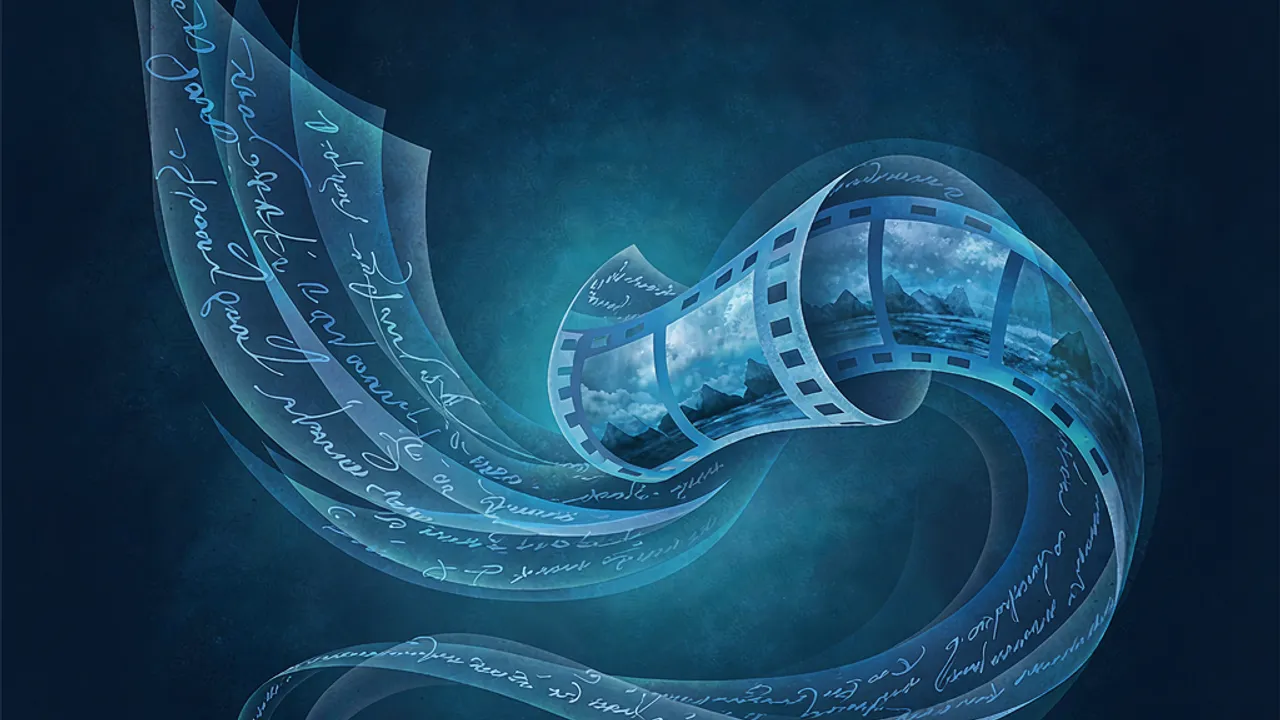
Researchers have introduced PoVi, an agentic framework designed to transform complex, metaphorical poetry into coherent, grounded video content.
 Source: Grafy Research Lab
Generating video from poetry presents a unique challenge for artificial intelligence because poetic language is rarely literal. Unlike standard descriptive prompts, poetry relies on high levels of compression, cultural context, and figurative expressions like metaphors and imagery to convey meaning. To address this, researchers have introduced PoVi, an agentic framework and benchmark designed for grounded poetry-to-video generation.
What is the PoVi framework?
According to the research paper by Yuxia Zhu et al., PoVi is an agentic framework that moves beyond simple text-to-video translation. Instead of attempting to map words directly to pixels, the system treats the process as a multi-step reasoning task. The framework aims to reconstruct the underlying semantics of a poem into an "evidence-bounded representation."
This representation serves as a foundation that the agent uses to progressively build a visual narrative. According to the authors, the process involves transforming these semantic insights into several distinct layers: narration, interpretation, character assets, and finally, the audiovisual realization. By breaking the task down, the framework attempts to ensure that the resulting video is not just visually impressive, but semantically faithful to the original poem.
How does the system handle figurative language?
One of the primary hurdles in poetic AI generation is the gap between what is said and what is meant. A poem might mention "the weeping willow" not just as a botanical subject, but as a symbol of sorrow. Standard video models often struggle with this distinction, frequently defaulting to literal interpretations that miss the emotional or cultural weight of the text.
PoVi addresses this by emphasizing "knowledge grounding." The authors note that poetic meaning is often deeply embedded in historical and cultural knowledge. The PoVi framework is designed to evaluate and implement semantic grounding, which allows the agent to interpret metaphors and non-literal expressions more accurately. This ensures that the discourse coherence—the logical and emotional flow of the video—remains intact throughout the generated sequence.
What metrics are used to evaluate PoVi?
Because poetry-to-video generation is a highly subjective and complex task, the researchers developed a specific benchmark to measure success. The PoVi benchmark evaluates the output across three critical dimensions: semantic grounding, discourse coherence, and audiovisual realization.
Semantic grounding measures how well the visual content reflects the actual meaning of the poem, including its metaphors. Discourse coherence assesses whether the video tells a consistent story or follows a logical progression of ideas. Finally, audiovisual realization looks at the technical quality of the generated video and how well the sound and visuals work together to support the poetic intent. This multi-faceted approach allows researchers to pinpoint exactly where an agent succeeds or fails in the creative process.
Why does agentic generation matter for creators?
Traditional generative models often act as "black boxes," where a user provides a prompt and receives a single output. An agentic approach, like the one proposed in the PoVi paper, introduces a layer of reasoning and planning. In practice, this means the AI acts more like a director or a production studio, making decisions about character design, scene transitions, and thematic consistency.
For creators, this shift from simple prompting to agentic workflows could mean more control over the nuance of a production. Instead of fighting with a model to understand a metaphor, an agentic system can theoretically "understand" the intent first and then execute the technical steps required to realize that intent visually. This moves AI closer to being a collaborative partner in complex storytelling rather than just a tool for asset generation.
How can this technology be applied in creative workflows?
While the PoVi framework is a research benchmark, the principles of breaking down complex semantic ideas into structured assets are highly relevant to modern AI filmmaking. For users looking to experiment with high-level narrative generation, Grafy's Film Studio provides a workspace designed for planning and assembling AI-driven content.
While current tools may not yet possess the specific "poetry-to-video" agentic reasoning of PoVi, the workflow of moving from a concept to a structured, narrated short film mirrors the progressive transformation described by the researchers. For those exploring the intersection of text and visual storytelling, the Community gallery is also a useful resource to see how other creators are currently structuring their multi-step AI productions.
Frequently asked questions
What makes poetry harder to turn into video than standard text?
Poetry uses highly compressed language that relies heavily on metaphor, imagery, and cultural context. Unlike literal descriptions, poetic text often requires an understanding of non-literal meanings to create a video that is semantically accurate. Without this grounding, an AI might produce visually correct scenes that fail to capture the actual emotional or symbolic intent of the poem.
What are the core components of the PoVi framework?
PoVi functions as an agentic framework that reconstructs poem semantics into an evidence-bounded representation. It then uses this representation to progressively generate various elements of a film, including narration, interpretations of the text, character assets, and the final audiovisual realization. This structured approach helps maintain coherence across the entire video production.
How does the PoVi benchmark measure success?
The benchmark evaluates the output based on three specific criteria: semantic grounding, which checks for metaphorical accuracy; discourse coherence, which ensures the video flows logically; and audiovisual realization, which assesses the technical quality of the combined sound and video. This allows for a comprehensive assessment of how well the AI understands and executes complex poetic instructions.
More news

Local open-weight AI turns factory event logs into SimPy simulations
Researchers report GenAI4SimPy, a local multi-agent framework turning manufacturing event logs into SimPy models, with a 7.9% error but a fidelity gap.
MulCLIP improves vision-language alignment for long descriptions
Researchers have introduced MulCLIP, a framework that enables vision-language models to better understand long, detailed captions without extra cost.

Study finds AI models struggle with partially covered questions
A new pilot evaluation shows AI models often add unsupported claims when reference material only partially answers a user's question. Learn more.