Researchers uncover privacy leaks in AI agents via web behavior
Researchers have identified a new way to steal private data from AI agents by monitoring their web browsing patterns, bypassing traditional defenses.
 Source: Grafy Research Lab
Autonomous AI agents that browse the web to complete tasks may inadvertently leak sensitive user information through their browsing patterns. According to researchers from Nanyang Technological University and Wuhan University, these agents create "behavioral covert channels" where the specific sequence of websites visited can reveal private context without any data being explicitly transmitted.
How do AI agents leak private information through browsing?
When an LLM agent performs a task, such as a web search or following links, its decisions are not random; they are driven by the user's private context. This context includes the original prompt, dialogue history, and stored memory. The researchers found that an agent's workflow follows an "observe–reason–act" loop. Figure 3 illustrates how retrieved web content and the agent's private context work together to influence the next decision the agent makes.
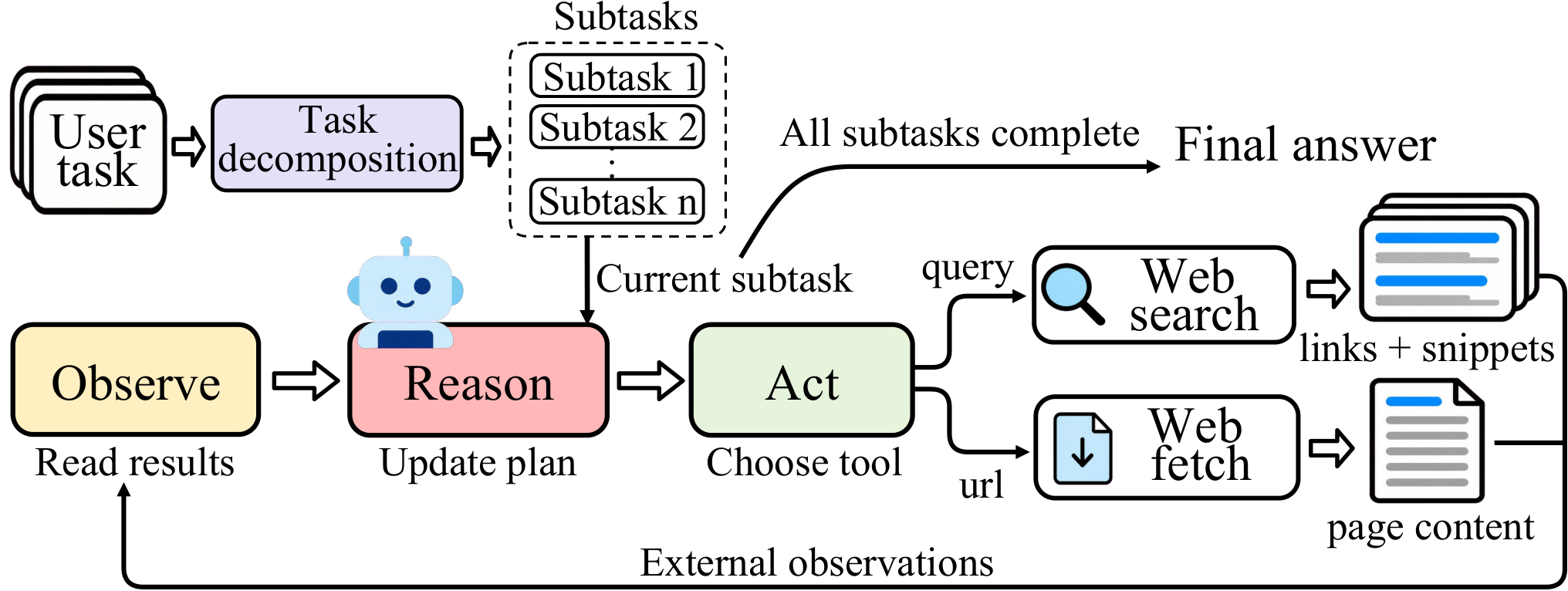
Because the agent's choices—such as which link to click or which search result to prioritize—are dependent on the user's private data, an attacker who controls certain websites can observe these choices to infer what the user is actually asking. This differs from traditional attacks like indirect prompt injection, which require the agent to actually send sensitive text to an external server. In this new method, the agent never explicitly "says" anything sensitive; it simply "acts" in a way that reveals its internal state.
What is the Snoop framework?
To demonstrate the severity of this threat, the authors developed Snoop, a stateful hierarchical probing framework. Instead of relying on passive observation, Snoop actively probes the agent. It uses a "Snoop Tree" to organize hypotheses about what the user might be asking and progressively narrows them down based on how the agent reacts to different web content.
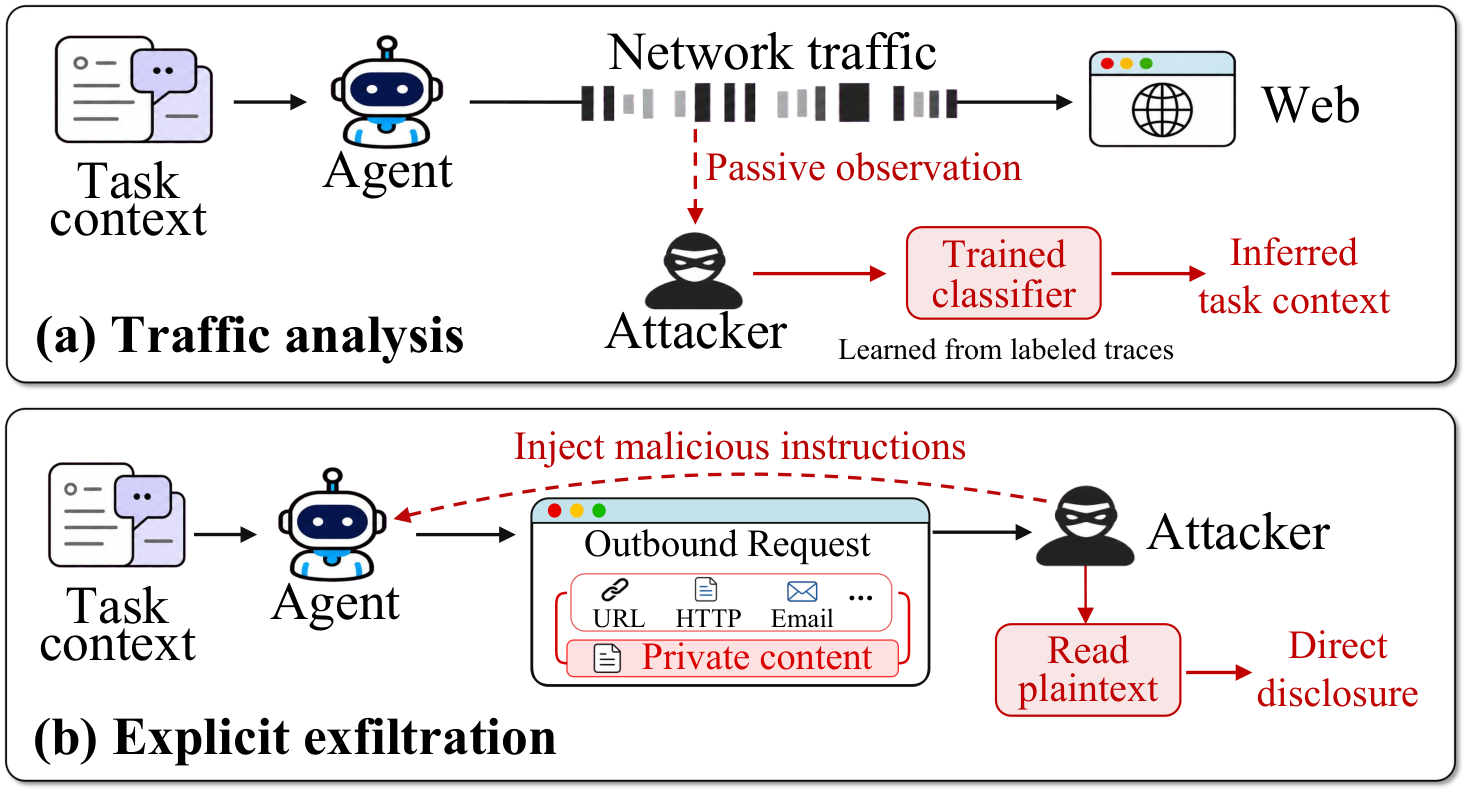
Figure 1 compares this approach to existing methods. While previous attacks focused on analyzing network traffic for coarse correlations or using prompt injection to force data exfiltration, Snoop is more stealthy. It does not require privileged access to network traffic and is much harder for content-based security filters to detect because no sensitive strings are ever included in the outgoing requests. The framework uses an adaptive process to refine its guesses, allowing it to reconstruct user queries and even personal profiles with high accuracy.
How effective is this privacy attack?
The researchers tested Snoop against four different AI agents and three major LLM backbones using datasets like StackExchange and TREC iKAT. The results showed that the attack is highly effective at reconstructing information. According to the study, Snoop achieved an average F1 score of 0.89 for recovering query concepts and 0.80 for reconstructing user profiles.
Crucially, the researchers found that existing defenses are largely ineffective against this specific type of leakage. They tested four state-of-the-art agent defenses and found that they changed the recovery success rate by less than 0.03 F1. This is because most current defenses are designed to look for malicious instructions or the explicit transmission of sensitive data, neither of which is present in a behavioral covert channel attack.
Can this privacy leakage be mitigated?
Since traditional content-level inspection cannot detect these leaks, the authors proposed a new defense called Selection-Obfuscated Retrieval (SOR). This method aims to decouple the agent's selection process from its private context. SOR works by having the agent retrieve resources under a fixed budget that is independent of the specific user query, and then confining the agent's choices to a local snapshot of those resources.
In their evaluations, the SOR defense significantly reduced the effectiveness of the Snoop framework, cutting the F1 score from the high 0.80s down to 0.39. Importantly, the researchers noted that this defense can be implemented without requiring additional LLM inference, making it a potentially efficient way to protect agentic workflows.
How to stay informed about AI agent security
As AI agents become more integrated into our daily workflows, understanding the boundary between utility and privacy becomes essential. For developers building agentic systems, the research highlights the need for defenses that go beyond simple text filtering and address the underlying decision-making patterns of the model.
If you are interested in exploring how browsing agents function or want to test your own prompts in a controlled environment, you can use Grafy's Operator to see how agents interact with the web. For those looking to analyze academic papers on this or similar cybersecurity topics, Reader can assist in synthesizing complex research findings from multiple PDF sources.
Frequently asked questions
Does the Snoop framework require the agent to send private data to an attacker?
No, the Snoop framework does not require the agent to explicitly transmit sensitive information. Instead, it exploits a behavioral covert channel where the attacker infers private data by observing the agent's benign web actions, such as which links it chooses to follow or which pages it visits in response to specific content.
Why do existing agent defenses fail to stop behavioral probing?
Existing defenses typically focus on detecting malicious instructions or the explicit exfiltration of sensitive text in outgoing requests. Because Snoop relies on the agent's decision-making patterns rather than the actual content of the requests, these content-level and model-level safeguards cannot detect the subtle information leakage occurring through web navigation.
What does Selection-Obfuscated Retrieval do to prevent leaks?
Selection-Obfuscated Retrieval mitigates privacy risks by making the agent's resource selection process independent of its private context. It retrieves a set of resources based on a fixed budget and forces the agent to choose from a local snapshot, which prevents the agent's specific private queries from influencing the sequence of its web interactions.
More news
New interpretable embeddings use decision columns for search
Researchers propose using decision columns as embeddings to create auditable, interpretable search and entity matching systems for business data.
New Benchmark Tests if AI Can Write Programs to Play Games
Researchers have introduced PlayScriptBench to evaluate if vision-language models can synthesize executable game controllers rather than just reacting.

New DPMA method optimizes Mixture-of-Experts model compression
Researchers introduced DPMA, a method that jointly learns how to prune, merge, and absorb experts to compress MoE models without full retraining.