SciMARS Tests Recursive Self-Improvement for AI Science Agents
Grafy Research Lab proposal SciMARS outlines recursive self-improvement for multi-agent science, using shared evidence and component editors. See source.
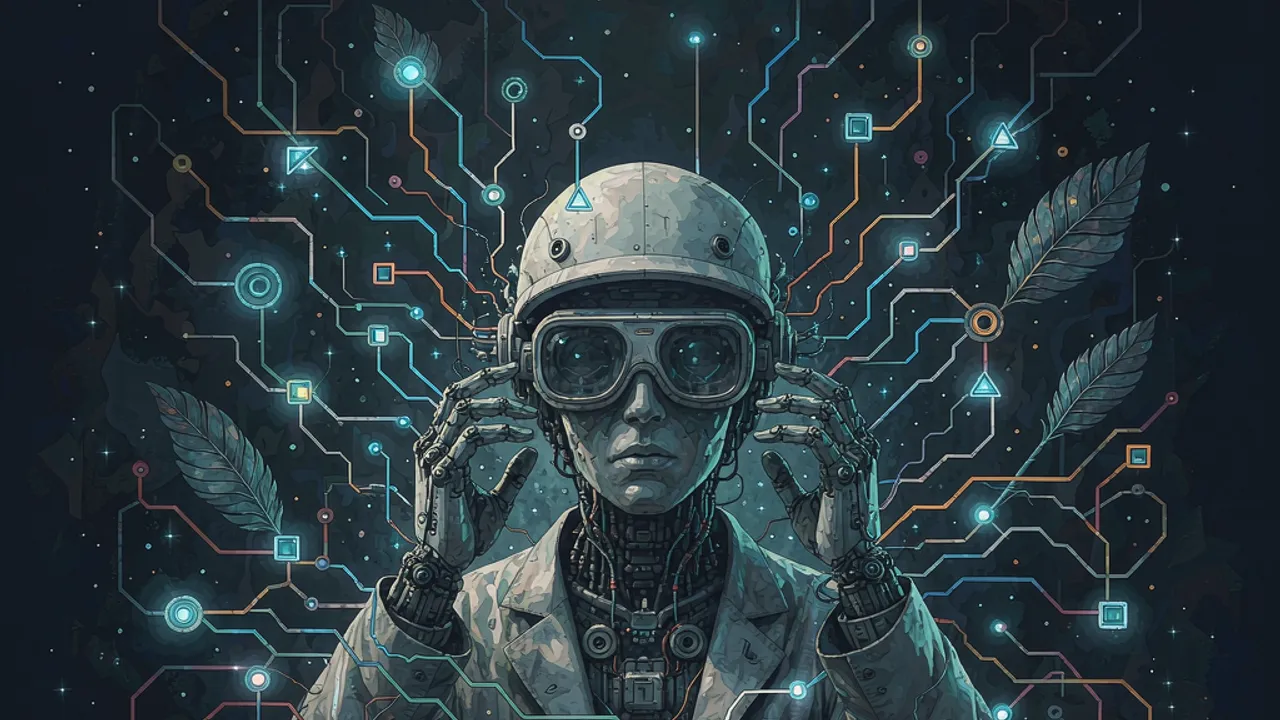 Source: Grafy Research Lab
The Grafy Research Lab has published a proposal called SciMARS, and it matters because it targets recursive self-improvement in closed-loop scientific discovery. The source says the framework addresses how multi-agent systems coordinate analysis, experimental design, and verification. According to the source, SciMARS is a framework for recursive task-local adaptation of multi-agent harnesses in closed-loop scientific discovery. The proposal is from the Grafy Research Lab and appears on the source page. The source describes a multi-agent approach that coordinates several scientific tasks as evidence evolves. The source frames the project as a research proposal, so the aim is to examine how such a system might improve over repeated cycles.
What Is SciMARS?
According to the source, SciMARS is a framework for recursive task-local adaptation. The source says it belongs to the setting of closed-loop scientific discovery. The source explains that multi-agent systems in this setting coordinate analysis, experimental design, and verification. The source presents the framework as a way to adapt over time. The source names Weimin Wu and Han Liu for SciMARS plus and lists the subject as Artificial Intelligence. The source describes SciMARS as a proposal, so its claims are research-oriented rather than product-ready. The source frames the work around recursive task-local adaptation, which suggests changes may be made for a task rather than globally. The source places the proposal in AI and computer science.
Why Shared Memory and Fixed Roles Are Limits
According to the source, two problems limit the effectiveness of multi-agent systems. The first is that without shared memory, agents lose observations and repeat work. The second is that fixed role procedures, handoffs, and memory policies perpetuate mistakes despite retained evidence. The source says these issues matter because scientific discovery often depends on accumulating and comparing evidence. The source frames the problems as practical obstacles for closed-loop systems. The source presents them as reasons the current approach may struggle. The source connects these problems to the broader goal of closed-loop scientific discovery.
How SciMARS Proposes to Adapt Agents
According to the source, SciMARS proposes a shared evidence graph and separate component editors. The source says SciMARS adapts roles and coordination. The source describes this as task-local adaptation within a recursive loop. The source does not give a full technical explanation in the summary. The source presents the approach as a proposal for how agents might adjust when scientific evidence changes. The source says the shared evidence graph is meant to address lost observations and repeated work. The source says separate component editors are meant to handle parts of the system. The source frames these as the proposed answer to the two problems.
What the Proposal Means for Closed-Loop Science
According to the source, the proposal points toward recursive improvement in AI-driven science. The source describes closed-loop discovery as a cycle in which evidence is gathered and used. The source says the aim is to improve coordination through that cycle. The source does not claim that the approach has already solved autonomous science. The source presents it as a research direction. The source notes that multi-agent systems coordinate analysis, design, and verification as evidence evolves. The source says the framework is for recursive task-local adaptation. The source describes the problems and proposed fixes in a research context. The source says the multi-agent systems coordinate analysis, experimental design, and verification as scientific evidence evolves.
Where Grafy’s Graph Fits the Idea
For readers interested in how such loops could be visualized or managed, Graph is the Grafy app that matches the idea of a branching graph of prompts, outputs and model history. The connection is genuine as a design analogy, because a shared evidence graph resembles a record of discoveries across steps. Grafy does not list SciMARS as a feature, and the source does not say Grafy built or deployed it. A creator or researcher could use Grafy Graph to sketch a similar branching process, but the underlying models and scientific tools would still come from elsewhere. For reading the source material itself, Reader is designed for PDFs and papers.
Frequently asked questions
Does SciMARS teach a smaller model how to teach itself?
The source describes recursive task-local adaptation of multi-agent harnesses. It does not describe a smaller model teaching another or being taught by it, according to the source. The framework concerns how agents adapt roles and coordination through cycles. Readers should not infer a smaller teacher model from the proposal.
How does the source describe shared memory?
According to the source, SciMARS uses a shared evidence graph to address lost observations and repeated work. It also uses separate component editors for roles and coordination. The source says this is part of the proposed approach, not a fully detailed implementation. The summary leaves the technical specifics open.
Does SciMARS prove recursive self-improvement works?
The source does not claim that SciMARS has proven recursive self-improvement in real scientific work. It proposes a closed-loop framework and mentions SciMARS plus. The source frames the work as a research paper from the Grafy Research Lab. Readers should treat the claims as preliminary.
The original source is the Grafy Research Lab page at https://arxiv.org/abs/2611.12552.
More news

LLM Explanations Study Social Bias in AI
A new study examines whether LLM-generated AI explanations fairly represent social groups, amid bias concerns. It reports a research gap.
DM-Call Adds Decision Model Verification to AI Function Calling
Grafy Research Lab proposed DM-Call, which adds decision-model verification and cumulative feedback to AI function calling. The paper asks if syntax is enough.

AI Agents Propose, Code Verifies, Humans Decide
AI agents propose, deterministic code verifies, and humans decide ingestion of scientific tables. The cautious design matters for research data.