STARK architecture introduces dual-graph memory for AI agents
Researchers have introduced STARK, a dual-graph memory system designed to help AI agents learn from user behavioral patterns over long periods.
 Source: Grafy Research Lab
AI agents are moving toward a future where they do not just recall past interactions, but actually understand the underlying reasons for user behavior. According to a paper by Aryan Jain, Abhishek Jha, Anish Nediyanchath, and Promod Yenigalla, a new architecture called STARK aims to solve the limitations of current long-term memory systems by treating user experiences as more than just isolated data points.
Why do current AI agents struggle with memory?
Most existing agentic architectures are designed to capture what occurred during an interaction, but they often fail to preserve the reasoning behind those events. According to the authors, current systems tend to silo knowledge within individual user sessions. While an agent might remember a specific command or a piece of information, it typically leaves the task of deriving the "why" to the underlying Large Language Model (LLM) at the moment of retrieval. This approach lacks the structural continuity required to build a truly personalized assistant that evolves alongside a user over long durations.
How does the STARK architecture work?
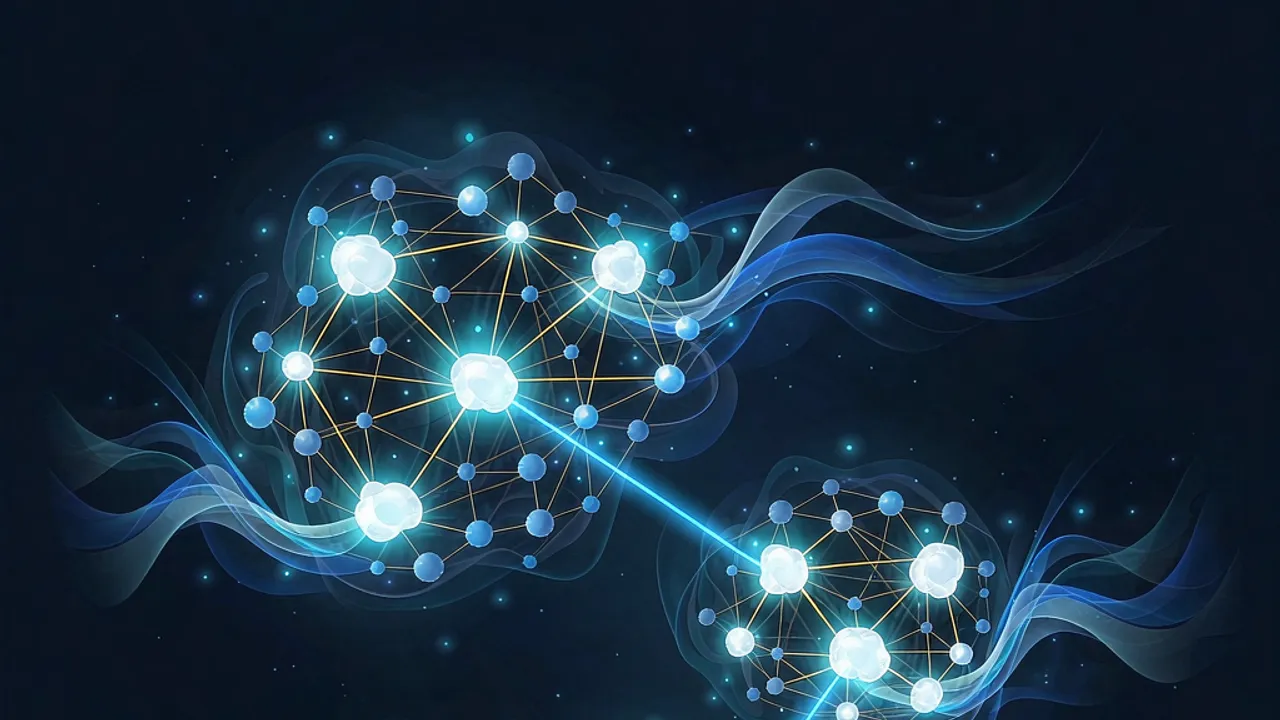
STARK introduces a dual-graph memory architecture to bridge this gap. Instead of treating every user event as a standalone node in a database, STARK utilizes two distinct but interconnected layers. The first layer is an episodic memory that records specific events. The second layer focuses on behavioral insights.
Crucially, the researchers propose that these events should function as edges between behavioral insights. By structuring memory this way, the system can map how specific experiences shape a user's behavioral patterns over time. This allows the agent to move beyond simple retrieval and toward a deeper understanding of user preferences and decision-making logic.
What are the benefits of dual-graph memory?
By implementing this dual-graph approach, personalized agents can achieve a higher level of continuity. The researchers suggest that treating events as connections between insights enables the system to capture the evolution of a user's persona. Rather than just knowing that a user requested a specific type of document yesterday, the agent can understand the pattern of why that user prefers certain formats or tones, leading to more proactive and accurate assistance in future sessions.
How does this impact personalized AI development?
The shift toward STARK-like architectures represents a move from reactive tools to proactive partners. For developers, this means building agents that can maintain a coherent "world model" of the user. As these agents learn to navigate the relationship between episodic facts and long-term behavioral trends, they become increasingly capable of handling complex, multi-step tasks that require context gathered from weeks or months of prior interaction.
How can researchers explore these memory concepts?
While STARK is a specialized architectural proposal, the core challenge of managing complex, interconnected information is central to modern AI research. For those looking to dive deeper into the mechanics of how AI processes dense documentation or complex research papers, using a dedicated tool to query and synthesize information is a practical starting point.
Researchers can utilize Reader to interact with academic papers, testing how different models interpret and link concepts across large datasets. For those interested in the broader evolution of agentic workflows, exploring Grafy Chat allows for testing how various cloud models handle long-context instructions and historical data.
Source: Grafy Research Lab — STARK: Moving towards Personalized Agents That Truly Learn and Remember
More news
How to Catch Seven Common AI Agent Failures in Production
Learn how to identify seven critical failure modes in AI agents, from contract mismatches to indirect injection, to ensure reliable production deployment.
New benchmark tests AI agents on building RAG systems
Researchers have introduced AutoRAGBench to evaluate how well AI agents can autonomously design and refine RAG pipelines in open coding environments.
NariQ method improves sub-3-bit quantization for AI agents
Researchers propose NariQ, a new quantization method that optimizes models for long-horizon tasks, preventing performance drops in agentic workflows.