Strongest Model Isn't the Best Agent Coordinator, Study Finds
WorkflowArena found a stronger model's workflows hurt worker models while another's helped all four — a warning for picking an agent coordinator.
 Source: Reddit ML
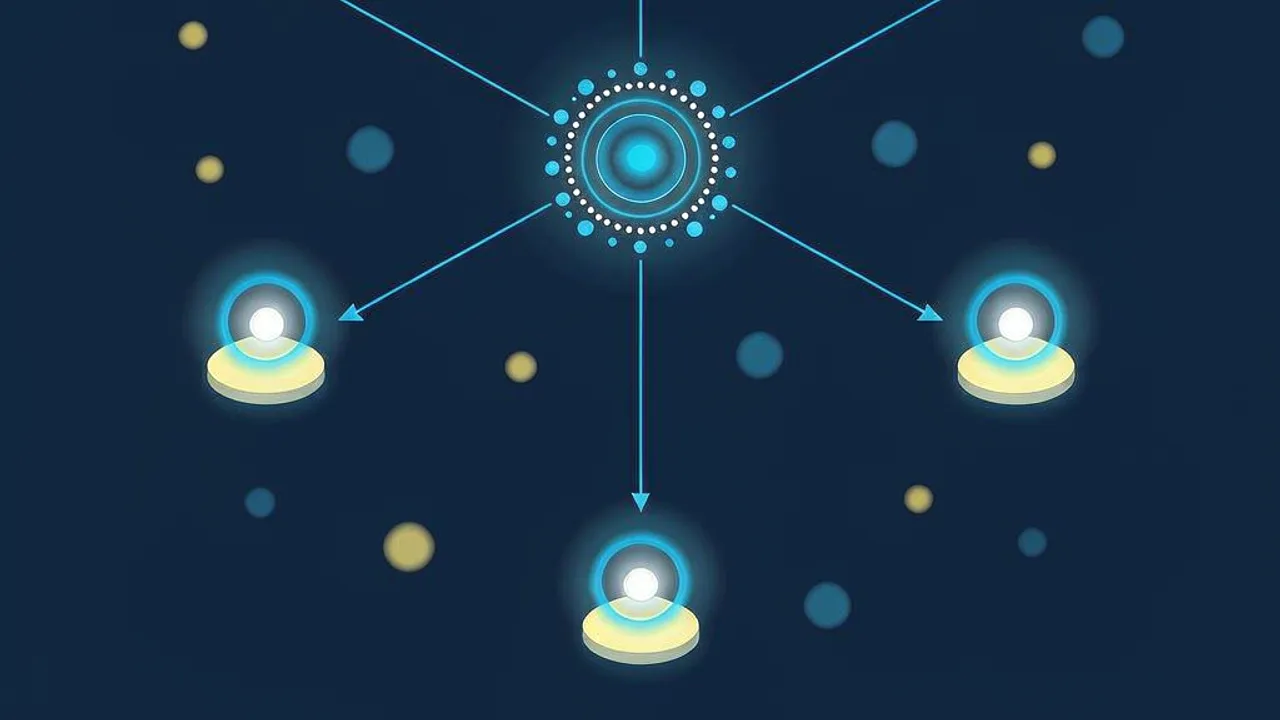
A multi-agent benchmark called WorkflowArena has found that the most capable model is not automatically the best team leader: in a test shared on Reddit's r/MachineLearning, workflows from one coordinator model raised every worker model's scores, while workflows from a stronger model lowered them. The finding challenges a common shortcut in agent design — handing planning and delegation to your single most powerful model — and suggests that coordination is a capability that has to be measured on its own.
What did the WorkflowArena experiment test?
According to the r/MachineLearning post, the researchers set out to check whether a strong model's workflows would genuinely help other models do the work, rather than assuming that a capable planner produces capable plans. They gave two coordinator models — Opus 5.5 and GPT-6 Astra — the same set of 32 challenging tasks and asked each to write workflows for four execution models.
The coordinators had a deliberately narrow role. They could divide the work into steps and instruct the worker models, but they were not allowed to edit the workspace themselves, so their contribution was planning and delegation only. Each coordinator's output was a set of static workflows — written in advance rather than adapted on the fly — and the team then measured how the four executors performed under those plans compared with a baseline in which the executors orchestrated themselves.
Which coordinator's workflows helped more?
The two coordinators produced opposite results. According to the post, Opus 5.5's static workflows improved all four execution models, adding 6.41 points on average to their continuous scores compared with letting the executors run themselves. GPT-6 Astra's static workflows did the reverse, lowering the average by 2.53 points.
What makes the gap notable is the ranking on paper. The post states that Astra was the stronger system of the two and outscored all four executors on the main benchmark. By conventional logic it was the obvious choice to lead the team, yet the plans it produced left the workers worse off than if they had coordinated themselves.
Does being the strongest model make you the best coordinator?
Not reliably, according to the WorkflowArena results. The post's central point is that a model's own task performance does not, on its own, predict how useful its workflows are to other models. Astra's individual strength did not carry over into good delegation, while Opus 5.5's plans helped across the board.
The lesson the post draws is a warning against choosing a coordinator based on its own task performance alone. That reframes coordination as a distinct capability: a model can be excellent at solving tasks directly and still be poor at breaking them into instructions that let a different model succeed. Strong solo performance and strong delegation, in other words, are not the same measurement.
What does this mean for building multi-agent systems?
If you are assembling a team of agents, the results argue for evaluating a candidate coordinator on how much its plans improve the specific worker models you plan to use, not on its headline benchmark score. Two checks follow directly from the setup: whether a coordinator's workflows beat the workers running themselves — the baseline used here — and whether any gain holds across all of your executors or only some of them.
The study also isolates a clean variable worth copying. Because the coordinators could not touch the workspace, the measured difference comes from the quality of the plans and instructions rather than from the coordinator quietly doing the work itself. That makes the workflow — how the task is decomposed and delegated — the thing to benchmark, separate from raw model strength.
How does this connect to Grafy?
The connection here is genuine. WorkflowArena is about workflows that split a task among several executor models, and Grafy Graph is built for that shape of work: a branching graph of prompts, outputs and model history. Because Grafy runs many cloud models side by side, you can route different steps of a plan to different models, then compare how the same brief performs when one model plans the whole thing versus when each step runs on its own — an informal version of the self-orchestration baseline the study used.
Grafy Chat goes further in the comparison direction: it lets you place candidate coordinators next to each other and read the plans they produce side by side. For a more structured check, the council-of-models approach — asking several models at once and letting a judge pick the best — mirrors the study's core lesson: measure the coordinator, don't assume it. Grafy is not WorkflowArena and does not score coordinators for you, but the pieces to run your own version of the test are already in place.
Frequently asked questions
Did the stronger model make the better coordinator in WorkflowArena?
No. According to the r/MachineLearning post, GPT-6 Astra was the stronger system and outscored all four executors on the main benchmark, yet its static workflows lowered the executors' average by 2.53 points. Opus 5.5's workflows, by contrast, improved all four. In this test, raw model strength did not translate into better coordination.
How much did Opus 5.5's workflows improve the executor models?
According to the post, Opus 5.5's static workflows improved all four execution models, adding 6.41 points on average to their continuous scores compared with letting the executors orchestrate themselves. The improvement applied across every worker model in the test rather than being confined to a single executor, which is what made the coordinator's plans stand out.
Could the coordinator models edit the workspace themselves in the experiment?
No. According to the post, the two coordinators, Opus 5.5 and GPT-6 Astra, could divide the work into steps and instruct the worker models, but they were not permitted to edit the workspace themselves. Their role was limited to planning and delegation, which is why the measured difference reflects the quality of the workflows rather than the coordinator completing tasks directly.
More news

United Won't Let AI Agents Book Flights on Its Site
United says AI assistants can browse its flights but can't complete bookings, citing privacy and regulatory worries. Here's what it means for agents.

Pomerado Turns Websites Into Agent APIs, Claims 7x Speedups
Pomerado launched on Hacker News with an open-source MCP server that turns any website into an API for agents.

DocFS Turns Complex Documents Into File Systems for AI Agents
A research framework called DocFS rebuilds long, image-heavy documents as file systems so AI agents navigate them faster and with far fewer tokens.