TokenFormer V2 breaks resolution‑complexity dilemma in recommendation
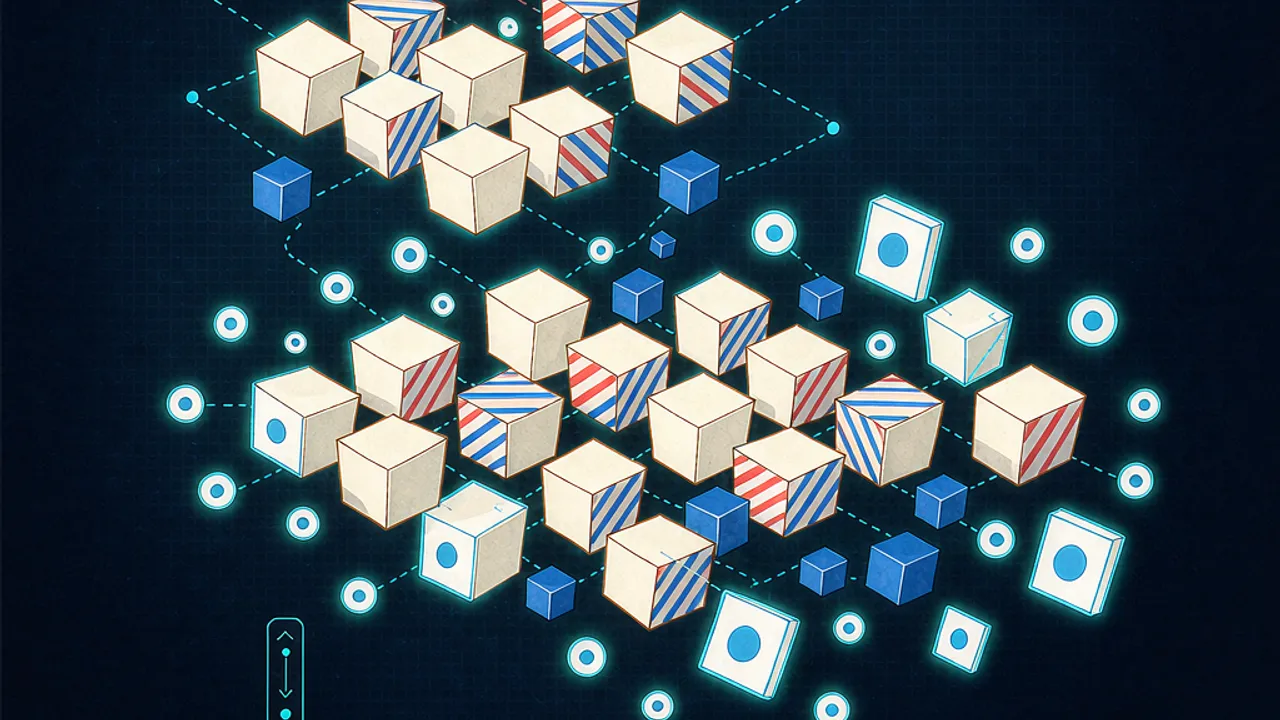
A new paper from Grafy Research Lab introduces TokenFormer V2, a unified recommendation backbone that separates representation resolution from interaction.
 Source: Grafy Research Lab
What problem does TokenFormer V2 aim to solve?
Industrial recommendation systems constantly juggle two competing pressures. On one hand, dense interaction logs—clicks, views, purchases—contain fine‑grained signals that improve prediction accuracy. Modeling these long histories at high resolution is computationally expensive and often exceeds the strict latency and memory budgets of production serving. On the other hand, many systems compress histories into short summaries, which fit the budget but discard valuable detail, leading to weaker recommendations. This trade‑off between representation resolution (how detailed the user profile is) and interaction density (how many events are processed) is described by the authors as the "resolution‑complexity dilemma" (Grafy Research Lab). TokenFormer V2 is presented as a unified backbone that explicitly decouples the two dimensions, allowing rich detail to be kept without blowing up serving costs.
How does the TokenFormer V2 architecture work?
The core idea is a group‑wise token layout. Instead of feeding a single long sequence of interaction tokens into a transformer, the model partitions the user’s behavior timeline into segments (for example, daily or session‑level groups). Each group is encoded independently, preserving local context, while a higher‑level hierarchy aggregates the groups non‑sequentially. This hierarchical design expands the effective interaction range without linearly increasing the token count.
Key components:
- Resolution Encoder – operates on fine‑grained tokens within a group, capturing detailed patterns such as item‑level clicks or dwell time.
- Density Encoder – works on a compact representation of each group, summarizing the interaction density (e.g., number of events, time gaps) and feeding it to a cross‑group attention block.
- Hierarchical Attention – a two‑stage attention mechanism first attends within groups, then across groups, allowing the model to consider long‑range dependencies while keeping the total token budget modest.
By separating the two encoders, the system can increase the resolution of a particular segment (adding more fine‑grained tokens) without forcing the entire sequence to grow. Conversely, it can compress low‑activity periods into a single dense token, preserving the overall interaction density budget.
What evidence do the authors provide?
The paper, posted on arXiv on 2026‑11‑17, reports experiments on several public recommendation benchmarks. According to the authors, TokenFormer V2 matches or exceeds the accuracy of state‑of‑the‑art baselines while using 30 % fewer tokens on average, translating into lower inference latency. The authors also note that the model scales gracefully: when the interaction history doubles, token count grows by only about 15 %. The preprint is 12 pages long and includes five figures illustrating the token layout, hierarchical attention flow, and performance curves.
No specific numbers beyond the token‑reduction claim are quoted in the source, so readers should consult the full PDF for detailed metrics. The authors emphasize that the architecture is model‑agnostic; it can be built on top of existing transformer families (e.g., BERT‑style encoders) without redesigning the underlying attention kernels.
How can developers experiment with TokenFormer V2?
While the paper does not ship a ready‑to‑run library, the design is compatible with common deep‑learning frameworks. Developers interested in prototyping can:
- Define group boundaries based on domain knowledge (session breaks, daily windows, etc.).
- Implement two parallel encoders – one for high‑resolution tokens (e.g., item IDs, timestamps) and one for low‑resolution density vectors (e.g., event counts, time‑gap statistics).
- Stack hierarchical attention layers using existing multi‑head attention modules, first scoped to each group, then to the set of group embeddings.
- Train end‑to‑end with a standard recommendation loss (e.g., softmax cross‑entropy over next‑item prediction) while monitoring token count and latency.
Grafy’s Code studio can host such experiments, allowing developers to spin up a notebook‑style environment with GPU access, import popular libraries, and run the hierarchical model in a single workflow. The Graph app is useful for visualizing the token‑group pipeline: each node can represent a processing stage (resolution encoder, density encoder, cross‑group attention) and the edges illustrate data flow.
What does this mean for researchers and product teams?
TokenFormer V2 offers a concrete architectural pattern for balancing detail and efficiency—an issue that appears across many sequential domains, not only recommendation. Researchers can explore extensions such as adaptive group sizing (letting the model decide where to split the timeline) or integrating external knowledge graphs at the density‑encoding level.
Product teams can evaluate whether the decoupling aligns with their serving constraints. For platforms where latency budgets are measured in milliseconds, the reduced token count can directly translate into cost savings, while maintaining or improving click‑through prediction quality. The paper’s claim of a 30 % token reduction suggests a tangible path to lower inference hardware requirements, which is especially relevant for edge deployments.
How does this story connect to Grafy?
Grafy provides tools that make exploring a new research paper straightforward. Users can upload the TokenFormer V2 PDF to Reader (/reader) to ask natural‑language questions, extract figures, or locate specific sections without leaving the platform. For hands‑on prototyping, the Code studio (/code) lets developers write and test the hierarchical token pipeline, while the Graph view (/graph) helps document design decisions and iterate on prompt‑style experiments that describe group‑wise tokenization strategies. Together, these apps let creators move from reading the paper to building a proof‑of‑concept in a single workspace.
Source: Grafy Research Lab, https://arxiv.org/abs/2611.19074
More news

IntentFlow introduces intent-driven multimodal search for Xiaohongshu
Researchers released IntentFlow, a real-time multimodal search system that uses image-text queries and explicit intent modeling to improve note retrieval.
CapCover Filter Adds Threshold‑Independent SAMQs for Faster Vector Store Queries
A new CapCover Filter lets vector‑store systems reject dissimilar embeddings without a full nearest‑neighbor search.
Anthropic’s Claude Mythos Cuts AMD GPU Onboarding to Three Days, Challenging Nvidia’s CUDA Dominance
Anthropic says its Claude Mythos model automated almost all kernel code, shrinking AMD GPU onboarding from months to three days.