Will Wright’s MyMems Will Turn Player Memories into AI‑Powered Simulations
Will Wright announced MyMems, a new simulation that uses generative AI to transform personal memories into game content.
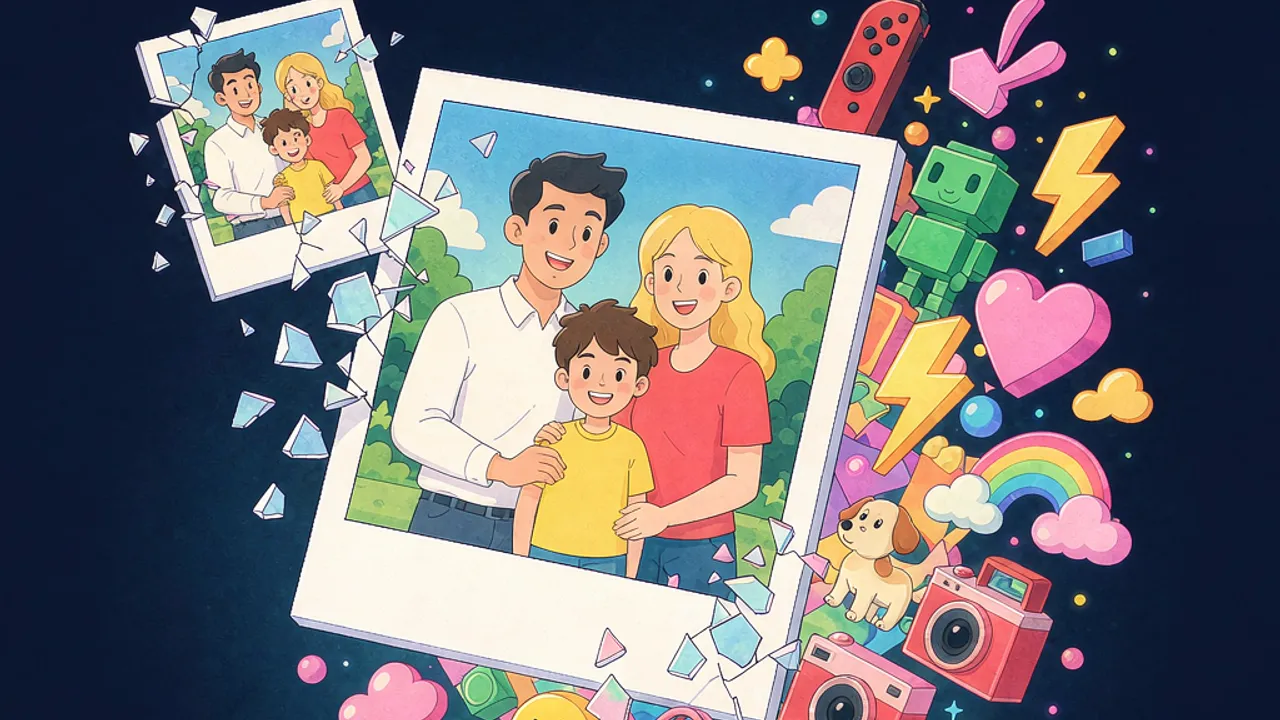 Source: Ars Technica
Will Wright, the creator of The Sims and Spore, unveiled MyMems, a simulation that will mine players’ personal memories with generative AI to build bespoke game worlds. The announcement matters because it pushes AI‑driven content creation from generic assets to deeply personal narratives, opening new design frontiers while sparking privacy debates.
What is MyMems and how does it differ from Wright’s earlier titles?
MyMems is billed as a "turn[ing] the simulation inward" experience, meaning the game’s content is derived from the player’s own recollections rather than pre‑designed scenarios. Unlike The Sims, which models generic household behavior, MyMems will generate digital characters and puzzles based on typed‑up memories. Wright gave the example of pitting his grandmother against Serena Williams in a Grand Slam match, or selecting three real‑life people to help build a bridge. The concept originated as a mobile prototype called Proxi in 2018, aimed at self‑discovery, but after funding dried up in 2024 the project was revived under Gallium Studios with AI partner Artificial Agency. The scheduled launch is next year, positioning MyMems as a personal‑memory‑driven sequel to Wright’s earlier sandbox games.
How does the AI memory‑mining work and what technology powers it?
According to the press release, MyMems uses a "proprietary behavior engine" layered on top of generative AI models to convert textual memories into simulated locales and characters. Artificial Agency supplies an AI tool that builds a "personal behavior model and a knowledge graph" from the submitted memories, a process the company calls MemDNA. The system runs locally on the player’s device, learning only with explicit permission, and avoids sending raw memory data to the cloud. Wright said the partnership lets Gallium use "off‑the‑shelf" AI components instead of developing its own research‑intensive models, keeping costs lower than the expensive frontier models that dominate the market.
What are the privacy and data‑handling implications?
MemDNA’s claim of local processing aims to differentiate MyMems from broader surveillance practices. Artificial Agency’s marketing contrasts its approach with services that track clicks or viewing habits, stating that "Nobody knows what you remember." Nonetheless, the creation of a personal knowledge graph raises questions about how that graph is stored, whether it can be exported, and how consent is managed. Wright emphasized that the system works only with the player’s permission, but the broader industry trend of turning intimate data into AI training material makes the model a focal point for privacy advocates.
When will MyMems be available and what is the development timeline?
The announcement video, linked below, confirms a 2027 release window. Development accelerated after Gallium Studios secured the Artificial Agency partnership, which provided the AI middleware needed to move beyond the stalled Proxi effort. The press release highlighted that the game will support both individual memory‑based worlds and shared worlds built from collective memories of families, friends, or coworkers. Wright described the upcoming year as a "design‑exploration" phase, during which the AI behavior engine will be refined based on early player feedback.
How creators can explore similar ideas with Graf AI
Creators interested in prototyping memory‑driven simulations can experiment with Grafy’s Game Studio (/game). By feeding a brief like "generate a puzzle based on a childhood beach memory," the app can produce a playable prototype that mimics MyMems’ approach. For developers who want to test AI prompt chains that transform text into character behavior, Grafy Chat (/chat) lets you run multiple models side‑by‑side, helping you compare how different generative back‑ends interpret personal narratives. Researchers concerned with privacy can use Grafy Reader (/reader) to ingest and query technical papers on on‑device AI and knowledge‑graph construction, gaining insight into the underlying technologies without leaving the workspace.
Frequently asked questions
How does MyMems create characters from my memories?
MyMems feeds typed memories into a generative AI model that extracts themes and traits, then uses a proprietary behavior engine to instantiate characters with those attributes. The AI builds a knowledge graph that links memories to in‑game actions, allowing characters to behave in ways that reflect the original recollections.
Will my personal memories be stored on external servers?
According to the press release, MemDNA processes memories locally on the player’s device and only learns with explicit permission. The system is designed to avoid sending raw memory data to the cloud, though a knowledge graph may be stored locally for gameplay purposes.
Can I share a MyMems world with friends using their own memories?
Yes. Wright described a feature that lets players create shared worlds based on collective memories from family, friends, or coworkers. Each participant contributes their own recollections, and the AI weaves them into a joint simulation environment.
Source: https://arstechnica.com/gaming/2026/11/will-wrights-next-simulation-will-use-ai-to-mine-content-from-your-memories/
Source: Ars Technica — Will Wright's next simulation will use AI to mine content from your memories
More news
Clustered Federated Unlearning Proposed for Secure Vehicular Networks
A new hierarchical federated unlearning framework called CULypso aims to let VANETs erase client data efficiently.

Anthropic prices IPO at $83 a share, valuing the AI firm at $1.5 trillion
Anthropic filed its S‑1 on Nov 18, setting the IPO price at $83 per share and a $1.5 trillion valuation.

Learned Multigranular Memory Retrieval Boosts Small LLM QA Performance
A new paper introduces LMMR, a learned multigranular memory retrieval method that trims input to under 400 tokens while raising F1 scores on HotpotQA and other.