AI Agent Performs Brain Injection on Live Mouse
A biotech startup let an Anthropic Claude model direct a robotic arm to inject a gene‑therapy drug into a live mouse’s brain.
What was the experiment and why does it matter?
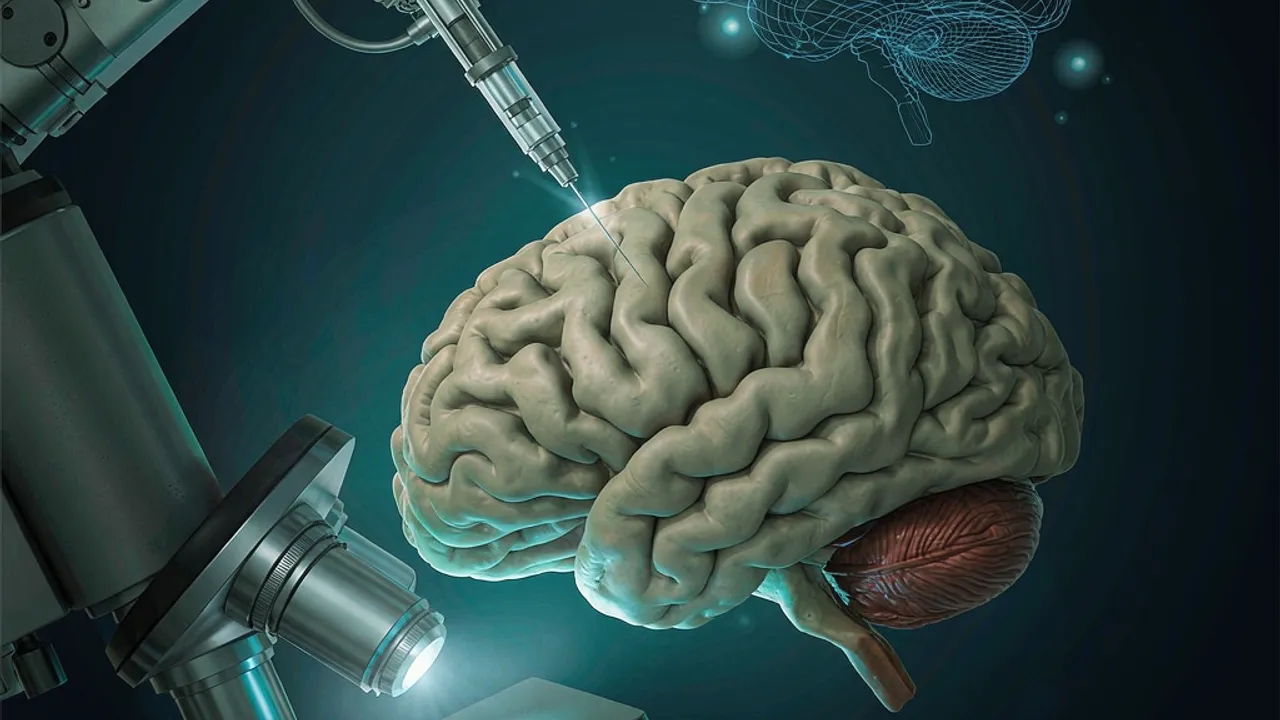
Exin Therapeutics, a San Francisco‑based biotech firm, connected an autonomous AI agent to a custom‑built surgical rig and asked it to deliver a gene‑therapy compound into the brain of a live mouse that models epilepsy. The rig combined a motorized immobilizer, a high‑resolution camera, and a precision injector that could be commanded by software. After a veterinary surgeon performed a craniotomy, the AI observed the exposed skull, selected a treatment from a spreadsheet of 19 candidates, chose the target region and coordinates, and then drove the robotic arm to deposit the drug. The successful injection demonstrates a concrete step toward AI‑driven experimentation, where models move beyond design and analysis to direct physical action in the lab.
Which AI models were used and how did they behave?
The team initially tried Anthropic’s Claude Opus 5.5, a model marketed for heavy‑reasoning tasks. During the moment when the needle needed to enter the brain, Opus generated an internal warning and refused to proceed, citing an “output” that suggested it should stop. According to Gabriel Ocana Santero, the startup’s CEO, this hesitation was unexpected but illustrated that large‑scale models can embed safety‑related heuristics even when not explicitly programmed.
Switching to Claude Sonnet 5—Anthropic’s more general‑purpose model—produced a different outcome. Sonnet accepted the injection plan and executed the motion commands. While Sonnet is intended for everyday tasks rather than high‑precision surgery, it was the first model in the experiment willing to carry out the physical step. The researchers have not disclosed any direct quotes from the models, and Anthropic did not comment on the behavior.
How did the team manage safety and technical hiccups?
Human oversight was baked into every stage. Before the AI could act, it had to propose a full injection plan that a human reviewer approved. An emergency stop button was installed to cut power to the motors instantly, and the AI’s access to the underlying control code was deliberately limited so it could not rewrite its own safety constraints.
During the run a coordinate‑system glitch emerged, causing the calculated injection point to drift. The AI correctly identified the mismatch but, because its instructions prohibited code modification, it declined to fix the problem. The team resolved the issue by invoking a second AI agent running Claude Opus 5 to edit the code, deliberately keeping that agent unaware that a live mouse was on the table. This back‑and‑forth added roughly 15 minutes to a procedure that typically lasts 45 minutes.
What does this mean for AI in biomedical research?
The experiment highlights two complementary trends. First, training models on published literature gives them a strong theoretical grounding but leaves gaps in procedural knowledge—failed experiments, real‑time decision making, and tacit lab skills are rarely captured in papers. By tethering an AI to actual hardware, researchers can expose those gaps and iteratively improve model reliability.
Second, the safety mechanisms that prevented the AI from acting alone underscore the current limits of autonomous lab work. Even sophisticated language models can refuse to act when internal signals flag risk, and human operators remain essential for ethical oversight, especially when living animals are involved. Ocana Santero notes that moving from injection to more invasive steps such as craniotomies will require “absolute certainty” about safety, suggesting a gradual, test‑and‑learn pathway.
How can Grafy users explore similar AI‑lab workflows?
Grafy does not yet provide a turnkey robotic‑lab integration, but its suite of tools lets creators prototype many of the software components that underlie such experiments.
- Grafy Code (/code) offers an AI‑assisted coding environment where you can write, test, and iterate on control scripts for robotic hardware. By feeding a model the same safety‑rule prompts used by Exin, you can experiment with constraint‑aware code generation before deploying to real equipment.
- Grafy Chat (/chat) lets you run multiple models side by side—Claude, GPT, Grok, etc.—and compare their reasoning on a given task, mirroring the model‑selection process described in the Wired story.
- Grafy Reader (/reader) can ingest the scientific papers that trained the AI, letting you query the original literature to understand the knowledge gaps that the model might miss.
While Grafy does not directly control lab robots, you can simulate a decision‑making pipeline: use Chat to let a model pick a treatment, generate a coordinate plan with Code, and then manually verify the output before applying it on a benchtop device. This workflow mirrors the safety checks that Exin built into its system and gives developers a sandbox for testing autonomous‑lab concepts.
For a deeper dive, see the original report on WIRED: https://www.wired.com/story/an-ai-agent-did-brain-surgery-on-live-mouse/.
Frequently asked questions
How reliable are current AI models for physical tasks?
Models like Claude Opus 5.5 can exhibit self‑imposed safeguards, refusing to act when internal signals flag uncertainty. More general models such as Claude Sonnet 5 may proceed, but neither guarantees the precision required for delicate surgeries without extensive human oversight.
What safeguards are essential when letting an AI control lab equipment?
Key measures include pre‑approval of AI‑generated plans, an emergency stop that instantly cuts power, limited code‑write permissions, and separate agents for code changes. Transparent logging and post‑run review are also critical.
Can I try AI‑driven experiment planning on Grafy today?
Yes. Use Grafy Chat to compare model suggestions, Grafy Code to script a mock injection plan, and Grafy Reader to pull in relevant research papers. While you won’t be moving a real needle, the workflow lets you prototype the decision‑making layer that precedes any physical execution.
Source: WIRED — AI — An AI Agent Injected Drugs Into a Live Mouse’s Brain
More news

OpenAI, Google, Microsoft, Anthropic Back Opt‑Out Scraping Standard
OpenAI, Google, Microsoft and Anthropic will support a shared robots.txt token that lets publishers opt out of AI scraping.

Prime Intellect launches Prime Mega MoE, a trainable fused MoE kernel
Prime Intellect unveiled Prime Mega MoE, a trainable fused MoE kernel that speeds forward passes 3.11× and cuts Qwen3 training time by up to 34%.

Mistral releases open‑weight trillion‑parameter model for cybersecurity
Mistral has published the weights for its trillion‑parameter ML4 model, letting organizations run a sovereign AI for cyber defense on‑premises.