EvoX Introduces a Runtime Policy to Boost LLM Agent Reliability
The new Rust‑based EvoX runtime applies a second, operational policy to LLM agents.
 Source: Grafy Research Lab
Large language model (LLM) agents are increasingly expected to call external tools and act in dynamic environments, yet mismatches between model output and executable actions still cause many failures. A new paper from the EvoMap research team, titled EvoX: Rethinking the Agent Harness as a Runtime Policy, proposes a Rust‑based multi‑model runtime that treats the harness as an explicit Operational Policy and reports a 56.2% success rate across 691 task‑model pairs, surpassing five competing harnesses.
What is EvoX and why does it matter?
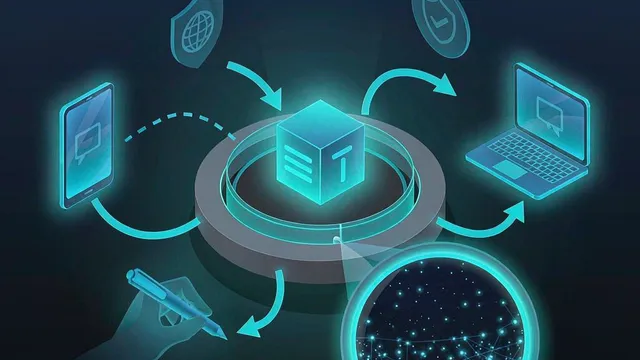
EvoX is a runtime layer written in Rust that sits between foundation models and the tools they invoke. The authors frame the system around a design principle they call The Second Policy: the foundation model provides a Semantic Policy (interpretation, planning, reasoning), while the harness supplies an Operational Policy that governs how actions are realized, how execution continuity is maintained, and how outcomes are grounded in observable evidence. By separating these concerns, EvoX aims to reduce the gap between plausible model decisions and successful tool execution, a problem that has limited the reliability of autonomous AI agents in real‑world settings.
How does EvoX differ from existing agent harnesses?
Previous harnesses such as SWE‑agent, OpenHands, Claude Code, Codex, Pi, Hermes, and Prime focus on specific interfaces, sandboxed environments, or minimal loops, but they generally leave execution control to the model’s own output format. According to the paper, this implicit approach can lead to tool‑call mismatches, interrupted workflows, and unsupported completion claims. EvoX, by contrast, makes the harness an active participant: it validates tool schemas, normalizes arguments, detects malformed calls, and injects deterministic recovery logic without altering the underlying model weights. This operational layer is meant to be provider‑agnostic, allowing the same harness to work with models from OpenAI, Anthropic, GLM, Kimi, and others.
What are the three mechanisms that EvoX introduces?
EvoX’s Operational Policy is implemented through three complementary mechanisms:
- Action Realization – Before a tool is invoked, EvoX checks the model’s output for malformed or "text‑leaked" calls, verifies that the arguments conform to the tool’s schema, and normalizes compatible formats. This step mitigates the frequent mismatch where a model produces a syntactically correct but semantically invalid request.
- Execution Continuity – The runtime monitors for repeated errors, applies circuit‑breaker logic to prevent endless loops, and supplies failure‑recovery guidance. It also manages context so that the model receives consistent state updates after each tool interaction, enabling smoother multi‑step workflows.
- Outcome Grounding – After a tool finishes, EvoX forces the model to align its reported outcome with the actual observed result, reducing cases where the model claims success without evidence.
These mechanisms are deterministic and do not require additional training or memory extensions, keeping the system lightweight while improving reliability.
How was EvoX evaluated and what were the results?
To compare harnesses fairly, the authors built Contrast, a controlled and auditable evaluation framework. Contrast enforces three conditions—locked, shared, and harness‑native—ensuring that each harness runs under comparable request parameters, task qualifications, and evidence collection. The framework also integrates fairness constraints and provider‑bound request verification, allowing the researchers to attribute success or failure to the harness rather than to differences in model prompting.
The evaluation covered five benchmarks, six foundation models, and six agent harnesses (including EvoX). Across 691 common task‑model pairs, EvoX achieved a numerical success rate of 56.2%, which was about 3.0 percentage points higher than the average of the five other harnesses. Notably, EvoX showed a 10.7‑point advantage on the GLM‑5.3 model and a 7.9‑point lead on the Kimi K3 model, highlighting that certain harness designs can be especially effective for particular providers. While Pi, Claude Code, and Hermes were close competitors (55.9%, 55.3%, and 54.4% respectively), EvoX’s edge was most pronounced on models where existing harnesses struggled.
The authors stress that these gains were realized without adding memory, evolution, or other extensions, underscoring the power of a well‑designed Operational Policy alone.
How can Grafy users explore EvoX concepts?
Grafy does not yet ship a built‑in EvoX runtime, but creators, developers, and researchers can still experiment with the ideas presented in the paper using existing Grafy tools:
- Grafy Reader – Load the EvoX arXiv PDF directly in the Reader app to search, annotate, and ask follow‑up questions about specific sections of the paper. This lets you dissect the architecture, the three mechanisms, and the Contrast evaluation methodology without leaving the workspace. (Path: /reader)
- Grafy Code – Re‑create a simplified version of the Action Realization or Execution Continuity logic in the Code studio. Because EvoX is open‑source and Rust‑based, you can paste snippets into the editor, run them against a local model endpoint, and observe how deterministic checks affect tool‑call success. (Path: /code)
- Grafy Chat – Compare how different foundation models respond to the same tool‑use prompt by switching models side‑by‑side. This mirrors the multi‑model evaluation in the paper and helps you see where a harness‑level policy might be most needed.
By combining these apps, Grafy users can perform a hands‑on audit of their own agent pipelines, adopt the three‑step operational approach, and even prototype a custom harness that follows the Second Policy philosophy.
Frequently asked questions
Does EvoX require any changes to the underlying language model?
No. EvoX operates entirely as a runtime layer that validates and normalizes model output, injects deterministic recovery, and grounds outcomes. The foundation model’s weights remain untouched, so the same model can be used with or without EvoX.
How does Contrast ensure a fair comparison between different harnesses?
Contrast locks task definitions, shares request parameters across harnesses, and verifies that each model request conforms to provider constraints. It also records execution evidence (tool logs, return values) and uses an evidence‑based adjudication process to attribute success or failure to the harness rather than to model variance.
Can Grafy’s existing tools replace the functionality of EvoX’s Operational Policy?
Grafy does not currently provide a dedicated Operational Policy harness, but its Code studio can be used to prototype validation and recovery logic, while Reader and Chat let you observe model behavior under controlled conditions. Together they offer a sandbox for testing the principles behind EvoX, even if they do not replicate the full Rust runtime.
Source: Grafy Research Lab — EvoX: Rethinking the Agent Harness as a Runtime Policy
More news

Cmpnd launches dspy-wsp: weight‑space programming
Cmpnd released dspy-wsp, a prototype DSPy optimizer that edits model weights directly without gradients.

Prefix‑Guided Sampling Cuts Test‑Time Costs While Boosting LLM Reasoning
A new method called Prefix‑Guided Sampling (PreG) uses early confidence signals to prune low‑quality reasoning paths.
guardscope Framework Quantifies Runtime Control Coverage for LLM Agents
A new arXiv study introduces guardscope, a two‑stage framework that measures how many of an LLM agent's action paths are inspected by runtime controls.