Google DeepMind Says AI Agents Verified Signal Code
Google DeepMind reported that AI agents formally verified Signal's cryptographic code using AlphaProof Code, a milestone for AI-driven software security.
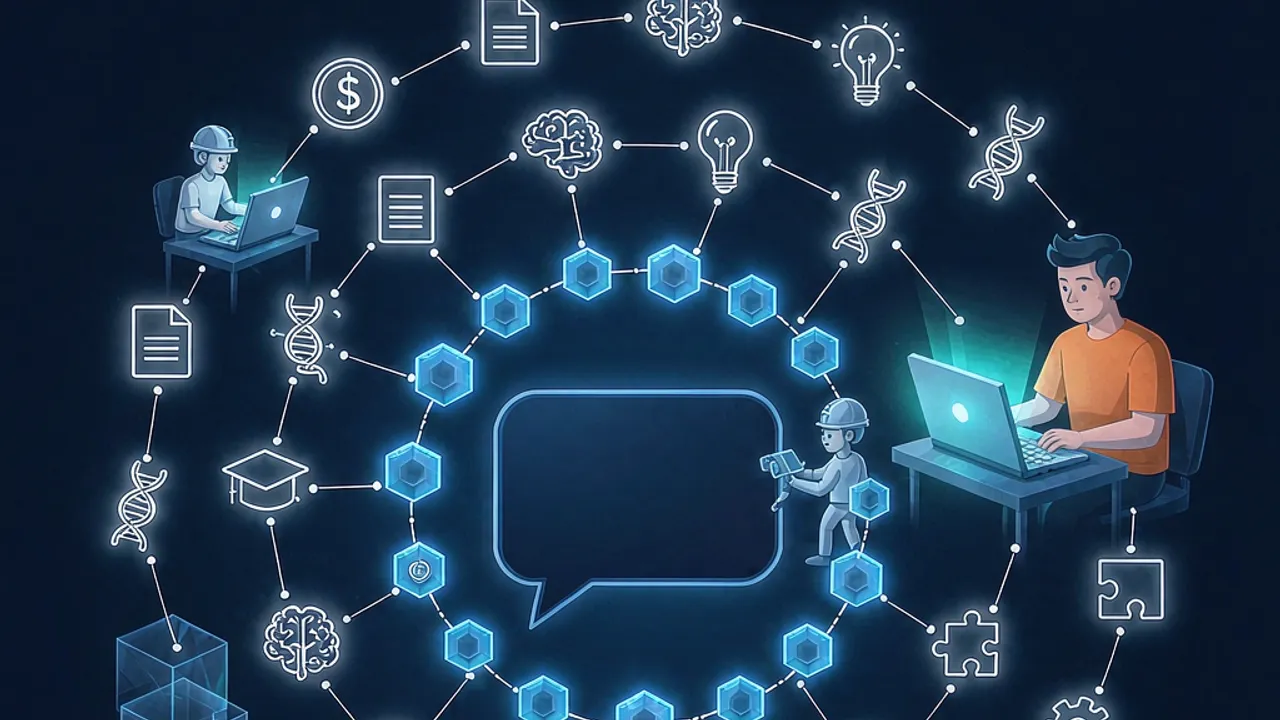 Source: Google DeepMind
Google DeepMind researchers said that AI agents helped formally verify key security properties of the code behind Signal’s encrypted messaging protocol. The announcement matters because formal verification, which means proving software is correct through mathematics, is the highest standard of security assurance, and the milestone was described as a breakthrough in verifying complex software at depth.
Google DeepMind's AlphaProof Code milestone
Google DeepMind said it was sharing a milestone in software security that it has long considered a grand challenge. According to the company’s blog post and technical paper, researchers guided AI agents to mathematically prove key security properties of the actual code underlying the Signal protocol, the technology that protects private conversations in apps like Signal and Google Messages. The source dated the announcement to November 10, 2026.
AlphaProof Code, the subject of the announcement, was described as a novel agentic framework for formal verification at unprecedented depth. Google DeepMind framed the work as combining human expertise with AI agents. The company said the approach represented a breakthrough in verifying complex software.
Why formal verification matters for complex code
Formal verification is the practice of mathematically proving that code runs correctly without flaws. Google DeepMind described it as the highest standard of security assurance, but said it is difficult and often labor-intensive. The source noted that cryptographic protocols underpin nearly all digital communication, from online banking to web browsing, and that a single flaw can expose millions of people at once.
Most protocol verification, according to Google DeepMind, has stopped at the design level. The AlphaProof Code effort went further by proving that compiled code fulfilled key security properties, such as keeping messages protected before and after a device was temporarily compromised, down to the exact code running on devices. Google DeepMind said real-world vulnerabilities often hide in the gap between design and implementation, which made the work more complex.
How AlphaProof Code verified Signal
Google DeepMind said AlphaProof Code is a multi-LLM agentic framework that splits formal verification work the way a research team would. Human experts work with AI to decide what to prove, and AI agents do the proofs. Researchers collaborated with a mix of models to translate Signal’s security goals into formal mathematical specifications, with human experts reviewing every one.
From there, agents powered by Gemini Carbon did the proofs, generating over six million lines of Lean, a computer language that mathematically proves the accuracy of code. Next, the agents audited the proof and highlighted areas that needed a second look by a human. Google DeepMind said that was just one percent of the codebase, a massive time savings. Because Lean automatically checks the rest, experts could focus their review where human judgment matters most.
Even at that complexity, Google DeepMind said the verification process took four weeks, a task that historically takes expert teams years. The company said the effort proved that Signal’s core cryptographic code delivered the security protections its experts specified.
What the bug test and timeline showed
To confirm that AlphaProof Code can tell correct code from buggy code, the team reintroduced two real, previously fixed bugs into an isolated version of Signal’s code. In both cases, the system produced a machine-checked proof that the buggy version was insecure.
What it means for security and future work
Google DeepMind said the result marks the first time AI was used to formally verify a widely deployed cryptographic protocol at this depth, and the first time any method formally verified an implementation of a widely deployed protocol like this, according to the source. Signal’s chief technology officer, Ehren Kret, said prior formal verification focused on smaller portions of the code and that the new approach enables significant expansion. He said using AI agents to translate live code into valid Lean theorems is a major breakthrough.
Google DeepMind said the work demonstrates how AI can bring elite security assurance to businesses, governments and critical infrastructure, helping defend against agent-driven cyber threats. It said verifying Signal’s core cryptography lays groundwork to secure other vital systems, from medical device firmware to power grid software. Scaling these techniques requires continued research, and Google DeepMind said it open-sourced formal verification artifacts for community use.
How can Grafy users engage?
For developers exploring formal verification or AI coding workflows, Grafy Code is the relevant app: an AI coding studio that installs packages and runs code. Researchers who want to read the technical paper alongside the announcement could use Grafy Reader to search and question PDFs and papers. Grafy Code Grafy Reader
Frequently asked questions
Did AlphaProof Code formally verify Signal's encryption?
According to Google DeepMind, AlphaProof Code helped AI agents formally verify key security properties of Signal's cryptographic protocol. The source said the work went down to the compiled code and used Lean proofs. It described the milestone as the first AI formal verification of a widely deployed cryptographic protocol at that depth.
How did the team test whether AlphaProof Code could detect insecure code?
Google DeepMind said AlphaProof Code was tested by reintroducing two real, previously fixed bugs into an isolated version of Signal's code. In both cases, the system produced a machine-checked proof that the buggy version was insecure. The source presented this as a way to confirm the system could tell correct code from buggy code.
What did Signal's chief technology officer say about AlphaProof Code?
Ehren Kret, Signal's chief technology officer, said prior formal verification had focused on smaller scopes. He said the new approach enables significant expansion and called AI agents translating live code into valid Lean theorems a major breakthrough. He said AI-driven security threats are growing and rigorous verification gives greater confidence.
Source: Google DeepMind — Introducing AlphaProof Code: a breakthrough in verifying complex software at depth
More news
Frontier3DBench Tests Whether Coding Agents Build 3D Worlds
Einsia's Frontier3DBench tests whether coding agents can build 3D objects, scenes and working worlds; GPT-6.1-sol led overall. See what it means.
Anthropic launches Claude Fable 5.2, Mythos 5.2, cuts API prices 20%
Anthropic's Claude Fable 5.2 and Mythos 5.2 top several third-party benchmarks and cut API prices 20%. Here's what the effort settings mean for your bill.
Chrome's Modern Web Guidance hits 1.0, adds Firefox and Edge
Chrome released Modern Web Guidance 1.0, giving coding agents expert web best practices, now backed by Firefox and Edge. Here's what changed.