Google launches Dreambeans in India with 13 local languages
Google has launched Dreambeans in India, its first market outside the US, with support for 13 Indian languages. We explain what it does next.
 Source: TechCrunch — AI
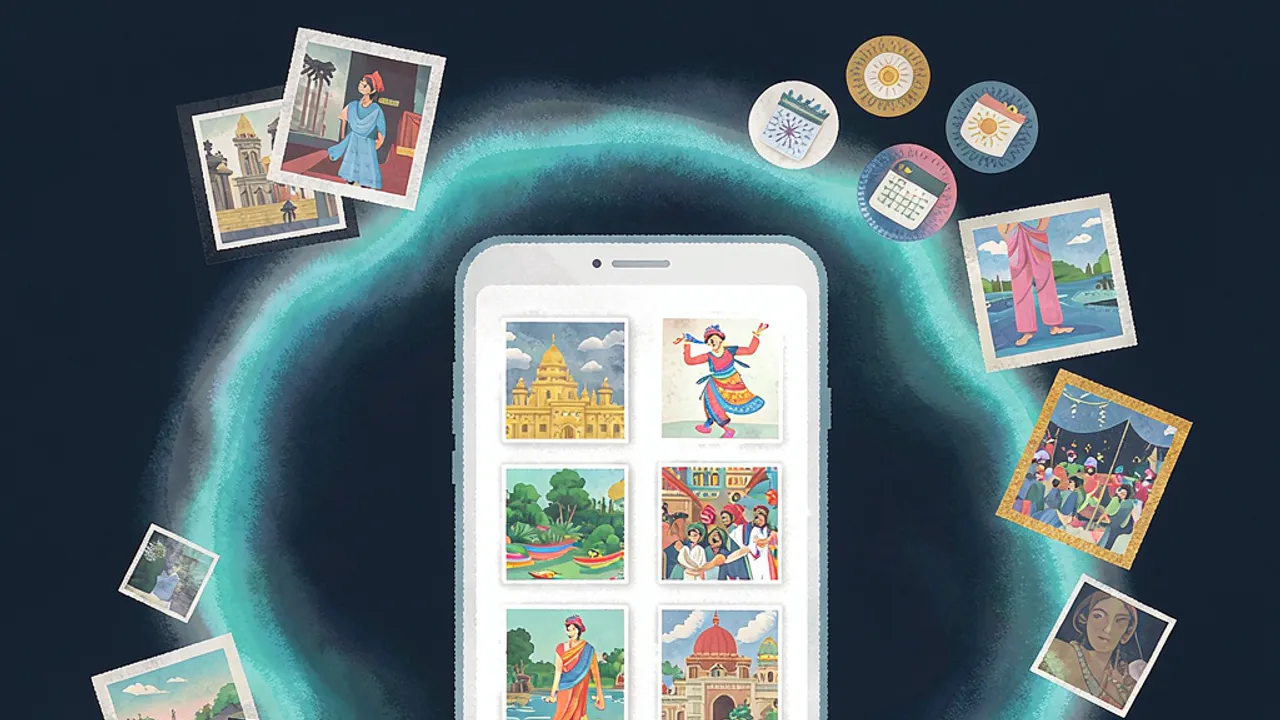
Google has launched its experimental AI app Dreambeans in India, its first market outside the United States, with support for 13 Indian languages including Hindi, Punjabi, Tamil, Telugu and Bengali alongside English, according to TechCrunch. The move matters because it tests whether proactive, personalized visual stories drawn from a user's connected Google accounts can scale beyond early US adopters in the world's second-largest internet market.
What is Dreambeans and what has Google launched in India?
Dreambeans is an experimental app available on Android and iOS that proactively generates personalized, illustrated stories about a user's interests and everyday life, without requiring the user to enter a prompt, according to TechCrunch. It was introduced in June and, less than two months ago, Google made it available to all eligible US users aged 18 and older. The India launch, reported on Monday, is the app's first expansion outside the US.
The app draws on information from connected Google services, including Calendar, Gemini, Gmail, Photos, Search and YouTube, to build those stories. It initially featured static, AI-generated illustrations, but Google has recently added a feature that uses its Veo video-generation model to animate images in select stories, according to TechCrunch.
Google said it chose India because of strong interest from Indian users seeking access and the widespread use of its services in the country. Google product manager Gozde Oznur said during a press briefing, as reported by TechCrunch, that India stood out for its high overlap of users across Gemini, Gmail and Google Photos.
Which languages does Dreambeans support in India, and what is the limitation?
Dreambeans now supports 13 Indian languages, including Hindi, Punjabi, Tamil, Telugu and Bengali, alongside English, according to TechCrunch. That breadth is central to the India strategy, because it allows the app to generate stories in the language a user selects rather than limiting the experience to English.
There is, however, a constraint that could affect everyday use. Users can select only one language at a time for their generated stories. The app can draw on information across Google services in multiple languages, but it cannot currently generate stories that mix languages, Oznur said during the briefing, according to TechCrunch.
That limitation may matter in India, where many people regularly switch between languages. TechCrunch notes that users often mix Hindi and English in what is commonly known as Hinglish. A single-language output could therefore feel less natural for people whose digital activity, messages and conversations routinely move between languages.
How well has Dreambeans performed in the US so far?
Dreambeans has recorded nearly 55,000 downloads in the US since its June debut, according to estimates from market intelligence firm Sensor Tower shared with TechCrunch. About 63% of those downloads came in September, when Google opened the app to all eligible US users aged 18 and older. Downloads then dropped 84% month over month to about 5,500 in October, according to the same estimates.
The early numbers are modest compared with general-purpose AI apps. In the first 30 days after Google opened Dreambeans to all eligible US users, the app recorded an estimated 29,000 downloads, compared with 7.4 million for Meta's Muse, 2.8 million for ChatGPT, 362,000 for Grok Bot and 155,000 for Claude during their respective first 30 days after launch, Sensor Tower estimates show, according to TechCrunch.
The comparison is not like-for-like. Unlike those general-purpose apps, Dreambeans focuses on generating personalized stories instead of responding to a broad range of user queries. Its value proposition is narrower: it surfaces a visual narrative based on connected activity, rather than acting as a conversational assistant or a tool for answering questions on demand.
How does Dreambeans handle privacy and upsetting memories?
Dreambeans' dependence on information from users' Google accounts raises questions about privacy and data access, according to TechCrunch. The app uses Google's Personal Intelligence technology to draw on connected services and personalize its AI-generated stories. Those services can contain sensitive personal information that some users may not want to share with an AI app just to receive personalized content.
Users can choose which Google services to connect to Dreambeans and disconnect them at any time, Oznur said, according to TechCrunch. They can also delete their Dreambeans data from within the app. Oznur asserted that information deleted from the underlying connected services is also removed from Dreambeans' personalization system.
Users can also tell Dreambeans to avoid certain subjects, including business-related information, and the app will try to adjust its stories accordingly, Oznur said. Dreambeans is available only to personal Gmail account holders, not enterprise users, and generated stories are visible only to the account holder, according to TechCrunch.
The proactive approach also carries a risk of surfacing memories that users may find upsetting. Oznur acknowledged that Dreambeans could generate stories involving people who have died, for instance. She said users can tell the app to stop showing certain subjects, comparing the feature to controls in Google Photos that let users limit which memories appear.
What does this mean for creators using AI tools in Grafy?
For creators, Dreambeans is a useful case study in the difference between prompt-led generation and proactive personalization. Dreambeans does not wait for a prompt; it assembles a story from connected activity. In Grafy, the more controllable counterpart is Grafy Creator, where you generate images and video from a prompt or a photo and decide what source material is used, rather than allowing an app to infer a narrative from your accounts.
The language limitation is also instructive. If you are working on multilingual content, you can test how different models handle Hindi, Tamil or Bengali prompts side by side in Grafy Chat, and keep the outputs in a branching history with Grafy Graph so you can compare versions without losing earlier attempts. For research and fact-checking around a topic before you create, Grafy Reader lets you question PDFs and papers directly.
Oznur told reporters that Google is exploring ways to make Dreambeans more actionable, moving beyond personalized stories and recommendations to help users act on the app's suggestions, according to TechCrunch. Until then, the app remains an experiment in ambient, personalized storytelling — and a reminder that consent, language choice and the ability to exclude sensitive subjects are central design decisions, not afterthoughts.
Frequently asked questions
Is Dreambeans available to enterprise Gmail users in India?
No. According to TechCrunch, Google product manager Gozde Oznur said Dreambeans is available only to personal Gmail account holders, not enterprise users. Generated stories are also visible only to the account holder, which limits how the app can be used in shared or workplace contexts.
Has Google added Veo-based animation to Dreambeans?
Yes. According to TechCrunch, Dreambeans initially featured static, AI-generated illustrations, but Google recently added a feature that uses its Veo video-generation model to animate images in select stories, expanding the app beyond still images.
Can users disconnect Google services from Dreambeans at any time?
Yes. According to TechCrunch, users can choose which Google services to connect to Dreambeans and disconnect them at any time. Users can also delete their Dreambeans data from within the app, and Oznur said deleted information from connected services is removed from personalization.
Source: TechCrunch — AI
More news

Google's Gemini Now Edits Docs and Files in Chats
Google's Gemini now generates and edits Docs, PDFs, Sheets and slides in chats. The Verge explains what changed and what is limited. Read more.
Web-scraped fine-tuning broke on boilerplate, Reddit ML post finds
A Reddit ML poster found boilerplate in scraped web data led to half-rendered HTML-like outputs. Here is what fixed it and what to check first.

BYOD Converts Four Open Models to Diffusion With LoRA Alone
Four open autoregressive models were converted to diffusion models using LoRA adapters alone, with the base models frozen. See the results and limits.