New Decision Framework Shows When Streaming Oversampling Beats Re‑Evaluation in Delayed, Imbalanced Data Streams
A recent arXiv study compares streaming oversampling with continuous re‑evaluation on imbalanced.
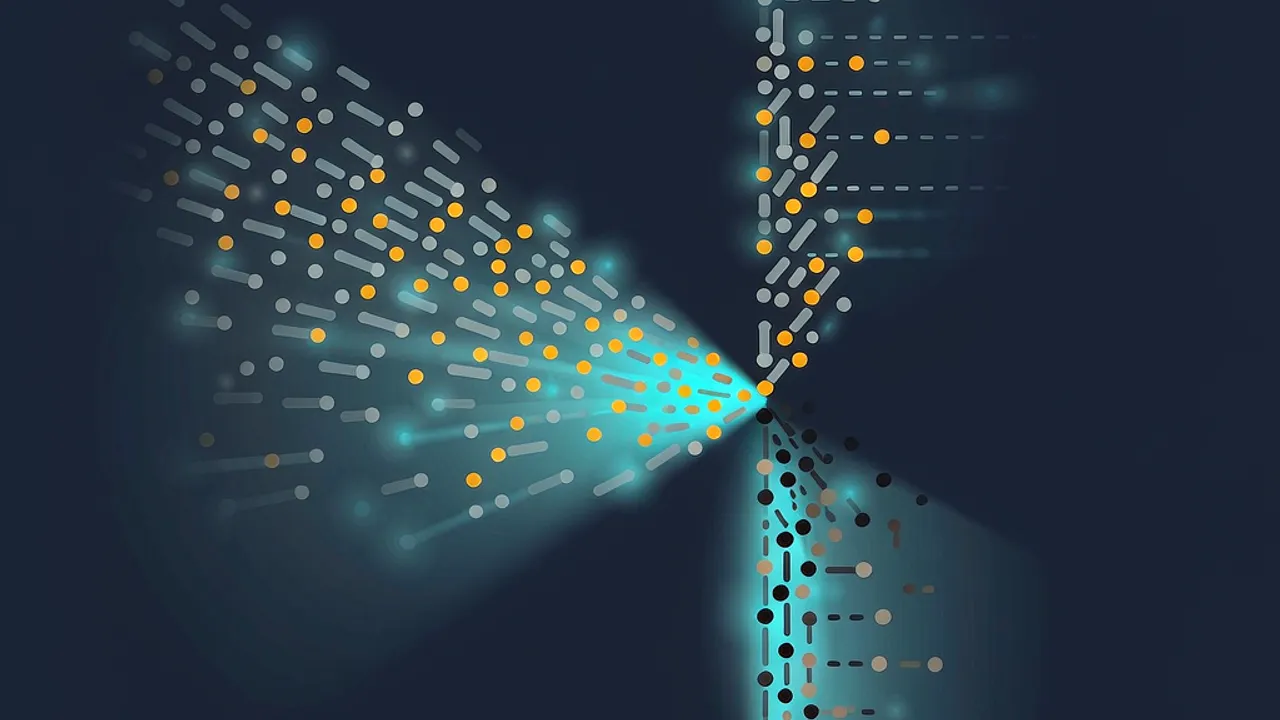 Source: Grafy Research Lab
For imbalanced data streams where true labels arrive late, researchers have asked whether adding a streaming oversampler still matters, or if continuously re‑evaluating earlier predictions can recover the lost performance. A new arXiv paper published on 16 Nov 2026 provides an extensive experimental answer and offers a decision framework that guides practitioners on when to deploy each technique.
What problem does delayed labeling create for imbalanced streaming classifiers?
Streaming classification must handle three pressures at once: a continuous flow of instances, a skewed class distribution, and possible concept drift. Traditional evaluations assume a test‑then‑train protocol where the label is available immediately after the model predicts. In real deployments—fraud detection, clinical outcomes, online conversion—labels can be delayed by minutes, hours, or even days. This delay hampers the model’s ability to adapt to drift and to learn the minority class, potentially degrading predictive performance. The paper formalises the delay using two parameters: the delay‑to‑drift ratio for synthetic streams (where is the label lag and the drift window) and the delay percentage for real streams (the proportion of the stream that elapses before a label arrives) (according to the authors).
How did the authors compare streaming oversampling with continuous re‑evaluation?
The study evaluated 15 streaming classifiers – six bare base learners and nine variants that integrate oversampling methods such as C‑SMOTE, VFC‑SMOTE, OOB/UOB, and RebalanceStream. Experiments ran on six synthetic streams (covering abrupt and gradual drifts) and six real‑world datasets (including Electricity, KDDCup, Forest Covertype, and Credit Card Fraud). Each stream was processed under three delay regimes ( for synthetic, for real) and predictions were recorded both at arrival and after a refinement window of labels – the point at which re‑evaluation occurs. Performance was measured with standard predictive metrics and computational overhead, and statistical significance was assessed using within‑cell paired tests and a difference‑in‑differences (DiD) analysis.
What are the headline findings?
- Re‑evaluation recovers delay‑induced loss on drift‑active streams – when concept drift is present, waiting for later labels and updating the model improves predictions, even without oversampling.
- Re‑evaluation is ineffective on stationary streams – if the underlying concept does not change, delayed labels do not provide a recovery channel, leaving the minority class under‑represented.
- Oversampling adds marginal value only in one real‑data configuration – across the six real datasets, the statistical benefit of oversampling over pure re‑evaluation was detectable in a single case, suggesting limited practical gain.
- Synthetic Pareto recommendations do not transfer – cost‑performance trade‑offs derived from controlled synthetic streams failed to predict real‑world behaviour; instead, Pareto fronts split according to drift density (dense‑drift vs. sparse‑drift regimes).
These results overturn the common assumption that oversampling is always beneficial in delayed‑label settings.
How does the three‑axis decision framework work?
The authors organise the decision space around three observable axes:
- Drift density – how often and how quickly the data distribution changes (high vs. low).
- Minority‑class learnability – the intrinsic separability of the minority class, independent of the imbalance ratio.
- Delay relative to the refinement window – whether the label lag (or ) is shorter or longer than the ‑label window used for re‑evaluation.
Two “channels” compete:
- Recovery channel – the re‑evaluation mechanism that refines predictions once delayed labels arrive.
- Minority‑coverage channel – the oversampling mechanism that injects synthetic minority examples to boost representation.
If drift density is high and the delay is shorter than the refinement window, the recovery channel usually dominates, making oversampling unnecessary. Conversely, when drift is sparse, the minority class is hard to learn, and delays exceed the refinement window, the minority‑coverage channel can provide a measurable edge. Practitioners are advised to monitor these axes online and switch strategies as the stream evolves.
How can creators, developers, and researchers apply these insights with Grafy?
- Explore the paper with Grafy Reader – upload the PDF to the Reader app to ask natural‑language questions, extract tables, or generate summaries without leaving the workspace.
- Prototype a re‑evaluation pipeline in Grafy Code – use the AI‑assisted coding studio to prototype a prequential loop that stores predictions, waits for delayed labels, and recomputes refined scores after new labels.
- Experiment with synthetic streams via Grafy Chat – ask the multi‑model chat to generate synthetic data streams with configurable drift and delay parameters, then feed them into your own code.
- Visualise the decision framework – build a quick graph of drift density vs. delay using the Graph app, linking each node to a description of the recommended strategy (re‑evaluation or oversampling).
By combining these Grafy tools, users can replicate the paper’s experiments, adapt the decision framework to their own data, and iterate rapidly on streaming models.
Frequently asked questions
Does continuous re‑evaluation completely replace the need for streaming oversamplers?
No. Re‑evaluation recovers performance on streams with active drift and short delays, but on stationary streams with long delays and hard‑to‑learn minority classes, oversampling can still provide a measurable benefit.
What delay ratios were found to be critical for choosing a strategy?
The study highlights the delay‑to‑drift ratio (or delay percentage ) relative to the refinement window of labels. When (or ) exceeds this window, the recovery channel weakens and oversampling becomes more attractive.
Can the decision framework be automated in a production system?
Yes. By continuously estimating drift density, minority‑class separability, and current label lag, a system can switch between a pure re‑evaluation loop and an oversampling‑augmented pipeline, following the three‑axis guidelines proposed in the paper.
Source: https://arxiv.org/abs/2611.17981
More news

Local Agent Harnesses Scale From 0.75B to 4.7B, New Study Finds Mingbird Leads
A Grafy Research Lab paper maps five locally‑run agent harnesses across four open‑weight models, showing the Mingbird harness outperforms others at every size.

CARE Introduces Retrieval‑Aligned Semantic IDs for Generative Retrieval
Grafy Research Lab unveils CARE, a new SID tokenizer that quantizes in a retrieval‑aligned space.
Study Shows Reusing Old Vector Index Only Delays, Not Eliminates, Re‑encoding
A new Grafy Research Lab paper finds that reusing an existing embedding index merely postpones full re‑encoding.