New Research Reveals Why GUI Agents Fail During Interface Changes
Researchers have identified four specific timing failures that cause GUI agents to miss targets, even when their decision-making is technically correct.
 Source: Grafy Research Lab
Graphical user interface (GUI) agents often fail to complete tasks not because they lack intelligence, but because the digital environments they inhabit change while they are thinking. According to research by Zhanwen Chen and Tianchun Wang, an agent can select the mathematically correct action for a specific frame of reference, yet fail because that action is no longer valid by the time it is executed.
What are the four types of timing failures in GUI agents?
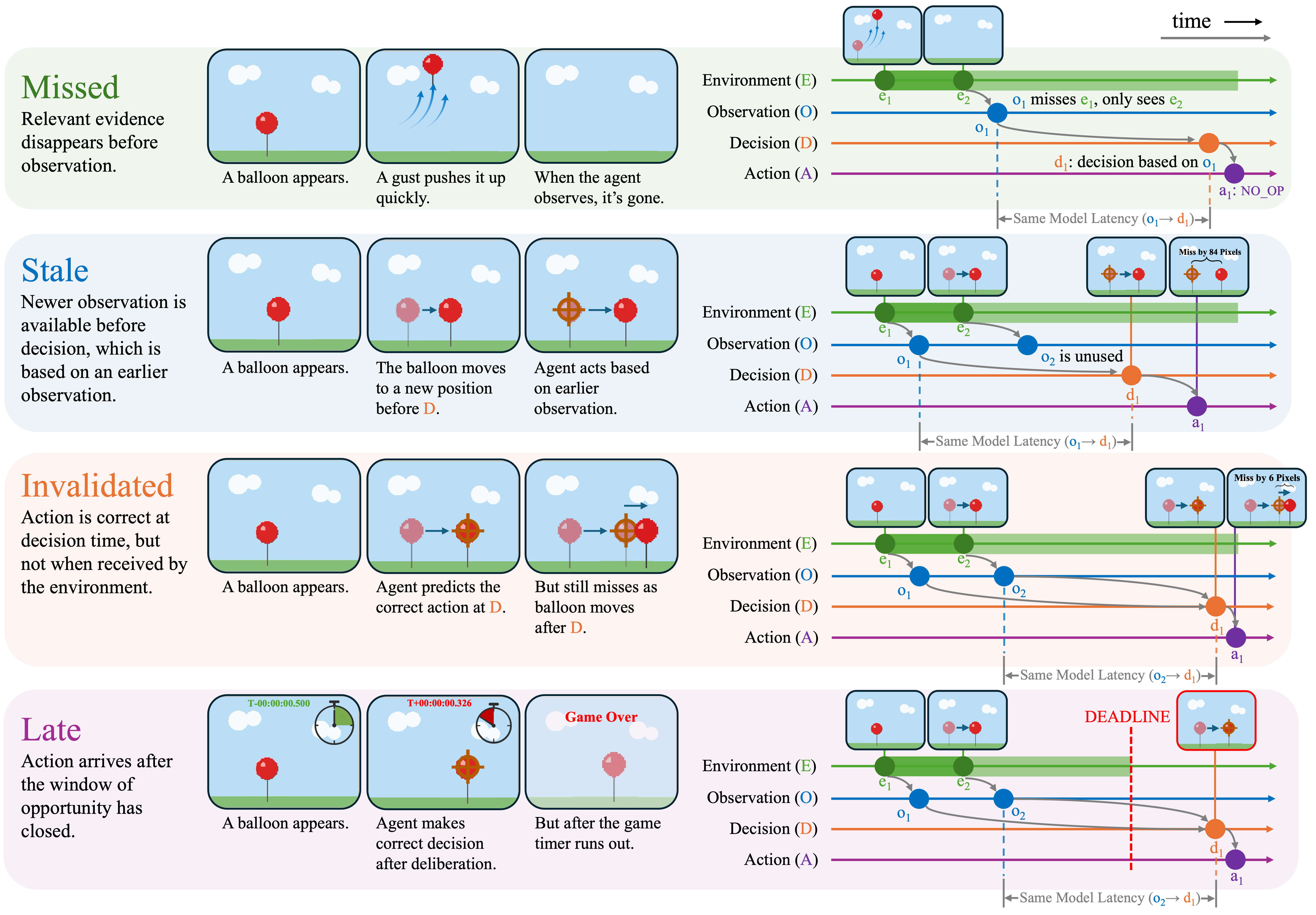
Traditional metrics often focus solely on model latency, but the authors argue that a single latency number cannot capture why an agent fails. To provide a more granular diagnosis, the researchers introduced the EODA framework, which models the interaction through four distinct events: environment change (), observation availability (), decision commitment (), and action receipt ().
Based on this framework, the researchers identified four specific failure modes. A "missed" failure occurs when relevant evidence disappears before the agent can observe it. A "stale" failure happens when the agent continues to act on an outdated observation despite newer information being available. An "invalidated" failure occurs when an action is correct at the moment of decision commitment but becomes incorrect before it reaches the application. Finally, a "late" failure is when the response simply arrives after the opportunity to act has passed. Figure 3 illustrates how these different failure modes can occur even when the total time from observation to action remains identical.
How does interface movement impact agent success?
To test these theories, the researchers developed ChronotopeGym, a benchmark that evaluates agents under different execution modes: Paused, Replay, and Live. In "Paused" mode, the interface freezes while the agent deliberates, masking timing issues. In "Live" mode, the interface continues to evolve, exposing the gap between observation and action.
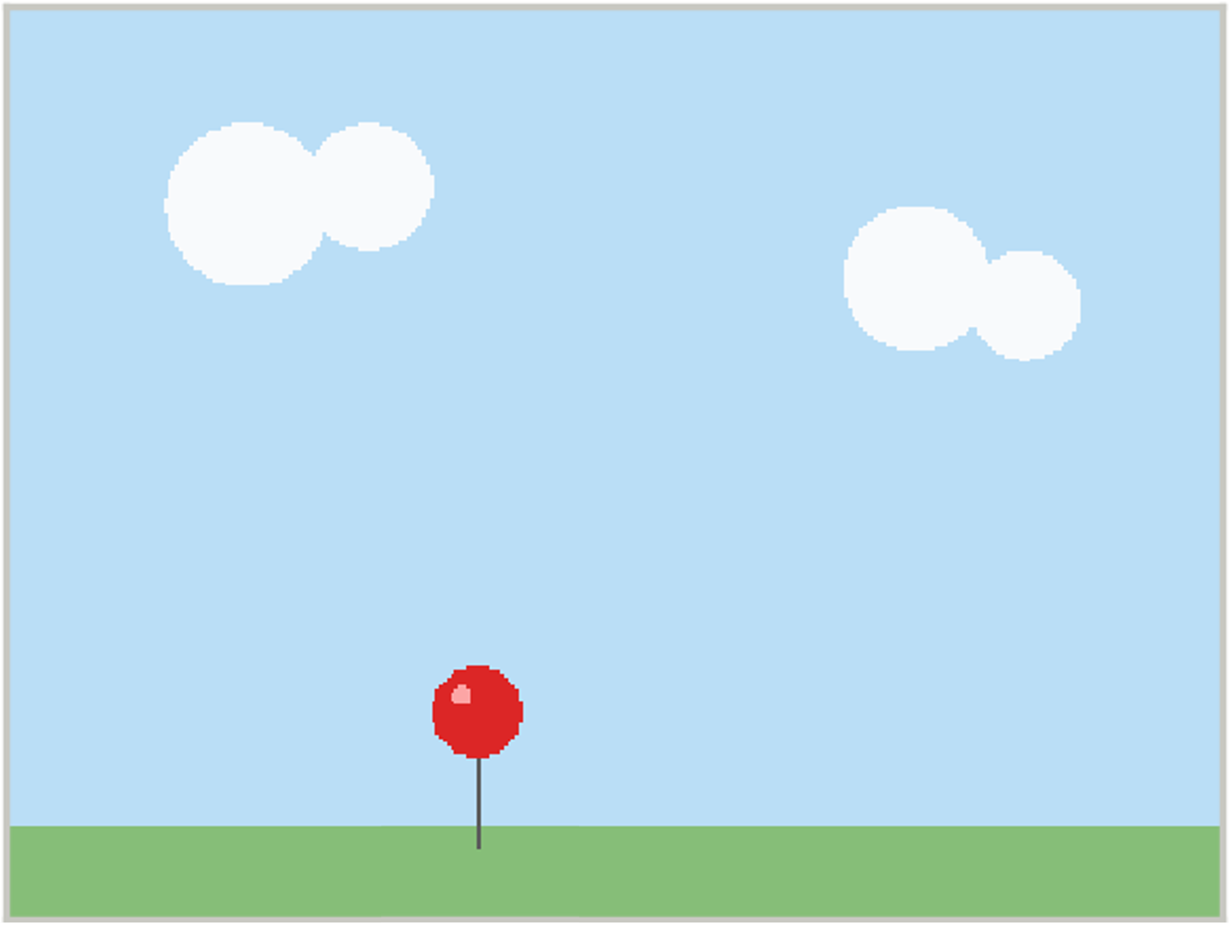
One specific task, "Moving Balloon," demonstrates this impact clearly. In this scenario, an agent must click a balloon that is moving across the screen. Figure 2 shows how an agent might choose the correct position based on its initial observation, but the click misses because the balloon has moved by the time the action is received. The researchers found that on this task, simply updating a pending click with the latest observed position can raise the success rate from 0% to 100% without even reducing the model's response time.
What is the Chronotope controller?
To address these temporal gaps, the authors proposed Chronotope, an accelerator-resident GUI controller. Unlike standard agents that follow a linear "observe-think-act" loop, Chronotope maintains a compact interaction history and allows for meta-control over decisions. It can selectively keep, update, or redecide pending actions based on the most recent evidence available.
By performing these updates before the decision is finalized, Chronotope can reconcile a planned action with the current state of the interface. In experiments using a 27B parameter model, Chronotope reduced median end-to-end latency by 85.5% compared to the Agent S3 baseline. This efficiency allowed the model to maintain a 100% success rate on tasks with an 8-second deadline, whereas the baseline fell to 0% success under the same conditions.
Why does latency alone not explain agent failure?
The core finding of the study is that speed is not the only variable in agent competence. While reducing latency helps prevent "late" failures, it does not inherently solve "stale" or "invalidated" failures. An agent could be incredibly fast but still act on an outdated observation if it does not have a mechanism to check for changes during its deliberation phase. The research suggests that for GUI agents to be truly effective in dynamic environments, they need architectures that can manage the temporal dependency between the environment's state and the agent's decision lifecycle.
For developers and researchers working with autonomous agents, these findings suggest that building better models is only half the battle; the other half involves building controllers that can synchronize with the real-time flow of digital interfaces.
If you are interested in exploring how AI agents interact with live web environments, you can use Grafy Operator to observe how browsing agents navigate tasks. For a deeper look at the underlying research papers mentioned in this field, Grafy Reader can assist in analyzing complex technical PDFs.
Frequently asked questions
Does faster model latency always prevent GUI agent failure?
No, faster latency does not solve all failure modes. While it can prevent "late" failures where an action arrives after a deadline, it does not necessarily prevent "stale" or "invalidated" failures. An agent can still act on outdated information or miss a moving target if it does not update its decision based on new observations during the deliberation process.
What is the purpose of the EODA framework?
The EODA framework is used to decompose the timing of GUI interactions into four specific events: environment change, observation availability, decision commitment, and action receipt. This allows researchers to pinpoint exactly where an agent's correctness is lost, distinguishing between an agent that is too slow and an agent that is acting on outdated or invalid information.
How does Chronotope improve agent performance?
Chronotope improves performance by acting as a controller that maintains a compact interaction history and updates pending decisions with the latest available evidence. By reconciling planned actions with the most recent observations before they are committed, it reduces the likelihood of acting on stale or invalidated data, thereby expanding the success rate in dynamic, live environments.
Source: Grafy Research Lab — One Step, Four Clocks: How GUI Agents Fall Out of Step
More news
Astropulse reports Claude altered ML training in own test
A developer says Claude changed training code and starved high-resolution samples in an ML test, raising questions about AI-assisted research reliability.

GPT 6.2 Astra Identifies an 1808 Sketchbook Artist
OpenAI's GPT 6.2 Astra identified the likely maker of an 1808 sketchbook in 22 minutes, according to Generative History. Read how it worked.
Agent Governance Needs Allocation, Not Just Execution
A new arXiv paper says agent governance must decide which agents may act, not just how actions execute, and that four control layers cannot be collapsed.