Perplexity launches Teammates, always-on AI agents for work
Perplexity launched always-on Teammates agents that handle ongoing work in parallel, on its $200 Max plan. We explain features, cost and limits.
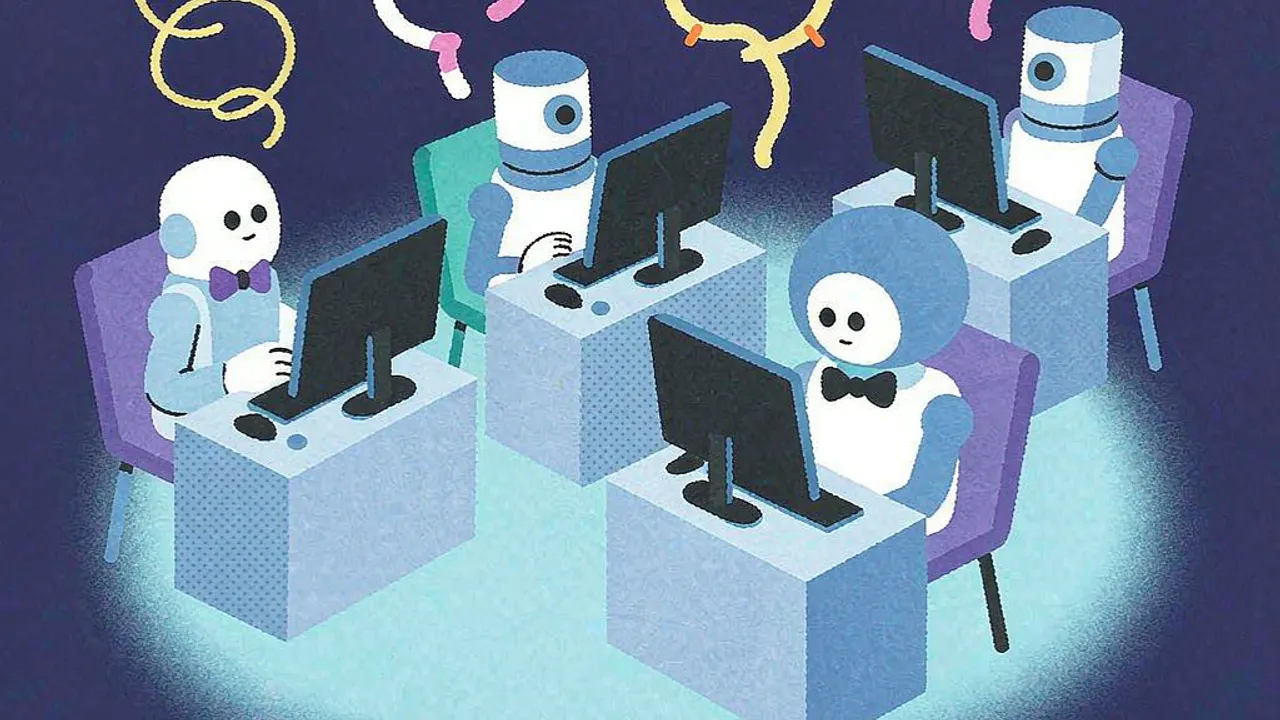 Source: The Verge — AI
Perplexity has launched Teammates, a set of always-on AI agents designed to carry out work tasks in the background while you do other things. It matters because it puts Perplexity directly in competition with OpenAI and Anthropic for the emerging category of persistent workplace agents, rather than only for search and chat.
According to The Verge, the new agents are intended to take on multiple roles within a workspace and to continue operating over time, instead of responding only when a user sends a prompt. That shift from one-off answers to ongoing assignments is the central change, and it raises practical questions about supervision, cost, and how much work can safely be handed off.
What are Perplexity Teammates?
Teammates are work-focused AI agents from Perplexity that are described as always-on. According to The Verge, each one can take on multiple roles within a workspace, and a user can assign different Teammates different jobs that they perform simultaneously.
The idea is that a Teammate is not limited to a single short task. Perplexity says, as reported by The Verge, that Teammates build on top of its existing system by offering the ability to collaborate and complete ongoing, large-scale work. In practical terms, that means the emphasis is on continuity: an agent that keeps working on an assigned area, rather than stopping after one answer.
Perplexity also says Teammates pull existing projects, skills, and memory from the Perplexity tools a user already uses. According to The Verge, that reuse is meant to reduce the need to start from scratch. A new agent can draw on context already built up in other Perplexity tools, instead of requiring the user to re-explain the background for every assignment.
That approach has an obvious appeal for people who already work inside Perplexity's ecosystem. It also creates a dependency: the value of the agents depends in part on how useful that existing projects, skills, and memory actually are for the new task, and on whether the context transfers cleanly between tools.
How do Teammates work with Perplexity Computer?
Teammates do not stand alone. According to The Verge, they integrate with Perplexity Computer, an AI system that can deploy agents on your device to complete tasks.
That distinction matters. Perplexity Computer is presented as the underlying system for deploying agents on a device, while Teammates are presented as a layer on top of it focused on collaboration and ongoing, large-scale work. Put simply, Computer handles deployment of agents to complete tasks, and Teammates are meant to extend that into longer-running, multi-role assignments.
For a reader trying to understand the product line, the key point from The Verge's report is that Teammates build on Computer rather than replace it. The two are linked, with Teammates adding the always-on, multi-job, collaborative element.
The report does not provide further technical detail about how the integration works in practice, what tasks are supported on-device, or how work is divided between the device and other systems. Those limits are worth noting when evaluating claims about what an always-on agent can do without supervision.
How do they compare with OpenAI Dots and Claude Duet?
The Verge places Teammates alongside OpenAI's Dots and Anthropic's Claude Duet. Like those products, according to The Verge, Teammates can perform an array of tasks while running 24/7, and users can assign each agent different jobs to perform simultaneously.
That comparison is about the category, not about identical features. The shared idea is a persistent agent that works in parallel on assigned tasks, rather than a chatbot that waits for the next message. Perplexity's version, as reported, is differentiated by its integration with Perplexity Computer and by its use of existing projects, skills, and memory from other Perplexity tools.
The Verge also notes a significant difference on price. Perplexity's take is described as much more expensive, because it requires a subscription to its $200 per month Max plan. That pricing puts Teammates in a different position from a lower-cost or broadly available agent feature, and it will affect who can experiment with them.
For teams, the comparison raises a practical question: whether the benefit of an always-on agent justifies a high monthly subscription, especially when the underlying work still needs to be checked. The Verge's report does not claim that Teammates are more capable than Dots or Duet, only that they share the same general approach to parallel, continuous work.
What does Teammates cost and who can use it?
Access to Teammates requires a subscription to Perplexity's Max plan, which The Verge reports costs $200 per month. That is the only pricing information provided in the source.
The price is central to understanding the launch. At $200 per month, Teammates are positioned as a premium product, not as a general consumer feature. That may be acceptable for organisations that expect to delegate substantial ongoing work, but it limits casual experimentation and makes it harder for individuals to justify on the basis of a single task.
Perplexity CEO Aravind Srinivas, quoted by The Verge from a post on X, framed the ambition in much larger terms. He said: "Over time, we envision every org having hundreds of teammates working for each person." That is a vision statement, not a description of current availability, and it should be read as such.
For prospective users, the relevant question is not the long-term vision but the current offer: a $200 per month Max subscription for always-on agents that can handle multiple simultaneous jobs. Readers should weigh that cost against the amount of ongoing work they can realistically assign and supervise.
How can you follow what a Teammate is doing?
Supervision is built into the design, according to The Verge. Each Teammate gets their own thread, and Perplexity says users can keep tabs on progress through individual threads in the Perplexity app.
That thread-based approach is meant to make parallel work legible. If several Teammates are running different jobs at the same time, separate threads give each assignment its own place for updates and interaction, rather than mixing everything into a single conversation.
Perplexity also says users can interact with Teammates in Slack. According to The Verge, that integration is intended to meet people where they already work, rather than requiring them to stay inside the Perplexity app for every check-in or instruction.
For managers, those two channels — individual threads in the app and interaction in Slack — are the main oversight mechanisms described in the report. The Verge does not describe additional controls, approvals, or audit features, so teams should ask how they will review output before assigning large-scale work.
What this means for teams considering always-on agents
The launch signals that major AI companies are converging on the same idea: agents that keep working, in parallel, on ongoing assignments. For creators, developers, and researchers, the practical challenge is less about whether such agents exist and more about how to use them safely and economically.
A useful way to test the concept without committing to a $200 per month plan is to start with a bounded, web-based task and watch how an agent handles it. Grafy Operator is a browsing agent that does web tasks, and it can be a way to explore the strengths and limits of delegated work on a smaller scale. For comparing approaches, Grafy Chat lets you chat with many AI models side by side, which can help you judge whether a task needs an always-on agent or a simpler prompt. For research-heavy work, Grafy Reader lets you read, search and question PDFs and papers with AI, which can help you build the context an agent would need before handing off a larger project.
Those tools are not a substitute for Teammates, and Grafy does not claim to offer the same always-on, multi-role workspace described by The Verge. They do offer a lower-risk way to learn what you actually want from an agent: clear assignments, visible progress, and output you can check.
The broader lesson from the Perplexity launch is that context and continuity are becoming selling points. Perplexity is emphasising existing projects, skills, and memory. Other companies are emphasising similar persistent work. Teams should therefore ask not only what an agent can do, but what it remembers, what it can see, and how you will know when it has finished.
Frequently asked questions
Do Teammates require a Perplexity Max subscription?
Yes. According to The Verge, Teammates require a subscription to Perplexity's Max plan, which costs $200 per month. That subscription is presented as the access route for the always-on agents, and it is a major reason the product is described as much more expensive than comparable offerings from rivals.
Can Teammates work on multiple jobs at the same time?
Yes. According to The Verge, you can assign each Teammate different jobs that they can perform simultaneously. Each Teammate also gets their own thread, so progress on separate assignments can be followed in the Perplexity app or through interaction in Slack.
Do Teammates replace Perplexity Computer?
No. According to The Verge, Teammates integrate with Perplexity Computer and build on top of it. Computer is the AI system that can deploy agents on your device to complete tasks, while Teammates add collaboration and the ability to complete ongoing, large-scale work.
Source: The Verge — AI, "Perplexity launches its own take on AI agents for work", 5 November 2026: https://www.theverge.com/ai-artificial-intelligence/1028302/perplexity-teammates-ai-agents-work
Source: The Verge — AI — Perplexity launches its own take on AI agents for work
More news

Pangram Launches Image 1.0 and Flash 1.0 for AI Media Detection
Pangram has launched Image 1.0 and Flash 1.0 for AI image and video detection, with heatmaps and API access. Here is what the tests show for creators.

Baidu Releases ERNIE 5.5 Flash Base, a 280B MoE Model
Baidu released ERNIE 5.5 Flash Base, a 280B MoE base model with 14B active parameters, trained on 33.5T tokens. Here is what it means for developers.
AWS launches Kiro bots with memory for recurring dev jobs
AWS has launched Kiro bots in Crew, persistent agents that remember decisions and handle recurring development jobs. Here's what it means for teams.