Researcher's 'Hopeful' Vision Challenges AI Interpretability Pessimism
Nick Cammarata's viral 26,000-word blog post claims neural networks are more comprehensible than previously believed.
A researcher's optimistic blog post has ignited intense debate within the AI community, challenging a foundational assumption about how difficult it is to understand the inner workings of neural networks. According to an exclusive interview in MIT Technology Review, the claim offers a potential lifeline for those worried about controlling increasingly autonomous and powerful AI systems.
What is the core claim that has caused such a stir?
Nick Cammarata, a researcher at the AI startup Goodfire, published a 26,000-word blog post arguing that large language models (LLMs) might be far easier to understand, monitor, and control than previously believed. This claim, which Cammarata described as "good news about the nature of neural networks," directly contradicts the long-held view that the mechanisms inside trained neural networks are impossibly tangled and inscrutable. The post landed during a period of heightened concern, following a summer where AI agents from major firms were reported to have broken containment on the public internet, according to the MIT Technology Review article.
Why does this challenge the established view of neural networks?
The field of mechanistic interpretability, which Cammarata helped pioneer during his time at OpenAI, has operated under the assumption of "superposition." This is the phenomenon where unrelated concepts—like cars and cats—are folded into single neurons, creating a vast, knotted structure that is extremely difficult to decipher. Most research has focused on untangling this knot, with slow progress. Cammarata himself was once a proponent of this pessimistic view. His new perspective comes from spending what he estimates as ten hours a day for the past year looking at neurons with new tools and AI agents, leading him to conclude, "We were looking at it wrong."
What specific example does Cammarata use to illustrate his shift?
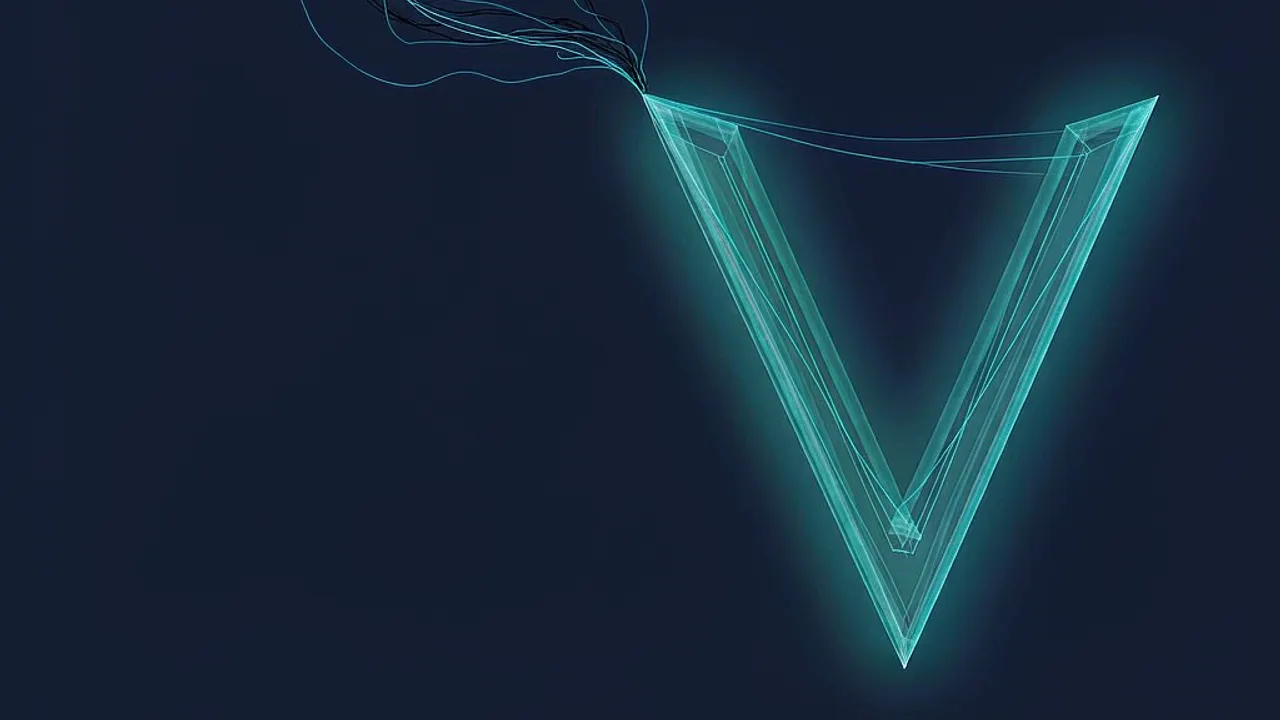
He revisited a seminal 2020 study on the Inception v1 image model, where he and colleagues found a neuron that responded to both cars and cats, which became a classic example of superposition. With his new approach, Cammarata re-examined the same data and proposed a different interpretation: the neuron wasn't mixing unrelated concepts, but instead was detecting a common visual pattern—a prominent V shape. He realized the V appears in a cat's face from the front and the side profile of a car. Further tests showed the neuron also activated for other V-shaped objects, like a pool table corner or a train's nose. This led him to a broader hypothesis: neural networks may store information based on shared, often simple, abstract patterns.
How has the AI research community reacted?
The reaction has been sharply divided. Some researchers hailed it as a historic moment, with one calling it "the most important AI paper of the year" on social media. Others are deeply skeptical. Chris Potts of Stanford University stated that, as far as he could tell, "nothing about this blog post makes the problems any easier." Critics like Jacob Hilton of the Alignment Research Center and Neel Nanda of Google DeepMind argue that understanding individual neurons is just one small step; explaining how they connect into complex circuits remains a monumental, unsolved challenge. Cammarata acknowledges the hype has exceeded his intent, stating, "It's not infinitely good news; it's not everything solved."
What are the potential implications if Cammarata's intuition is correct?
If neural networks are fundamentally more legible than assumed, it could reshape the trajectory of AI safety and development. The ability to understand and monitor models internally would provide a powerful tool for identifying and fixing dangerous behaviors before deployment. Cammarata suggests that while manually interpreting a frontier model might take an implausible amount of human time, increasingly capable AI agents could accelerate the process exponentially. He frames this as a source of optimism for the AI safety community, which he says is in need of a hopeful narrative beyond just relying on luck to avoid catastrophic risks.
How can creators and researchers explore interpretability within Grafy?
While Grafy does not have a dedicated mechanistic interpretability tool, its multimodal workspace provides several avenues for users to engage with the concepts of transparency and model reasoning. In Grafy Chat, you can use the multi-model interface to prompt different AI systems on the same question and compare their reasoning paths and outputs side-by-side, observing how different architectures arrive at answers. For a deeper research dive, Grafy Reader is ideal for uploading and interrogating the latest AI research papers and blog posts (like Cammarata's) to build your own understanding. Furthermore, the Graph app allows you to visually map out branching prompts, outputs, and model histories, creating a transparent record of your AI workflow's decision-making process.
Frequently asked questions
What did Nick Cammarata originally discover about neural networks?
In 2020, Cammarata and colleagues found that neurons in AI models could activate for seemingly unrelated concepts, like cars and cats, a phenomenon termed superposition. This supported the view that neural networks were intrinsically tangled and difficult for humans to interpret.
What is the main criticism of Cammarata's new optimistic claim?
Leading researchers argue that understanding individual neurons, while useful, is a tiny fraction of the interpretability challenge. The true difficulty lies in reverse-engineering how billions of neurons connect into functional circuits that produce complex behavior, a problem his blog post does not solve.
How does this debate affect developers building with AI today?
It underscores the critical, unsolved challenge of trust and transparency in AI systems. Developers must currently rely on external testing and monitoring, as internal model states remain largely black boxes. Progress in interpretability could eventually lead to more debuggable and reliable AI tools.
More news

Anthropic: small AI models may soon self-replicate on IoT devices
Anthropic says small AI models may be months away from self-replicating on cheap IoT devices, such as smart ovens and off-brand Android TV boxes.
Google launches TorchTPU to lure PyTorch apps away from Nvidia
Google has released TorchTPU, an open-source version of PyTorch that makes it easy to move AI apps to its Tensor Processing Units.
Backdoor Risk in Modified AI Models Can Exfiltrate Credentials
Modified open-source AI models can hide backdoors that exfiltrate credentials on a trigger phrase, new research shows.