Three‑Tier Architecture Lets Companies Scale Oversight of AI Agents
A new three‑tier model separates runtime fixes from human approval, letting firms monitor AI agents at scale while keeping high‑impact decisions under expert.
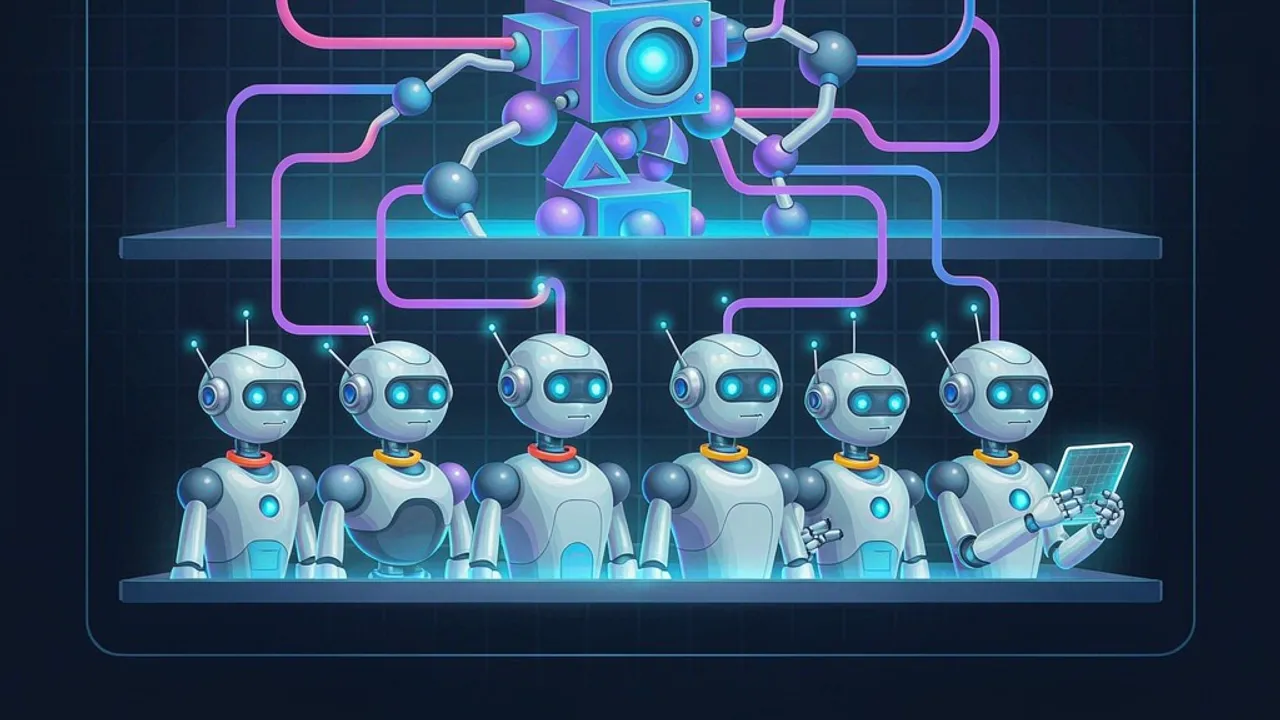 Source: Towards Data Science
A post on Towards Data Science introduced a three‑tier architecture that separates the day‑to‑day management of AI agents from strategic human oversight, promising safer and more scalable deployments. The approach matters because as autonomous systems proliferate, unchecked runtime changes can cause costly errors, while excessive human bottlenecks can stall innovation.
What does the three‑tier architecture look like?
The model divides oversight into three distinct layers. The lowest tier is the runtime supervisor, an automated component that continuously monitors agents as they act. When it detects a reversible deviation—such as a drift in output style or a minor policy breach—it can intervene instantly, applying predefined fixes without human input. The middle tier is a human‑in‑the‑loop review that receives alerts for any change deemed high‑impact, such as modifications that affect safety constraints or business‑critical decisions. Finally, the top tier is a strategic governance board that defines the policies, thresholds, and escalation paths that guide the lower layers. This hierarchy keeps fast‑moving agents under tight, automated guard while preserving human authority over the most consequential actions.
Why keep reversible fixes automated and reserve humans for high‑impact changes?
Automation excels at handling repetitive, low‑risk adjustments. By letting an autonomous supervisor correct minor issues, organizations avoid the latency and labor cost of routing every anomaly to a person. This also reduces the chance of human fatigue or oversight fatigue, which can happen when reviewers are inundated with trivial alerts. Conversely, high‑impact changes—those that could alter an agent's core behavior, affect compliance, or expose the firm to liability—require nuanced judgment that current AI systems cannot reliably provide. Human reviewers bring contextual awareness, ethical reasoning, and legal expertise, ensuring that only well‑vetted alterations are deployed. The split therefore balances efficiency with accountability.
How can a team set up an autonomous supervisor for runtime oversight?
- Define clear metrics for what constitutes a reversible deviation. Common signals include confidence score drops, sudden spikes in request latency, or violations of soft policy rules.
- Implement a monitoring pipeline that streams these metrics to a lightweight decision engine. Open‑source tools like Prometheus or Grafana can be adapted, or cloud services such as Vertex AI Monitoring can be leveraged.
- Create a library of corrective actions that the supervisor can invoke automatically. Examples are resetting model temperature, throttling request rates, or rolling back to a previous model version.
- Establish safety thresholds that trigger escalation. When a metric crosses a predefined boundary, the supervisor logs the event and forwards it to the human review tier.
- Test the loop in a sandbox before production rollout. Simulate edge cases to verify that the supervisor reacts appropriately without over‑correcting.
By following these steps, organizations can build a self‑correcting layer that operates continuously, freeing human operators to focus on the truly strategic decisions.
What responsibilities do humans have in the high‑impact approval tier?
Human reviewers act as gatekeepers for any change that could affect an agent's purpose, legal compliance, or user safety. Their workflow typically includes:
- Alert triage: Prioritizing incidents based on severity and potential impact.
- Root‑cause analysis: Examining logs, model outputs, and contextual data to understand why the supervisor escalated the issue.
- Decision making: Approving, modifying, or rejecting the proposed fix. This may involve consulting domain experts, legal counsel, or ethics boards.
- Documentation: Recording the rationale behind each decision to create an audit trail, which is essential for regulatory compliance.
- Policy refinement: Updating the thresholds and corrective action library used by the autonomous supervisor, creating a feedback loop that improves the system over time.
The human tier therefore provides the critical judgment layer that keeps AI agents aligned with organizational values and external regulations.
How does this architecture map onto Grafy’s ecosystem?
Grafy’s Bots platform lets developers embed AI agents into products while exposing hooks for custom supervision logic. By integrating a runtime supervisor as a middleware layer in a Bot, teams can automatically enforce reversible fixes before the bot’s response reaches the end user. The Graph app can then be used to visualize the flow of decisions across the three tiers, showing where the supervisor intervened and which alerts were escalated for human review. For teams that need to experiment with different supervisory models, the Chat interface offers a quick way to prototype prompts that define corrective actions, and the Reader can ingest policy documents to feed the human review tier with up‑to‑date compliance guidance. Together, these tools enable a practical implementation of the three‑tier model without building a separate infrastructure from scratch.
Frequently asked questions
How does the autonomous supervisor decide which fixes are reversible?
The supervisor relies on pre‑defined rules and statistical thresholds that flag deviations considered low‑risk. Examples include minor confidence drops, temporary latency spikes, or breaches of non‑critical style guidelines. When a condition matches a rule, the supervisor executes the associated corrective script automatically.
What kinds of changes require human approval in this architecture?
Any modification that could alter the agent’s core objectives, affect safety constraints, impact regulatory compliance, or change business‑critical outcomes is routed to the human tier. This includes updates to model weights, policy rewrites, or changes to the decision‑making logic that affect downstream users.
Can Grafy’s Bots be used to build the autonomous supervisor itself?
Yes. Bots provide a programmable interface where developers can attach monitoring callbacks and corrective actions. By coupling a Bot with Grafy’s Graph visualizer, teams can trace supervisory decisions and maintain an audit trail, effectively turning the Bot into the runtime supervisor layer of the three‑tier architecture.
Source: Towards Data Science — How to Oversee AI Agents at Scale With a Three-Tier Architecture
More news
Five essential guardrails for limiting AI agent damage
Developers are implementing five specific guardrails to prevent AI agents from causing unintended harm, ensuring safer autonomous operations.

New DEO Method Fixes AI Retrieval Failures in Negation Queries
Researchers have introduced Direct Embedding Optimization (DEO) to solve how AI fails at exclusion queries. Learn how this training-free approach works.

Researchers find browser-embedded models can be used for attacks
Researchers demonstrate how attackers can leverage local models like Gemini Nano for post-exploitation, bypassing traditional network monitoring.