Zero‑Shot Product Entity Resolution Pipelines Tested on Real‑World Noise
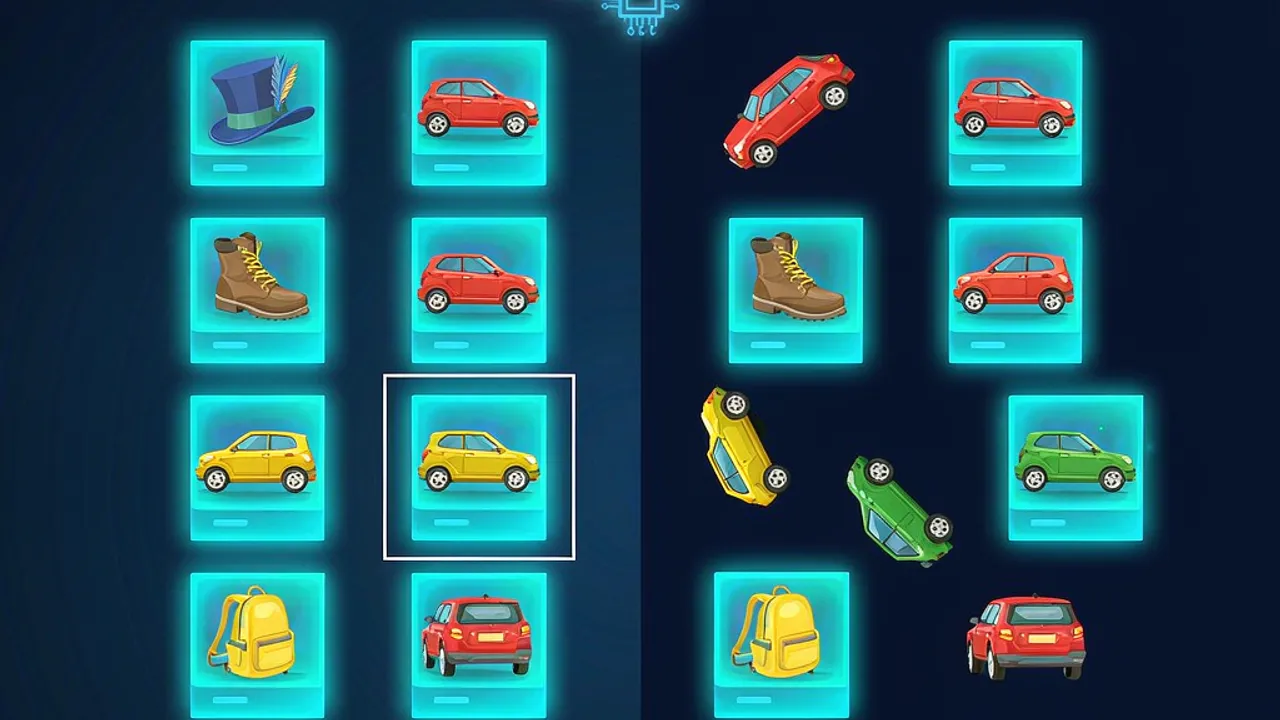
A new Grafy Research Lab study benchmarks four zero‑shot PER pipelines on standard tests and two noisy.
 Source: Grafy Research Lab
Product Entity Resolution (PER) – the task of deciding whether two listings refer to the same real‑world item – remains a bottleneck for e‑commerce platforms, according to a paper released by the Grafy Research Lab on November 17, 2026. The study presents an end‑to‑end evaluation of four zero‑shot PER pipelines and introduces two new real‑world datasets that feature cross‑lingual noise and dense brand collisions, offering a realistic testbed for future research.
What is product entity resolution and why does it matter?
PER is essential for deduplicating catalogues, powering accurate recommendation engines, and ensuring price‑matching algorithms work correctly. In practice, listings often contain unstructured text, irregular formatting, marketing fluff, and subtle attribute differences that make simple string matching insufficient. The Grafy Research Lab paper notes that these challenges are amplified in global marketplaces where product names appear in multiple languages and brands may share similar naming conventions.
Which zero‑shot pipelines were evaluated?
The authors benchmarked four distinct pipelines that require no task‑specific training data:
- Lexical Cascade – a hierarchy of rule‑based and lexical similarity stages that progressively filters candidate pairs.
- Semantic Cascade – replaces the lexical stages with dense vector similarity using transformer embeddings.
- Hybrid Fusion Cascade – combines lexical and semantic scores at each cascade level to exploit complementary signals.
- Generative‑Lexical Cascade – augments the lexical cascade with a Large Language Model (LLM) verifier that generates natural‑language explanations for matches.
All four pipelines follow a common architecture: an initial blocking step to reduce the quadratic pairwise space, followed by a verification stage that decides the final match. The study evaluates both lexical and dense blocking methods, including cross‑encoder re‑ranking, tensor‑search indexing, and LLM‑based verification, measuring overall accuracy and computational cost.
How were the new real‑world datasets constructed?
Beyond established benchmarks, the researchers assembled two datasets drawn from live e‑commerce feeds. The first dataset contains product titles and descriptions in five languages, deliberately injecting translation errors, mixed scripts, and promotional boilerplate. The second dataset focuses on “brand collisions,” where different manufacturers use overlapping brand names (e.g., "Apple" for fruit and electronics). Both datasets were manually annotated by domain experts to provide reliable ground truth. According to the paper, these collections capture the type of noisy, multilingual input that most commercial systems encounter today.
What were the key findings across the pipelines?
The evaluation revealed several practical insights:
- Lexical Cascade performed surprisingly well on clean, single‑language benchmarks, achieving high precision but suffering recall loss when faced with noisy or translated text.
- Semantic Cascade improved recall on the multilingual dataset, thanks to language‑agnostic embeddings, yet it introduced more false positives when brand names overlapped.
- Hybrid Fusion Cascade consistently balanced precision and recall, leveraging the strengths of both lexical tokens and semantic vectors. It achieved the highest F1 score on the brand‑collision dataset.
- Generative‑Lexical Cascade showed the most robust performance on the cross‑lingual set. The LLM verifier could reason about ambiguous phrasing and correctly reject matches that only appeared similar lexically. However, the verification step added noticeable latency, making it less suitable for real‑time pipelines.
The authors also compared blocking strategies. Dense tensor‑search reduced candidate pairs by 70 % while preserving most true matches, whereas cross‑encoder blocking offered higher precision at a higher computational cost.
How can Grafy users experiment with these approaches?
While Grafy does not yet ship a dedicated PER service, creators and developers can reproduce parts of the study using existing apps:
- Grafy Reader (/[reader]) lets you upload the paper PDF, ask the AI to summarise methodology, and extract the exact prompts used for LLM verification.
- Grafy Chat (/[chat]) enables you to run zero‑shot LLM prompts against your own product listings, mimicking the Generative‑Lexical Cascade’s verification step.
- Grafy Graph (/[graph]) can visualise the cascade workflow: each node can represent a blocking stage, and you can branch to test lexical versus semantic similarity functions side‑by‑side.
By chaining these apps, a developer could build a lightweight PER prototype: first use Tensor‑search (via a vector store in the backend) for dense blocking, then invoke Chat with a verification prompt that asks the model to explain why two items match. The explanation can be stored in Graph for auditability. This workflow mirrors the study’s hybrid and generative pipelines without requiring custom model training.
What are the broader implications for e‑commerce AI?
The paper underscores that zero‑shot methods, especially those that combine lexical heuristics with modern LLM reasoning, can approach the performance of supervised models on noisy, multilingual data. For practitioners, this means that deploying a PER system may no longer demand large labelled datasets; instead, careful prompt engineering and pipeline design can yield competitive results. The research also highlights the importance of realistic evaluation data – the two new datasets expose failure modes that standard benchmarks hide. As e‑commerce continues to globalise, tools that handle cross‑lingual noise and brand collisions will become a differentiator for platforms seeking clean catalogues and trustworthy recommendations.
Source: https://arxiv.org/abs/2611.19418
Frequently asked questions
Does the Generative‑Lexical Cascade require fine‑tuning?
No. The pipeline is zero‑shot; it relies on a pre‑trained LLM to generate natural‑language match explanations without any task‑specific fine‑tuning, according to the Grafy Research Lab paper.
Which blocking method gave the best trade‑off between speed and accuracy?
The study found that dense tensor‑search blocking reduced candidate pairs by about 70 % while keeping most true matches, offering a good balance of speed and recall compared to the more expensive cross‑encoder approach.
Can Grafy’s existing apps fully replace a custom PER system?
Grafy provides the building blocks – Reader for paper insight, Chat for LLM verification, and Graph for pipeline visualisation – but a production‑grade PER system would still need integration with a vector store and possibly custom scaling logic beyond the current apps.
Source: Grafy Research Lab — Real-World End-to-End Product Entity Resolution
More news

TokenFormer V2 breaks resolution‑complexity dilemma in recommendation
A new paper from Grafy Research Lab introduces TokenFormer V2, a unified recommendation backbone that separates representation resolution from interaction.

Alibaba launches Qwen4‑Max: cheaper AI work but mixed benchmark results
Alibaba unveiled Qwen4‑Max, a multimodal model that cuts task costs by about 60% while offering up to one‑million token context.

Versioned Plugins Bring Governance to Coding Agents Across Repositories
A new method packages coding‑agent skills, rules, and hooks as versioned plugins distributed through a marketplace.