Claude Code and Other Coding Agents Now Run Cloud‑Based 24/7
A Towards Data Science guide shows two ways to keep Claude Code and similar coding agents online continuously—either via a ready‑made cloud toggle.
 Source: Towards Data Science
Two deployment paths let developers keep Claude Code and other AI coding agents running around the clock, according to a recent Towards Data Science tutorial. Continuous availability matters for tasks such as automated code reviews, nightly builds, or long‑running data pipelines that rely on an LLM‑driven assistant.
What is Claude Code and why keep it running all the time?
Claude Code is Anthropic’s coding‑focused LLM that can generate, explain, and even execute code snippets when paired with a runtime environment. When an agent is online 24/7 it can respond to incoming requests without the latency of a cold start, making it suitable for services that need instant feedback—e.g., IDE plugins, CI/CD bots, or research notebooks that query the model repeatedly throughout the day.
Which cloud‑based options does the guide describe?
The article outlines two distinct approaches. The first is a "quick‑path" that flips a switch in Claude Code’s own cloud offering, instantly provisioning a managed environment. The second is a more hands‑on route: renting a virtual machine (or similar compute instance) and installing the agent yourself, giving full control over the runtime, dependencies, and networking.
How does the quick‑start cloud environment work?
In the managed option, Claude Code’s provider hosts the model and a lightweight execution sandbox. Users simply enable the service, supply an API key, and the platform handles scaling, security patches, and uptime guarantees. Because the environment is pre‑configured, developers can start sending prompts within minutes, making it attractive for prototypes or short‑term projects that do not require custom libraries.
What does renting a dedicated server give you?
A self‑hosted instance puts the entire stack under the user’s authority. This includes the ability to install specific Python packages, mount private data stores, or integrate with on‑premise CI pipelines. While the setup demands more sysadmin effort—installing Docker, configuring firewalls, and monitoring health—it also removes any usage caps imposed by the managed service and allows fine‑grained cost optimization (e.g., spot instances or reserved VMs).
When should you choose one approach over the other?
If speed of deployment and minimal maintenance are the priority, the managed toggle is the clear winner. It is ideal for hackathons, classroom demos, or small‑scale internal tools. Conversely, teams that need custom tooling, compliance with internal security policies, or predictable long‑term pricing will benefit from the rented‑server route.
How can Grafy users replicate these setups?
Grafy’s Code studio provides an AI‑powered coding environment that can run scripts and manage dependencies directly in the browser. To emulate the quick‑path, you can connect the Code studio to Claude Code’s API, enable the "cloud mode" flag (if offered) and start issuing prompts without leaving the Grafy interface. For a fully controlled deployment, the Code app lets you spin up a Docker‑based workspace on your own cloud account, install any libraries you need, and keep the session alive with Grafy’s built‑in persistence features. Both workflows benefit from Grafy’s Chat app, where you can test model responses side‑by‑side with other LLMs, and the Reader app if you need to ingest documentation while building your agent. Detailed step‑by‑step guides for integrating external APIs are available in the Grafy Blog.
What are the practical implications for creators, developers, and researchers?
For creators, a always‑on coding assistant can auto‑generate assets—scripts for animation, procedural textures, or game logic—without manual prompting each time. Developers gain a reliable backend for code‑assist features embedded in IDE extensions, reducing latency and improving developer experience. Researchers can schedule long‑running experiments that query Claude Code for hypothesis generation, data cleaning, or model‑to‑code translation, ensuring the agent is reachable whenever the experiment triggers.
Source: "How to Run Claude Code and Other Coding Agents in the Cloud 24/7" – Towards Data Science (2026‑11‑19).
Source: Towards Data Science — How to Run Claude Code and Other Coding Agents in the Cloud 24/7
More news
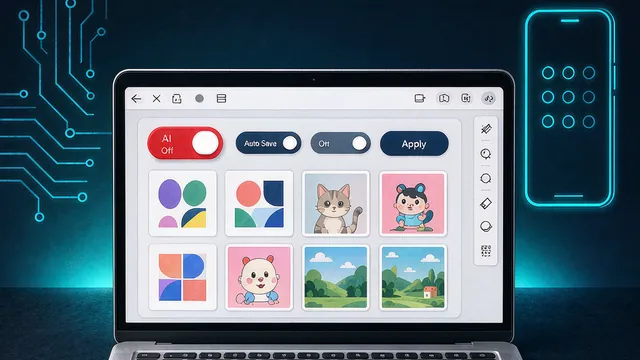
Canva introduces an AI “off” toggle for its design suite
Canva now lets users disable most generative AI tools via a new toggle, addressing complaints about AI overload while keeping essential helpers active.

Small Models Narrow Accuracy Gap for AI Coding Agents, Study Finds
A new study shows that recent small open‑weight models can match larger counterparts on a software‑engineering benchmark.

Study Finds Gender Stereotyping in LLM‑Generated Bedtime Stories Across 35 Countries
Researchers analyzed 62,873 stories from 16 large language models and uncovered gendered portrayals that vary by narrator role and country.