New Agent Primitives Target the Last Mile to Real-World Tasks
A new arXiv paper proposes primitives and the HEELO harness to help agents apply resources, with gains on 20+ benchmarks. Read why it matters.
 Source: arXiv Computation and Language
A new paper on arXiv proposes reusable agent-native primitives and a harness called HEELO to help AI agents complete real-world tasks end to end. The authors argue that the main bottleneck is not reaching a tool or resource, but knowing how to apply it once it is within reach.
What is the last mile to the real world?
According to the arXiv paper, frontier models paired with their own harnesses still resolve only a minority of tasks on some real-world benchmarks. On Terminal-Bench 4.0, the paper reports 37.3% resolution for GPT-5.6 Sol with Codex and 51.8% for Claude Opus 5 with Claude Code. The authors describe the failure point as the step from reaching a resource to applying it, which they call the last mile to the real world. In their framing, existing approaches make a resource available but leave the competence to use it with the caller. Each harness therefore has to rebuild that competence for its own tasks, rather than reusing it.
What are agent-native primitives?
The paper introduces agent-native primitives as reusable units intended to carry that competence with the resource itself. Each unit equips a resource with a resident language model that applies the resource in context and communicates with other primitives. The idea is to shift reusable know-how out of a single task-specific harness and into the building blocks that a harness can compose. The authors say they instantiate the approach with eight primitive families, each built for one kind of task. That design is meant to make the same primitive usable across different tasks that need the same kind of resource, instead of writing fresh glue code each time.
How does HEELO build a harness for a task?
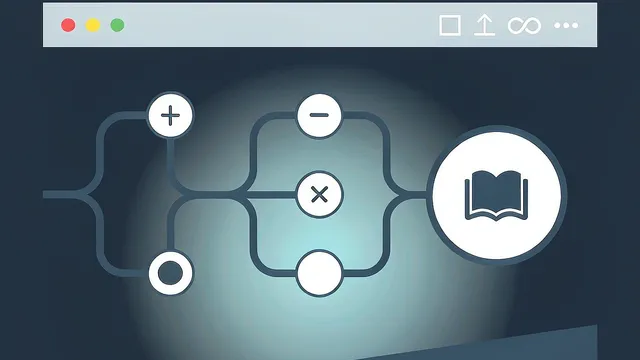
HEELO stands for Harness Engineering around Evolving Agent-Native Primitives for the Last Mile to Real-World Tasks, according to the paper. It builds a task-specific harness from a library of primitives by composing the units a task needs into a graph. The paper says HEELO then checks the result against evidence from the environment. If a failure occurs, it revises the primitives that the failure implicates. New or improved primitives are admitted only after validation. In other words, the harness is not fixed in advance: it is assembled per task, tested against the environment, and updated when the evidence points to a weak primitive.
What results does the paper report?
The authors evaluate the approach on more than twenty benchmarks, according to the arXiv abstract. Dev-Primitives raise Terminal-Bench 4.0 resolution from 37.3% under Codex to 55.5% on the same backbone. Harness Primitives composed per task raise Terminal-Bench 2.0 Pass@1 from 60.0% for the seed harness to 72.2%. Tool Primitives raise ToolBench pass rate from 55.8% to 75.1%, and Navigation Primitives raise GAIA-Text-103 accuracy from 45.6% to 58.3%. On the paper's platform with 46 real-world tasks, Claude Opus 5.5 with Claude Code and GPT-6.1 Sol with Codex each complete 9 tasks on their own, compared with 39 and 35 when connected to HEELO through its MCP server. The paper also reports 1.9x and 2.3x less time and 1.55x lower cost per completed task in that setting.
What should readers take from the numbers?
The reported gains are large, but they are the authors' own results on the benchmarks and platform they chose, as presented in the paper. Readers should note the comparison structure: several gains are measured against a seed harness or a model with its own harness, not against every possible alternative. The paper's contribution, on its own terms, is architectural as much as empirical. It proposes moving competence into reusable primitives, composing them into a task graph, verifying against environmental evidence, and evolving the library after failures. Whether that pattern generalises beyond the reported benchmarks is a question the paper's evaluation invites, rather than settles for all real-world work.
How can you explore this in Grafy?
For developers, the closest Grafy starting point is Grafy Code, where you can test how an AI coding assistant handles terminal-style tasks and where harness-like workflows are easiest to compare in practice. You can also use Grafy Reader to read and question the paper itself, checking the benchmark tables and method details against the claims summarised here. If you want to see how a browsing agent behaves on web tasks, Grafy Operator offers a concrete contrast to the paper's primitive-based approach. And with Grafy Chat, you can put several models side by side on the same task brief to see how much of the difference comes from the model, the harness, and the tools around them.
Frequently asked questions
What is the last mile to the real world in this paper?
According to the arXiv paper, it is the step from reaching a resource to applying it correctly in context. Existing approaches make resources reachable but leave the competence to use them with the caller, so each harness rebuilds that competence instead of reusing it across tasks.
How much did Dev-Primitives improve Terminal-Bench 4.0 under Codex?
According to the paper, Dev-Primitives raised Terminal-Bench 4.0 resolution from 37.3% under Codex to 55.5% on the same backbone. That is the comparison the authors report for that benchmark and backbone in the abstract.
What does HEELO do when a task fails?
According to the paper, HEELO verifies results against evidence from the environment, revises the primitives that a failure implicates, and admits new or improved primitives only after validation. The harness is therefore assembled per task and evolved based on observed failures.
Source: arXiv:2611.07461
More news

AWS launches Kiro bots with memory for recurring dev jobs
AWS has launched Kiro bots in Crew, persistent agents that remember decisions and handle recurring development jobs. Here's what it means for teams.
Ricursive Releases Ripple-65B Preview, 65B Open-Weight Model
Ricursive Intelligence released Ripple-65B Preview, a 65B open-weight model scoring 80.5 on Terminal-Bench 2.1. What it means for developers.

Only four Uber rides were booked by AI agents in busiest week
Uber said only four rides were booked by AI agents in its busiest week, versus 320 million trips and orders. Here's what it signals for agents.