New Study Links In‑Context Learning to Out‑of‑Context Hallucinations in LLMs
Researchers reveal a unified mechanism behind in‑context learning and out‑of‑context hallucinations.
The AI news that matters for people who make things — what happened, and how to put it to work in Grafy.

Researchers reveal a unified mechanism behind in‑context learning and out‑of‑context hallucinations.

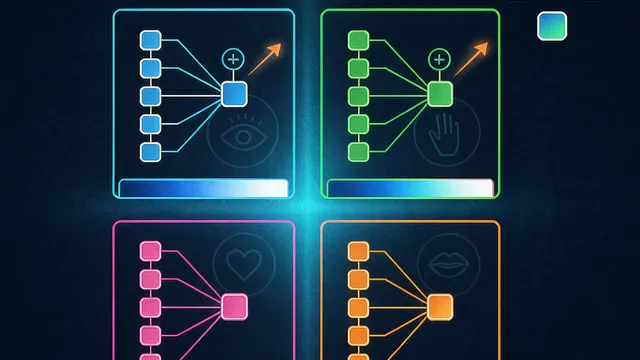
Researchers unveil OmniDebias, a bias‑centric method that unifies fairness across attributes and modalities in omni‑modal large language models.

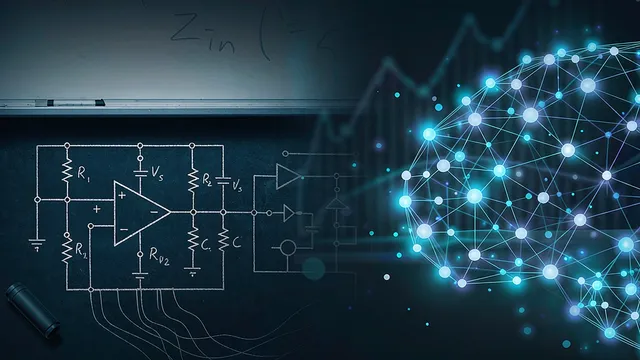
A new benchmark based on Razavi's analog design questions tracks AI models improving from 28% to 98% accuracy.

Grafy Research Lab's DiSPaT framework uses self‑play to improve large language model anomaly detection on mixed‑type tables, a method accepted at ICML 2026.

A new paper proposes a faster, lower‑error activation checkpointing technique that trims GPU memory use while keeping training speed.

A new head‑adaptive sparse attention method leverages query‑key interaction structure to cut the compute and memory load of large language models.

Researchers unveiled Packed‑SS, a decoding schedule that merges drafting and verification into a single linear‑size call.

Inception Labs released Mercury 3, a diffusion-based LLM that claims to outperform GPT-6 Luna in speed and cost for real-time agents.

In a 2026 essay, Clojure creator Rich Hickey argues that large language models are a form of automation that users do not 'wield,' sparking debate on Hacker.