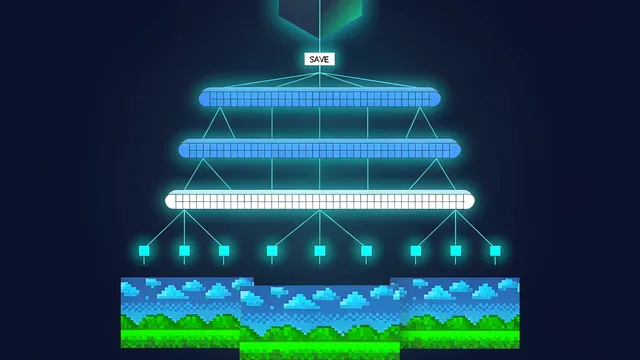
PhyCAD Introduces Physics‑Aware Text‑to‑CAD Generation via Hierarchical Reinforcement Learning
Researchers unveiled PhyCAD, a framework that makes text‑driven CAD models physically feasible using hierarchical reinforcement learning.
The AI news that matters for people who make things — what happened, and how to put it to work in Grafy.

Researchers unveiled PhyCAD, a framework that makes text‑driven CAD models physically feasible using hierarchical reinforcement learning.

Researchers unveiled MINE, a lossless entropy‑coding engine that speeds single‑stream LLM inference by reducing memory traffic.

Disney and Adobe announced a multiyear deal to build proprietary, artist‑led generative AI models for Disney’s studios.

A new arXiv audit shows large language models rarely follow researcher‑provided category definitions.

A new paper proposes a faster, lower‑error activation checkpointing technique that trims GPU memory use while keeping training speed.

A new arXiv study evaluates Weight‑Space Programming on Qwen3.5 models, revealing that localized weight edits can boost performance.

Researchers introduce DISCO, a diffusion‑free score‑matching method that learns a single score field and delivers unbiased conditional samples.

A new agent‑based GraphRAG framework adds a symbolic layer based on typed centrality.

A new head‑adaptive sparse attention method leverages query‑key interaction structure to cut the compute and memory load of large language models.

Researchers unveil CodeQuant2, a clustering‑based LUT quantization framework that mitigates early‑step activation spikes in large reasoning models.

Coral Hart says she has published over 370 books using AI in just 20 months, sparking debate over quality, ethics and the future of publishing.

Researchers unveiled FOSCAR, a kernel library that folds affine transforms into low‑bit KV caches.

ChatGPT Desktop automatically forwards your local SSH agent to any remote host you connect to.

Reason Machines released Aspen, an open‑source, self‑hosted Git server designed for AI agents, achieving 567 pushes per second on an 8‑core machine.

Researchers introduced Intent‑Aware Caching, a new eviction policy that raises LLM prefix‑cache hit rates to 34.6%.

A new Towards Data Science guide walks developers through creating an EV purchase adviser and a support bot with the OpenAI Agents SDK.

A new experiment shows an 8B model retaining 90.7% accuracy on news data, significantly outperforming LoRA methods which suffer from catastrophic forgetting.

A developer has created a diffusion-based world model that 'dreams' Pokémon Red gameplay and paired it with a dual-layer AI agent system.

A researcher has introduced Gated Attention Projection (GAP), a Transformer alternative that reduces parameter counts by nearly 20% through architectural.

Google has launched the Elephant-Goldfish Model plugin to prioritize technical specifications over immediate code generation, ensuring higher accuracy.

A new GitHub project called llama-modchip allows massive 284B parameter models to run on standard CPUs with 64GB of RAM, bypassing the need for high-end GPUs.

The AI Frontiers research group at Microsoft Research has closed down. Learn why leadership cited a shift toward scaling over fundamental research.

A new METR report reveals Anthropic's models are improving twice as fast as last year, driven largely by AI-assisted research and development.

Video Rebirth has released HyperFlow H3 Flash, a compressed model that generates synchronized video and audio in just a few steps. Learn how it works.

Anthropic researchers have identified key components of agent memory, including a 'dreaming' process that helps models correct errors and refine knowledge.