
TANSAR Memory Research Tests Correlated Keys
TANSAR studies AI memory under correlated keys, with frame-theoretic capacity bounds and deletion attribution.
Try in Graphai memorycorrelation matrixframe theorytansar
The AI news that matters for people who make things — what happened, and how to put it to work in Grafy.
TANSAR studies AI memory under correlated keys, with frame-theoretic capacity bounds and deletion attribution.

Proposal SciMARS outlines recursive self-improvement for multi-agent science, using shared evidence and component editors. See source.
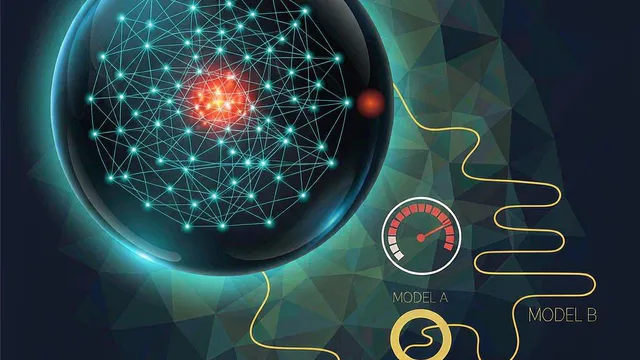
Grafy Research released a framework for foundation-model predictions under average query cost budgets, using training data and Q-learning. Here's why

A MachineLearningMastery benchmark compared local Scikit-Ollama and Groq-backed Scikit-LLM classifiers on speed, cost and accuracy. Read the limits.

DeepX says its taped second-gen AI chip can run up to 100B-parameter models under 5 W, a claim that could reshape edge AI inference.

Proposed LLM AutoML would jointly tune architecture, hyperparameters and data ratios without fine-tuning, according to new arXiv paper. Why it matters.
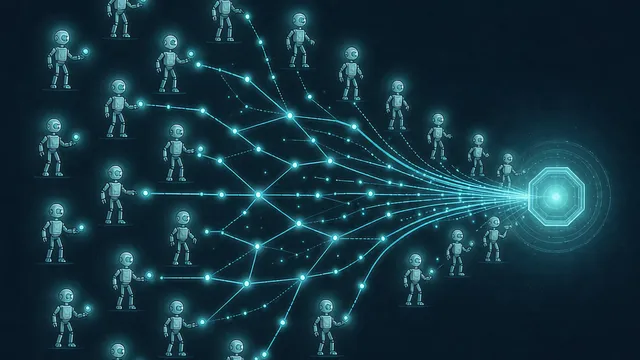
Grafy reported on WorkflowArena, a benchmark for executable workflow orchestration in LLM multi-agent systems.

Grafy Research Lab reported on HiVe-Mem, a multimodal agent memory framework blending horizontal expansion and vertical evidence. It aims at long AI.

Meituan released open LongCat-2.5 vision-language weights under the MIT License. It adds a new developer access path, though benchmark comparisons remain mixed.

Nvidia CEO Jensen Huang faces an investigation after admitting an affair with a suspected Chinese intelligence asset, shaking AI power assumptions.

Google introduced the TPU 8i Max, a dual‑chip package for long‑context AI agents.

Anthropic unveiled Claude Fable 5.2 and Mythos 5.2, models that deliver faster, cheaper coding, vision and scientific reasoning, with new safety safeguards.

Google DeepMind used agentic AI to formally verify Signal protocol guarantees, a milestone for AI-assisted security. Here’s what it found and what it means.

OpenAI’s CodeRabbit uses its models to govern AI‑generated code, enabling teams to ship twenty times more software without expanding staff.

Anthropic released Claude Fable 5.2 and Mythos 5.2, claiming faster coding, reasoning and vision gains. Here’s what the debut means.

Medium unveiled TK, an AI‑enabled editor that lets writers summon assistance with @TK.

Continuous batching in the vLLM inference engine achieved up to 2.91× speed gains over static and dynamic batching.

Shopify unveiled SID-LLM, a model that generates semantic IDs to power both product search and recommendation.

A two‑tier LLM reranking cascade deployed at a large FP&A SaaS provider reduces inference spend by about 10% without hurting recommendation quality.

A new arXiv study introduces a hybrid Retrieval‑Augmented Generation system that combines knowledge graphs with dense vector search to improve multi‑hop.

A new benchmark (DS‑QA) shows that popular LLMs vary widely across repeated runs.
Security researchers discovered over 100,000 public Claude Code settings files on GitHub.

Meta's Superintelligence Lab released Muse Ember, a lightweight model that handles tool calls.

A new ENGRAM framework separates when language‑model agents admit new skills from when they discard external memory.

Instagram launched Effect Builder, an AI web tool that lets US users create Story filters from text prompts, preview them, and submit for use with credit.