LightTAR boosts multimodal tabular learning with cheap target‑aware embeddings
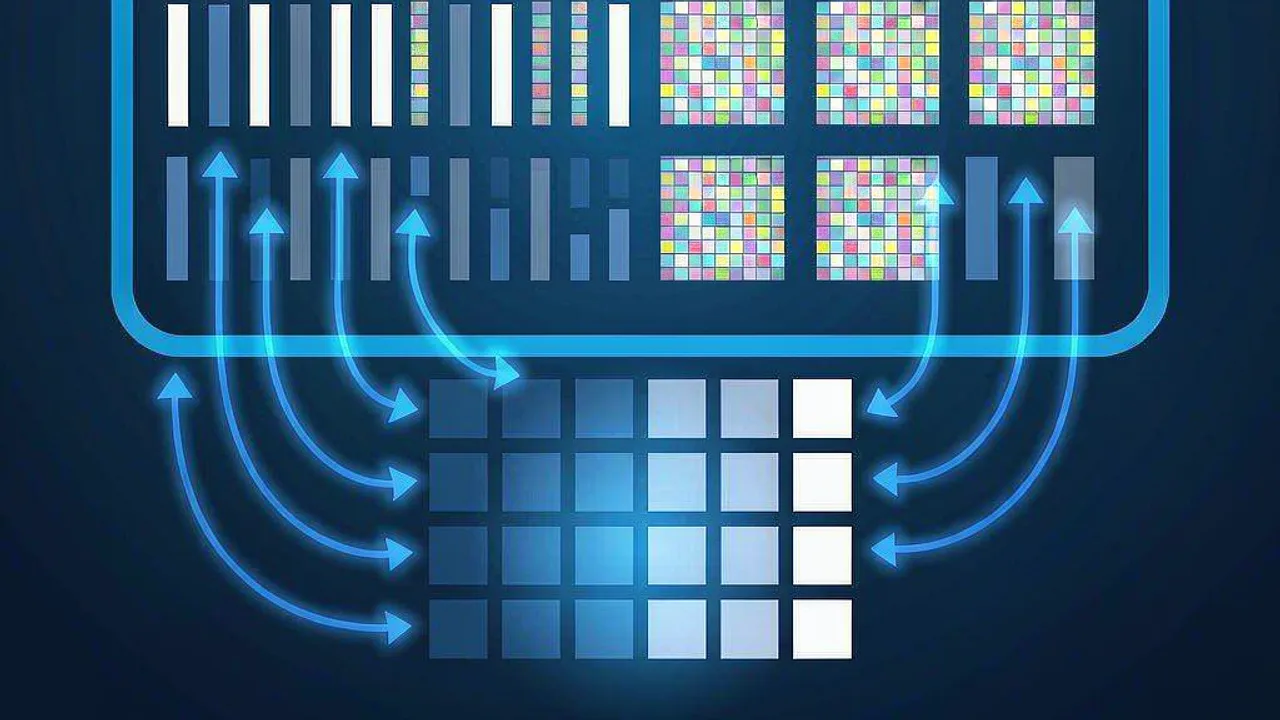
Researchers introduce LightTAR, a fast method that adds task‑aware features to PCA‑reduced embeddings.
The AI news that matters for people who make things — what happened, and how to put it to work in Grafy.

Researchers introduce LightTAR, a fast method that adds task‑aware features to PCA‑reduced embeddings.

Meta moved its LLM‑generated JiTTests into production, where they automatically write failing tests for risky code changes and have already blocked 74 privacy.

Researchers introduce SCALAR, a new PEFT method that matches LoRA performance while using only 4% of its trainable parameters.

A new Vision-as-a-Tool paradigm lets multimodal and text‑only coding agents offload visual reasoning to external utilities.

A recent Towards Data Science test shows local large language models score 12‑20/20 on textbook RAG tasks but drop to 0‑9/15 on a brand‑new research paper.

Alibaba unveiled Qwen4-Max, a 2.4 trillion‑parameter Mixture‑of‑Experts model with 71 billion active weights.

Researchers unveil A³, a framework that keeps audio agents functional during network outages by dynamically switching between device and server processing.

Researchers unveiled UUE, a lightweight adapter‑based framework that erases specific knowledge from large language models while preserving overall performance.

A new framework shows deep classifiers act like Shannon‑style decoders, linking cross‑entropy to maximum‑likelihood decoding and explaining loss geometry.

Grafy Research Lab's DiSPaT framework uses self‑play to improve large language model anomaly detection on mixed‑type tables, a method accepted at ICML 2026.

A new paper shows how evolutionary algorithms can craft real‑world signal manipulations that fool end‑to‑end autoencoder communication.

Researchers unveiled Fuse-All MoE, a TPU kernel that fuses expert computation and output routing.

Researchers introduce VelServe, a tail‑calibrated scheduler that reduces decode jitter in large‑language‑model inference.

A fine‑tuned 0.8B‑parameter model runs entirely in a web page, spotting hidden order mistakes without sending any text off‑device.

OpenAI announced a candidate non‑perturbative lattice definition of the Standard Model.

OpenAI unveiled a new science blog that publishes AI‑enabled research findings, methods and researcher stories.

A joint study from Meta FAIR and NYU trained over 200 multimodal LLMs from scratch.

Towards Data Science outlines six agentic GraphRAG patterns that let AI agents turn static knowledge graphs into dynamic context graphs.

Bland has released Tofu-1, a full‑duplex speech‑to‑speech model aimed at noisy, high‑stakes phone calls, now in enterprise research preview.

Kiri 0.2.1, a new container runtime for Mac, Windows and Linux, launches in beta.

A new arXiv paper presents AFTER, a world model that uses dual‑timescale error‑driven corrections to stay responsive.

Cmpnd released dspy-wsp, a prototype DSPy optimizer that edits model weights directly without gradients.

A Crissy Field security analysis of 159,041 Lovable projects found thousands of apps leaking emails.

Agweb, a new macOS browser designed for AI agents, avoids focus stealing and reduces resource use.

Stanford researchers released Memorilla, an open‑source module that compresses a document collection into just 16 memory tokens for frozen Qwen3‑8B.