RSIBench-Infra Benchmark Tests Agents’ Ability to Optimize Training and Inference Infrastructure
A new benchmark, RSIBench-Infra, evaluates whether AI agents can autonomously optimize end‑to‑end training and inference pipelines at production scale.
The AI news that matters for people who make things — what happened, and how to put it to work in Grafy.

A new benchmark, RSIBench-Infra, evaluates whether AI agents can autonomously optimize end‑to‑end training and inference pipelines at production scale.

Perplexity launched an Orchestrator API that lets developers call OpenAI, Anthropic.

Google’s Gemini app for macOS now can act on local files and desktop apps, letting users run multi‑step tasks.

Researchers unveil ICICLE, an in‑context surrogate that extrapolates learning curves with variable hyperparameters.

OpenAI unveiled the Performance Factory, a Codex‑driven workflow system that automatically finds and fixes latency issues in ChatGPT.

Researchers unveil MINT, a new truncation method that replaces trace‑product coefficients with meeting‑time indicators.

Meta employees reported that the Muse AI agent mistakenly combined conversations and displayed private details such as bank balances and personal requests.

OpenAI has launched Live Dictation, letting ChatGPT transcribe spoken prompts as you speak and removing the 10‑minute limit.

Google unveiled a controlled, mirror‑image of the web called the “Mirror Dimension” to safely train Chrome’s AI browsing assistants.

Google launched a Gemini desktop update that lets the AI directly operate macOS apps.

Canva now lets users disable most generative AI tools via a new toggle, addressing complaints about AI overload while keeping essential helpers active.

A Towards Data Science guide shows two ways to keep Claude Code and similar coding agents online continuously—either via a ready‑made cloud toggle.

A new study shows that recent small open‑weight models can match larger counterparts on a software‑engineering benchmark.

Researchers analyzed 62,873 stories from 16 large language models and uncovered gendered portrayals that vary by narrator role and country.

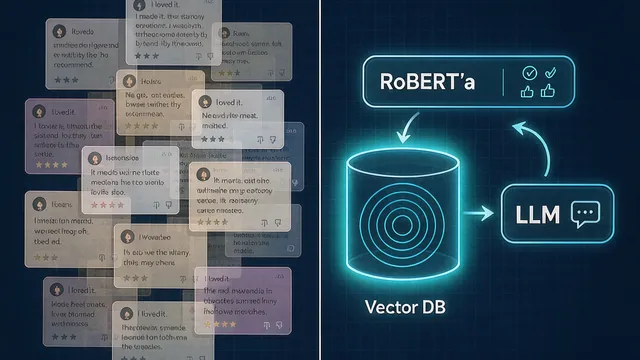
A new Retrieval‑Augmented Generation system combining RoBERTa‑LoRA, FAISS retrieval and LLM reasoning hits 0.90 F1 in cross‑domain deceptive review detection.

Researchers unveil MIRAGE, a framework that lets large language models update and reason with conflicting and new knowledge across multiple hops.

Researchers reveal a unified mechanism behind in‑context learning and out‑of‑context hallucinations.

A new benchmark, Movie2Game-Bench, evaluates film‑to‑game adaptations beyond basic playability.

A new arXiv dataset, RSI‑Prime, provides 350 full training trajectories to teach large language models how to conduct model‑training.

Researchers introduce LoopCache, a technique that removes stale speculation in looped transformers and cuts compute for long‑context generation.

Researchers introduce Resolution as Attention (RAA), a method that allocates perceptual detail to past interactions.

Researchers introduce MoE-Context, a method that lets language models read only the blocks they need.

Clover-35B-A3B-Preview, a 35 billion‑parameter diffusion language model that activates just 3 billion weights.

GateWatch proposes a compact Boolean‑circuit probe for monitoring large language models, offering interpretable alerts with minimal compute and memory overhead.

FailTrace, a new open‑source CLI, extracts the exact failing step from a GitHub Actions run and generates a Docker‑based reproduction plan.