
Nutrient Data Extraction API Delivers Schema‑Aligned JSON with Citations and Confidence
MarkTechPost reports a new API that turns PDFs and Office files into JSON that follows your schema.
Try in Filesapidata extractionpdfjson
The AI news that matters for people who make things — what happened, and how to put it to work in Grafy.
MarkTechPost reports a new API that turns PDFs and Office files into JSON that follows your schema.

A new audit method (FLCVA) measures the true value of continuing reasoning versus answering immediately.

Researchers unveil CrossEnv, a framework that automatically builds verifiable tasks spanning multiple services.

Researchers propose proximal targets for looped refinement models, eliminating loss floors caused by multiple correct answers and boosting Sudoku solving rates.

A new arXiv paper shows how agents can boost performance in unseen real‑time visual games using model‑as‑policy and code‑as‑policy methods.
Researchers introduced the Piccolo family of multimodal decision models, ranging from 0.8 B to 27 B parameters.

A NeurIPS‑2026 paper benchmarks kernelized attention against FlashAttention, showing lower memory use and faster training.

Researchers unveil OmniDebias, a bias‑centric method that unifies fairness across attributes and modalities in omni‑modal large language models.

Researchers unveil counterfactual target‑aware commitment and adaptive budgets, turning token commitment into a controllable surface for masked diffusion.
Researchers introduce TempQuant, a method that learns temperature and top‑p settings for quantized language models, boosting performance without extra labels.

OpenAI outlines how it handles frontier AI risk from training to deployment with alignment.

Researchers unveil GUARD, a risk‑controlled post‑hoc correction that improves frozen multimodal predictors when some modalities disappear.

Researchers introduce WorldRuler, a framework for building interactive worlds that follow user‑defined rules.

Anthropic filed its S‑1 on Nov 18, setting the IPO price at $83 per share and a $1.5 trillion valuation.

A new paper introduces LMMR, a learned multigranular memory retrieval method that trims input to under 400 tokens while raising F1 scores on HotpotQA and other.

Researchers introduce JET, a fine‑tuning approach that trims unnecessary tool calls in repository‑level QA agents while keeping answer quality high.
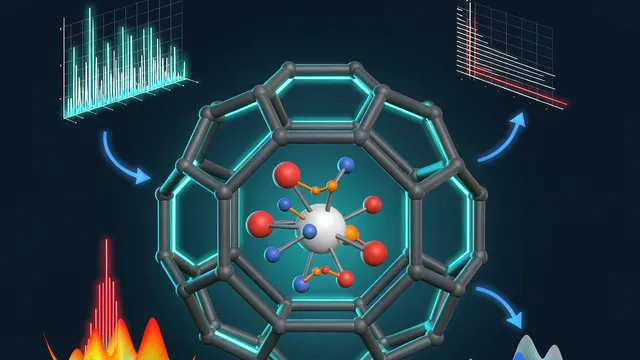
A new transformer model, MOSAIC, can generate any combination of 3D structures, UV.

Researchers introduced FieldGuide, a corpus‑map tool that lets AI agents navigate document collections more efficiently.

A new causal measurement technique called RAW quantifies the drop‑off caused by LLM refusals, finding a 3‑to‑17‑point loss in re‑engagement for many models.

Researchers show that confidence signals can rank correct responses but often fail to improve outcomes.

Dharma‑AI analyzed 272 fine‑tuning runs on NVIDIA H200 GPUs and built a CatBoost predictor that cuts error to under two hours.

Researchers introduce PACT, a training framework that preserves correct plans and repairs actions in GUI agents.

Will Wright announced MyMems, a new simulation that uses generative AI to transform personal memories into game content.

Microsoft CEO Satya Nadella warned that AI-driven agents will upend ad‑based web economics, urging e‑commerce platforms to open up to agent access.

Researchers introduce PACE, a framework that enforces linear physical constraints exactly during flow‑matching super‑resolution.